
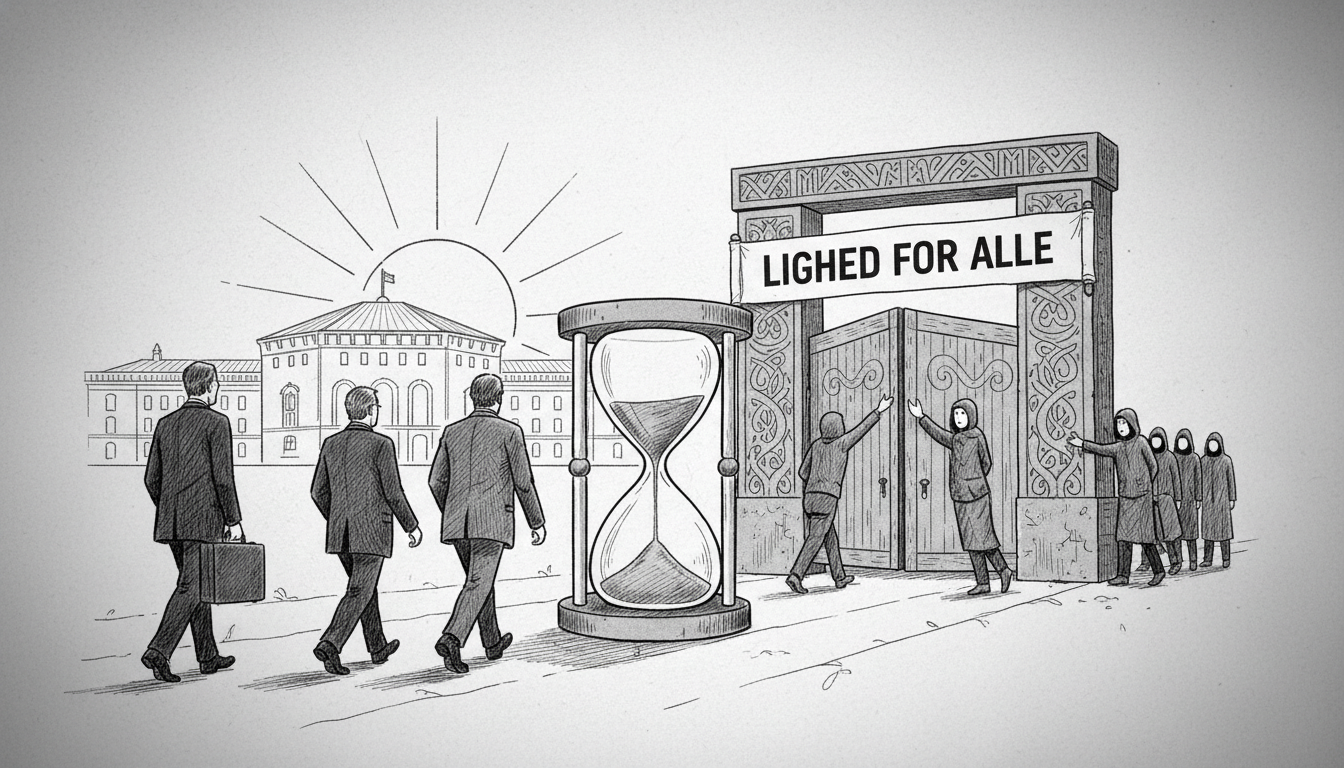
A quiet but significant change is happening in the Danish welfare system. For decades, former members of parliament enjoyed a unique privilege regarding early retirement pensions. They could receive a special 'MP early pension' and keep it unchanged even if they later returned to work. This practice has now been stopped by the parliament itself. The decision highlights a long-standing double standard within the Danish social policy framework. Ordinary citizens face a very different reality when navigating the welfare state.
For the average Dane, applying for an early retirement pension, or 'førtidspension', is a notoriously difficult process. It involves lengthy work capability assessments, resource mapping programs, and bureaucratic hurdles that can last for years. The system is designed to be restrictive, ensuring only those with permanently reduced working capacity receive support. If a regular pensioner later earns income, their pension payments are reduced accordingly. This contrast with the parliamentary system has sparked deep public unease, a sentiment often discussed in Copenhagen integration centers and social policy forums.
Henrik Sass Larsen, the former group chairman for the Social Democrats and a former business minister, is one notable example of a politician who utilized this special pathway. The existence of such a streamlined 'backdoor' for elected officials, while their constituents struggled with complex procedures, became increasingly difficult to justify. The parliament's move to end the privilege is a direct response to this growing perception of unfairness. It touches on core values of equality and trust that underpin the Danish welfare model.
This policy shift is more than a simple administrative change. It speaks to broader questions about integration and social cohesion in Denmark. When different rules apply to different groups, it can erode public trust in institutions. Municipalities and social centers across the country work daily to integrate newcomers and support vulnerable citizens under the standard, rigorous rules. The previous MP pension exception stood in stark contrast to the principles of universalism taught in those very spaces. The reform aligns the rules for politicians with those for everyone else, removing a symbolic barrier between the elected and the electorate.
What does this mean for Denmark's social contract? The change suggests a recognition that the welfare system's legitimacy depends on perceived fairness. Statistics on integration and social mobility often show that trust in public institutions is a key factor for successful societal participation. By eliminating this special treatment, the Folketing is making a statement about shared responsibility. The move is likely welcomed by community leaders and advocates who have long argued for a single standard of justice within the Danish welfare system. It is a small but meaningful step toward reinforcing the principle that the same rules must apply to all, regardless of former title or position.