
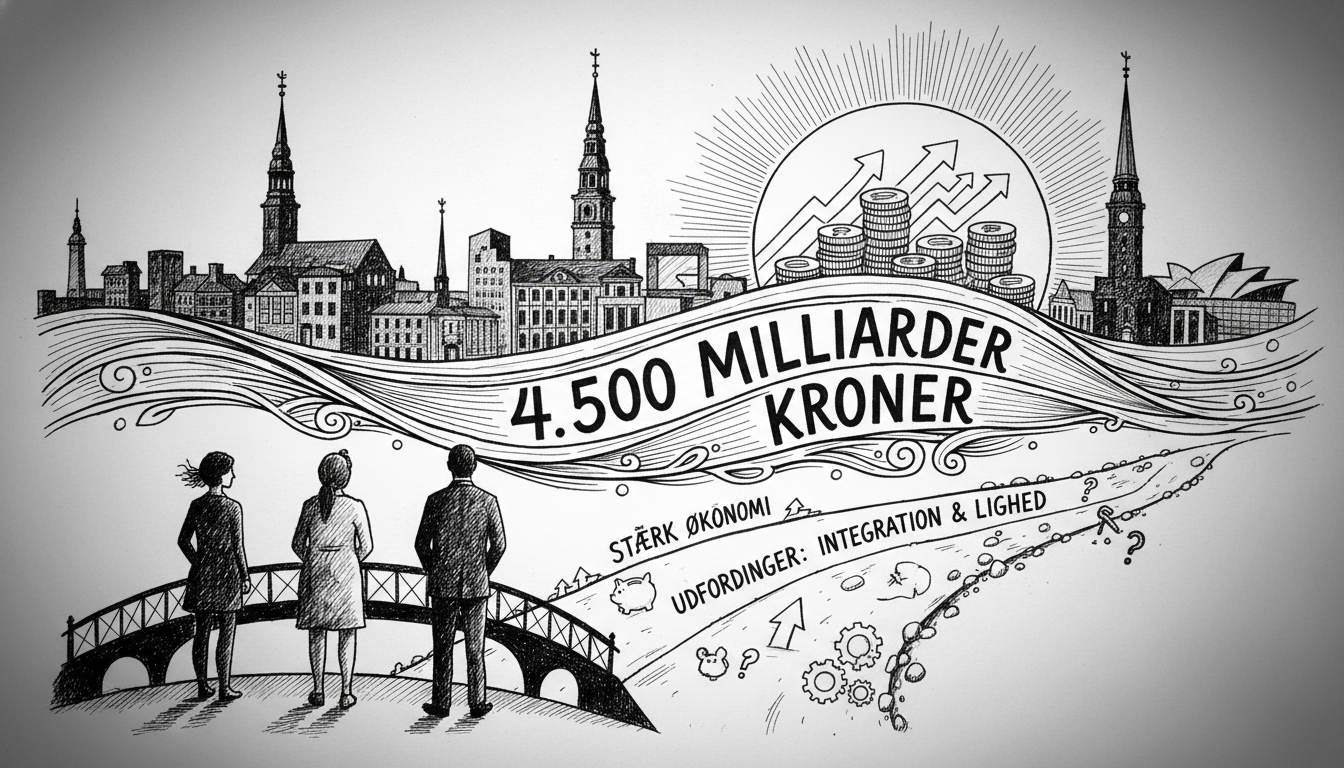
Danish pension savings have reached a historic high, crossing a major financial threshold for the first time. The total collective pension fortune of Danes rounded 4,500 billion kroner at the close of the third quarter. Precise figures from the central bank, analyzed by pension company Sampension, show the fund reached 4,512.4 billion kroner. This marks an increase of about 119 billion kroner from the previous quarter.
Helle Dalsgaard, chief advisor at Sampension, explained the positive trend in a written comment. She said the development connects strongly to favorable winds on stock markets since mid-April. Good progress in Danish pension contributions this year also contributed to the growth in the pension fortune, she noted.
This milestone matters deeply within the context of the Danish welfare system. The pension system, or 'folkepension', is a cornerstone of Danish social policy, designed to provide security in old age. The recent growth suggests resilience in a model often scrutinized for its sustainability amid demographic shifts. For international observers, this data offers a key indicator of economic confidence and long-term planning in Danish society. High pension wealth reflects not just market performance but also a cultural commitment to collective savings and future security.
From an integration perspective, such financial stability within the core welfare system presents both opportunities and benchmarks. Newcomers to Denmark navigate a complex landscape of mandatory labor market pensions and voluntary schemes. Success in this area is a critical measure of long-term economic integration. Municipalities and social centers in Copenhagen and beyond often highlight pension literacy as part of broader integration efforts. Understanding this system is crucial for achieving financial independence and fully participating in the Danish social contract.
The rising tide of pension wealth, however, does not lift all boats equally. Disparities often exist based on employment sector, career length, and arrival time in Denmark. While the aggregate number is impressive, it masks variations in individual preparedness for retirement. This growth likely reinforces the existing structure, potentially widening the gap between those fully embedded in the formal labor market and those on its margins. The system's strength relies on continuous high employment and steady contributions, factors that can be challenging for some immigrant groups and their descendants.
What comes next? Continued market volatility could test this new peak. Policy debates will likely intensify around pension age adjustments and contribution rates to maintain the system's robustness. For the average Dane and resident, this news translates to a slightly more secure projected future, but it also underscores the system's dependence on global economic forces and domestic employment trends. The real test is whether this collective wealth translates into dignified aging for all segments of an increasingly diverse Danish population.