
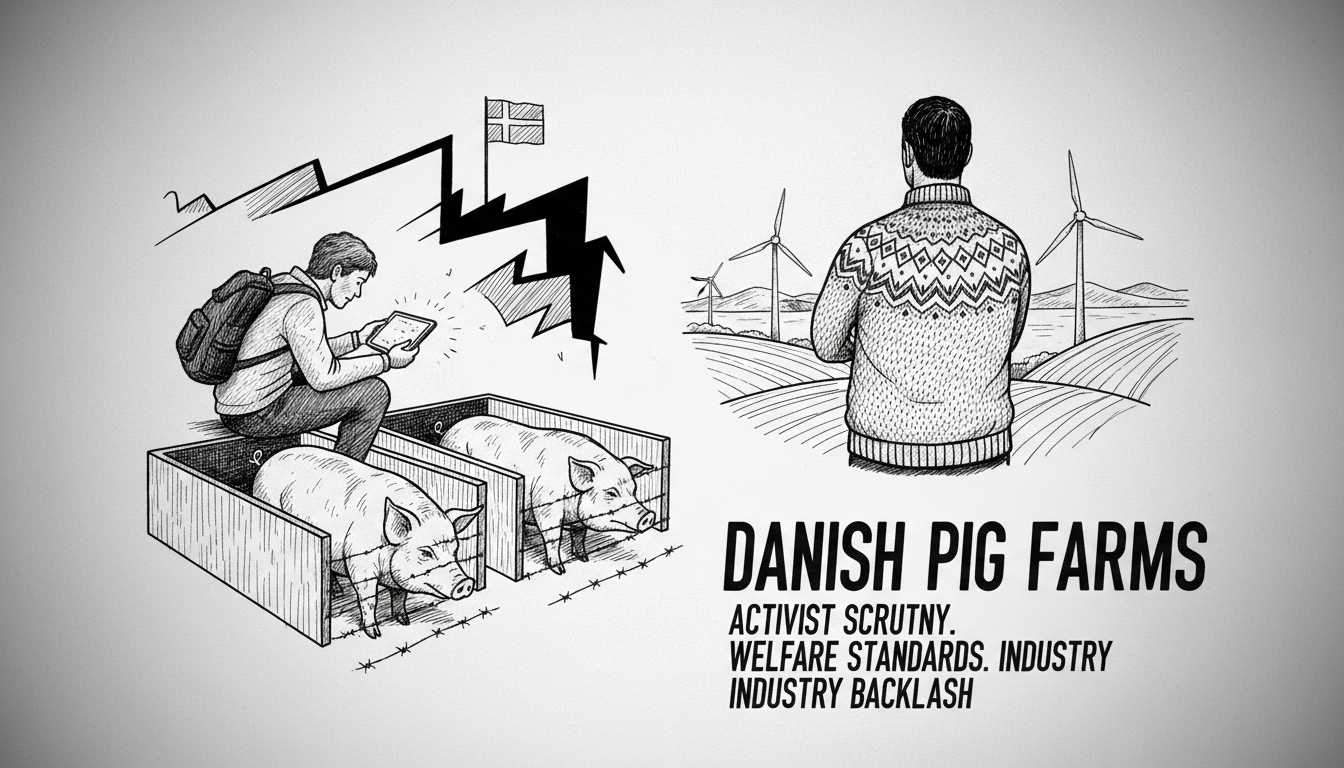
Danish agriculture faces mounting pressure as undercover activists document conditions in pig farms across the country. The recordings reveal animals with open wounds, undernourished pigs, and livestock trapped in stall equipment. Industry leaders condemn the methods while acknowledging some welfare issues require attention.
Farmers express outrage over unauthorized entries into their facilities. Jeppe Bloch, Chairman of Danish Pig Producers, calls the break-ins unacceptable. He emphasizes the biosecurity risks and potential economic consequences for Denmark's pork industry. The sector represents substantial export revenue, with pork exports traditionally ranking among Denmark's top agricultural exports.
Ulrik Bremholm, Vice Chairman of Agriculture & Food and board member at Danish Crown, describes the activists' actions as boundary-crossing. He states the unauthorized entries violate private property rights and disease control protocols. Both industry leaders confirm investigating the documented conditions within their operations.
Activists defend their methods despite legal consequences. One participant argues the public interest justifies documenting farm conditions. They claim to follow biosecurity protocols during nighttime visits, wearing disposable suits and gloves. The campaign follows previous documentaries questioning Danish pig welfare standards.
The Odense court issued a temporary injunction against publishing footage from one farm. Legal experts note such cases often balance property rights against public interest considerations. Denmark's animal welfare laws require proper care and housing for livestock.
This controversy emerges as Danish agriculture navigates evolving consumer expectations and export market requirements. Major importers increasingly demand documentation of animal welfare standards. The Danish pork industry supplies markets across Europe and Asia, making production standards economically significant.
Industry representatives acknowledge room for improvement while defending overall standards. Bloch states he takes animal welfare extremely seriously but acknowledges imperfections. The conflict highlights ongoing tensions between agricultural production methods and evolving societal expectations.
International markets monitor such developments closely. Denmark exports approximately 90% of its pork production, with Germany, China, and Poland among key destinations. Any perception issues could affect trade relationships and export revenues.
The situation reflects broader European debates about farming practices and transparency. Similar activist campaigns have emerged in neighboring countries, prompting industry responses and policy discussions. Danish authorities typically investigate verified welfare violations.
Agricultural organizations emphasize their commitment to addressing legitimate concerns through proper channels. They encourage reporting through official inspection systems rather than unauthorized entries. The industry faces the dual challenge of maintaining productivity while meeting rising welfare expectations.