
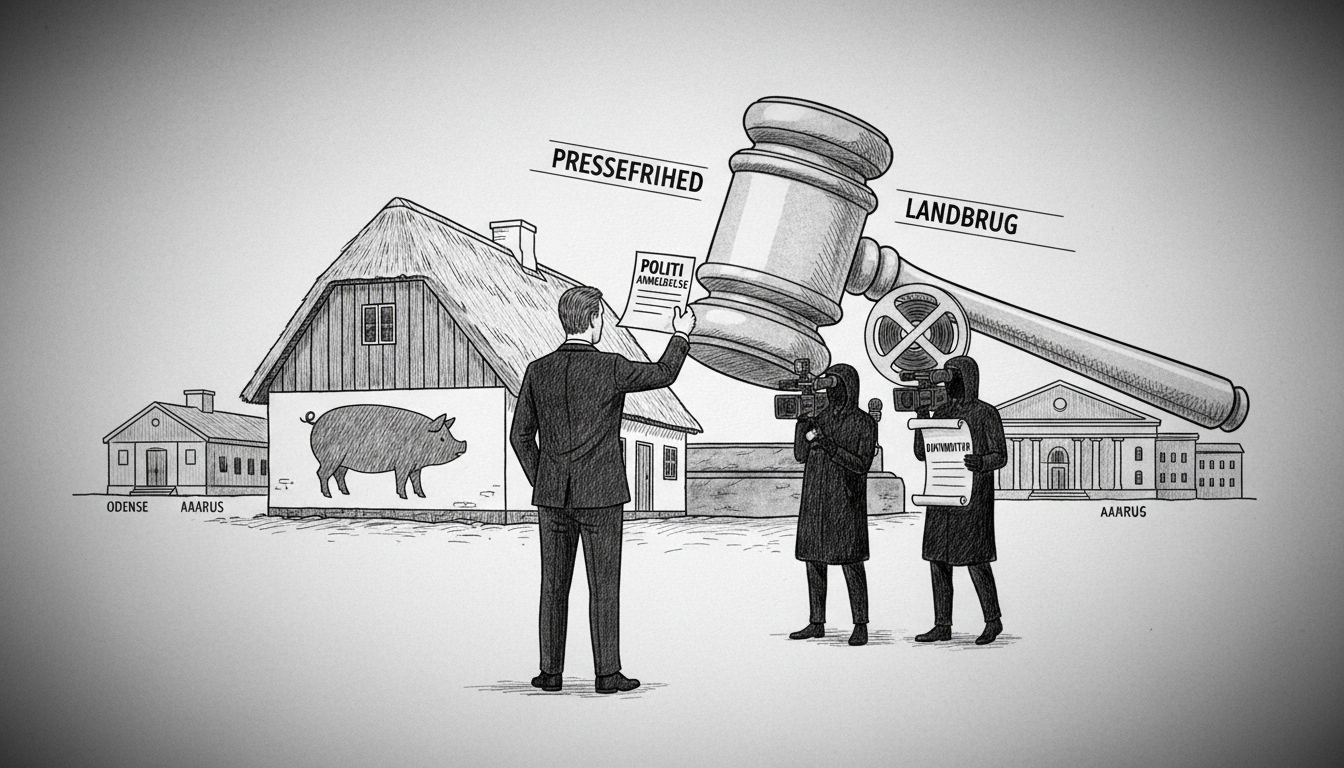
The chairman of Danish Pig Producers has filed a police report against a television broadcaster and production company. Jeppe Bloch Nielsen seeks to prevent the airing of an upcoming documentary about conditions in Danish pig farms. The case centers on video footage allegedly obtained illegally by unknown persons who broke into several agricultural facilities.
The police report targets both the broadcaster and production company Kompagniet. Industry leaders claim the footage shows unauthorized recordings from their properties. Both Nielsen and H.C. Gæmelke, chairman of the pig sector at Agriculture & Food, confirm the videos were filmed in their stables.
This represents an escalation in the ongoing tension between Danish agricultural interests and media investigations. The production company maintains they received the footage anonymously following their previous documentary "Who's Looking After the Pigs?" They deny conducting the recordings themselves.
The new documentary shares the same title as last year's investigation and is scheduled to premiere on Wednesday. Simultaneously, Danish Pig Producers have requested injunctions and evidence preservation orders in both Odense and Aarhus courts. These cities host the offices of the involved media companies.
The Odense court has scheduled the case for Monday. Nielsen defends his legal action with a pointed analogy. He asks whether someone could be convicted for receiving stolen goods even if they didn't commit the theft. He argues the media organizations are disseminating illegally obtained material.
This case highlights the delicate balance between press freedom and property rights in Denmark. The country maintains strong protections for both investigative journalism and agricultural business interests. Similar conflicts have emerged across Scandinavia in recent years as undercover investigations into farming practices have increased.
International observers will watch this case closely. Denmark ranks among the world's largest pork exporters, making farming practices a matter of both domestic concern and international trade implications. The outcome could influence how media organizations handle anonymously provided footage across the Nordic region.
The timing coincides with increased European scrutiny of animal welfare standards. Denmark's agricultural sector faces pressure to demonstrate transparency while protecting business operations from what they consider illegal intrusions.
The court's decision next week may set important precedents for media law and agricultural regulation in Denmark. Both sides appear prepared for a legal battle that could extend beyond the initial hearing.