
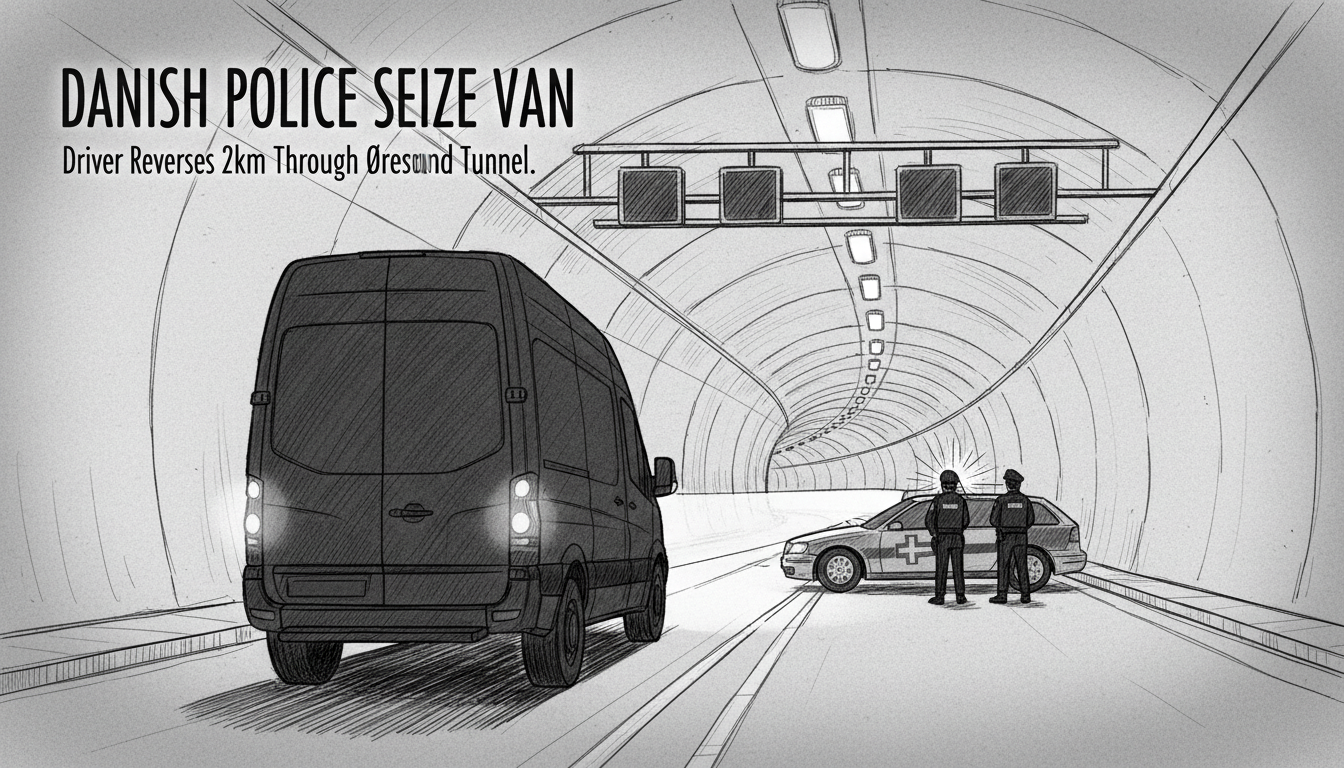
Copenhagen police seized a van on Monday morning after its driver reversed two kilometers through the Øresund Tunnel connecting Denmark and Sweden. The incident occurred during morning rush hour, creating a dangerous situation on one of Scandinavia's busiest transportation routes.
Police Commander Henrik Stormer confirmed officers charged the 36-year-old Danish driver with reckless driving. The charge falls under Denmark's strict traffic laws designed to prevent dangerous behavior on roadways. Stormer explained the reasoning behind the serious charge in a police statement. He said reversing such a long distance on a highway clearly qualifies as reckless driving under Danish law.
The Øresund motorway's final exit before Sweden has been closed since late October due to crane work near Copenhagen Airport in Kastrup. This temporary closure has created confusion for some drivers. Police have recorded multiple instances of motorists accidentally heading toward Sweden then choosing to reverse. This case marks the first time someone reversed against traffic flow over such an extensive distance.
Traffic monitoring services detected the reversing vehicle and immediately closed a barrier. This preventive action stopped other cars from entering the tunnel from the Danish side. The quick response likely prevented more serious consequences on the busy international route.
Denmark strengthened its traffic legislation in recent years under the "Stop Reckless Driving" initiative. The updated laws increased penalties for various traffic violations. They also granted authorities power to confiscate vehicles in particularly serious cases. Police can now temporarily seize vehicles while awaiting court decisions about permanent confiscation.
Vehicle confiscation means ownership transfers to the state. Losing one's car represents a substantial consequence beyond traditional fines under Denmark's progressive traffic safety approach. The airport exit on the Øresund motorway will remain closed through late November according to current plans.
This incident highlights ongoing challenges with the temporary road configuration. It also demonstrates Denmark's strict enforcement of traffic safety regulations. The country maintains some of Europe's most comprehensive welfare and social protection systems. These systems depend on public safety and orderly infrastructure functioning properly.
Danish integration policies often emphasize rule-following and social responsibility. This case shows how traffic enforcement connects to broader social cohesion principles. The driver's choice to reverse rather than find an alternative route reflects either desperation or disregard for collective safety.
International readers should understand Danish authorities take traffic violations seriously. The country's social contract depends on mutual responsibility. This includes following road rules designed to protect all users. The temporary tunnel situation has created unusual circumstances. But the legal response shows consistent application of Denmark's safety-first transportation philosophy.
The Øresund Connection remains vital for regional commerce and daily commuters. Approximately 20,000 vehicles cross the bridge-tunnel complex each day. Maintaining safety on this critical infrastructure remains a top priority for both Danish and Swedish authorities. This incident will likely prompt review of signage and driver communication during future construction projects.