
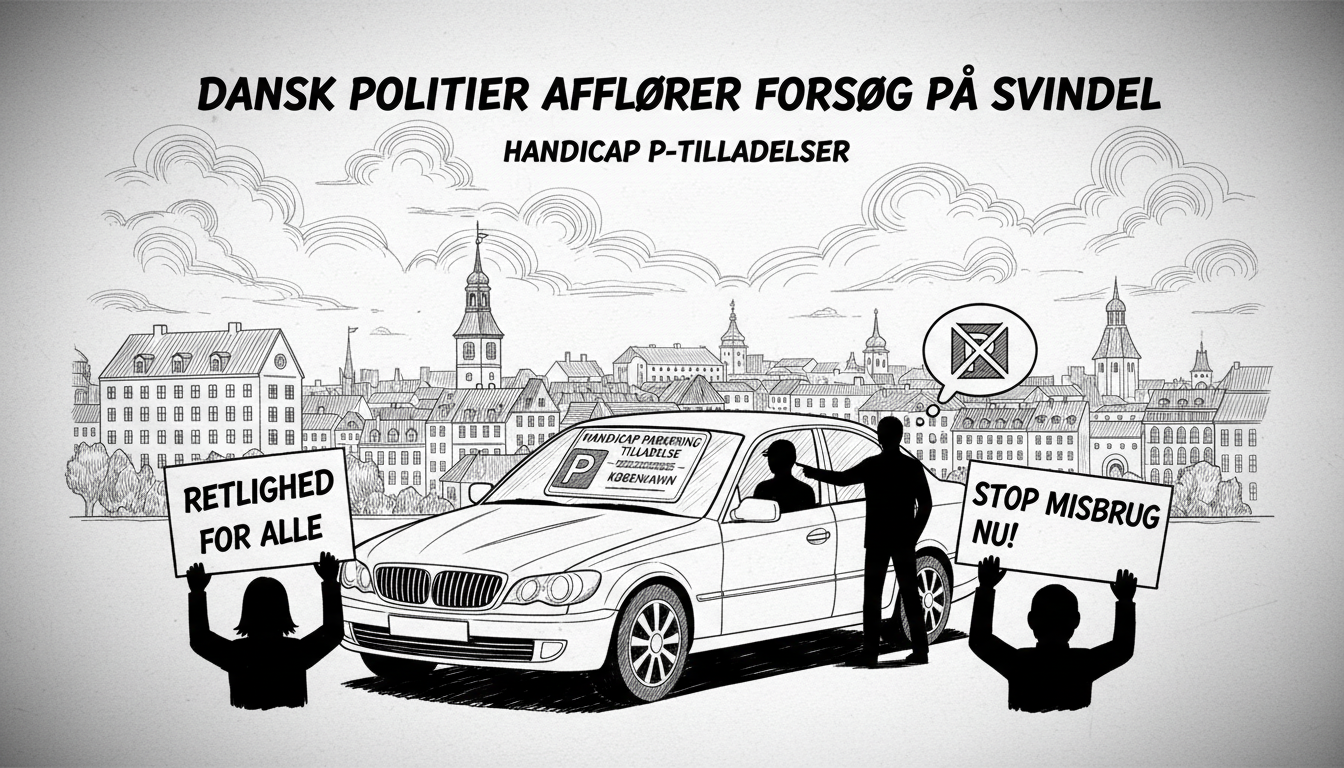
A Danish politician has expressed outrage after discovering a car advertisement on social media that included a personal disability parking permit as a selling point. The post, which has since been deleted, offered a vehicle for sale with the permit included, promising the buyer free parking in Copenhagen's payment zones. This incident has sparked a heated debate about the misuse of vital accessibility tools and the underlying pressures of urban living costs.
Frederik Vad, a young politician from the Social Democrats, found the advertisement in a Facebook group. He described the attempt to sell the permit as making him furious. The seller claimed the permit provided free access to paid parking areas and extended parking in time-limited zones, presenting it as a valuable bonus. Commenters on the post quickly pointed out the illegality, noting that disability permits are personal documents tied to an individual, not a vehicle. The seller initially defended the offer before removing the advertisement.
Katrine Mandrup Tang, director of a major Danish disability organization, clarified the legal position. She stated the action was clearly forbidden. Misusing a valid permit constitutes abuse, while selling a stolen one is forgery. She noted her organization lacks precise statistics but observes a worrying increase in such incidents. Permits are sometimes sold online or even stolen from vehicles. The permits have a name and photo on the back for privacy, with a serial number on the front for verification by parking attendants.
Tang emphasized the real human cost of this fraud. She argued it is not just a victimless crime against a system. It directly harms the person who needs that parking space to shop or pick up their child. This undermines the entire support structure and cheats fellow citizens with genuine needs. The seller, who wished to remain anonymous, responded to the criticism. He claimed he never used the permit to park in designated disability bays. His motivation, he explained, was to make the car more attractive to buyers struggling with Copenhagen's high parking costs, which he said prevent many students and workers from affording trips into the city center for jobs, school, or medical appointments.
This case highlights a tension within Danish social policy. The welfare system is designed with high trust and personal responsibility, but this can be exploited. It also points to broader integration and social challenges in cities like Copenhagen. High living costs can push individuals toward gray-area solutions, creating conflicts between personal hardship and communal rules. For international observers, this is a microcosm of a larger discussion about accessibility, urban planning, and the pressures on the Danish welfare model. Municipalities and social centers often deal with the fallout when systems designed for support are misused due to economic strain. The incident serves as a reminder that maintaining a fair and functional society requires constant vigilance, clear enforcement, and addressing the root economic pressures that can lead to such breaches of trust.
The response from officials and community leaders will be telling. Will this lead to stricter controls on permit issuance and verification, or a deeper conversation about transportation equity in major Danish cities? The story is more than a simple attempted fraud. It is a window into the complex interplay between Denmark's social policies, its high-cost urban centers, and the everyday realities of integration and accessibility.