
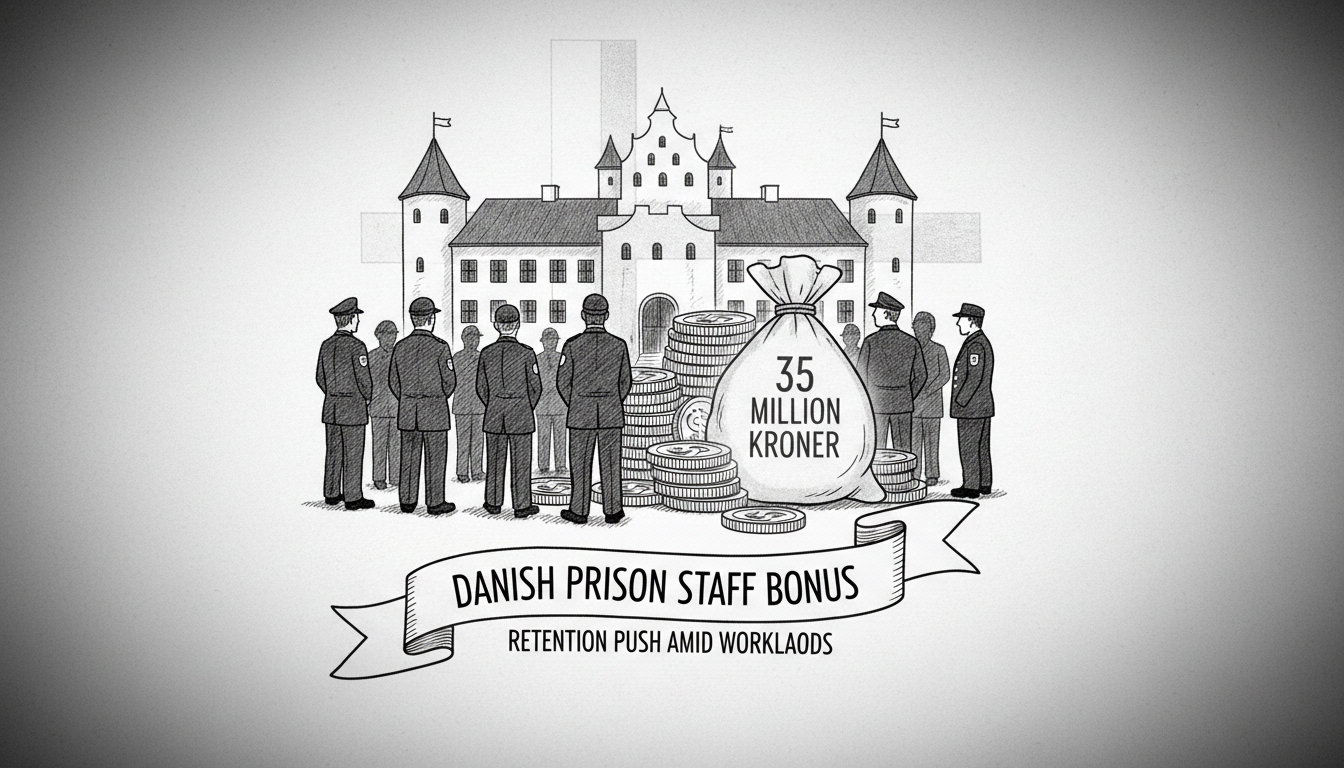
Danish prison officers and uniformed staff will receive a substantial one-time bonus totaling 35 million kroner. The payment is part of a broader 100 million kroner retention package agreed upon by a wide political majority earlier this year. The funds aim to address chronic staffing shortages and high workloads within the Danish prison system.
Justice Minister Peter Hummelgaard announced the measure. He said the government works hard to recruit new staff, but it is equally important to retain existing employees. The bonus serves as direct financial recognition for their demanding work. The agreement originated from broader criminal justice reforms negotiated in June.
Ina Eliasen, Director of Denmark's Prisons and Probation Service, expressed strong support for the payout. She highlighted the daily efforts of uniformed staff who continue to work extensive overtime. The bonus acknowledges this extra burden, she said in an official statement.
The 35 million kroner will be distributed across three tiers in mid-December. Unit leaders, department heads, and section chiefs in prisons and detention centers will receive 21,000 kroner each. Prison officers, workshop supervisors, and transport officers will get 12,100 kroner. Apprentices in these roles receive the same 12,100 kroner amount.
The bonus also extends to merit apprentices and institutional staff at departure centers, who get 12,100 kroner. Internship supervisors receive a smaller bonus of 6,000 kroner. Bo Yde Sørensen, Chairman of the Prison Officers' Union, called the deal an economic pat on the back for a wide range of personnel.
This move reflects deeper economic pressures within Denmark's public sector. While private sector wages in Copenhagen and the Øresund region have risen, public sector roles like prison officers struggle with recruitment. The government is using direct financial incentives to combat this trend. The remaining 65 million kroner from the retention package will be negotiated next year.
The bonus payout is a straightforward response to a difficult labor market. It shows the state is willing to spend to maintain core services. Critics might question the long-term sustainability, but for now, it addresses an immediate staffing crisis. The real test will be whether this one-time payment improves retention rates or if more structural reforms are needed.
For international observers, this story highlights a typical Nordic approach to labor issues. Social dialogue between unions, employers, and the state leads to negotiated solutions. The Danish model prioritizes consensus, even on contentious issues like prison reform. This bonus is a tactical element within a larger strategic agreement, demonstrating how policy and workforce management are intertwined in Denmark.