
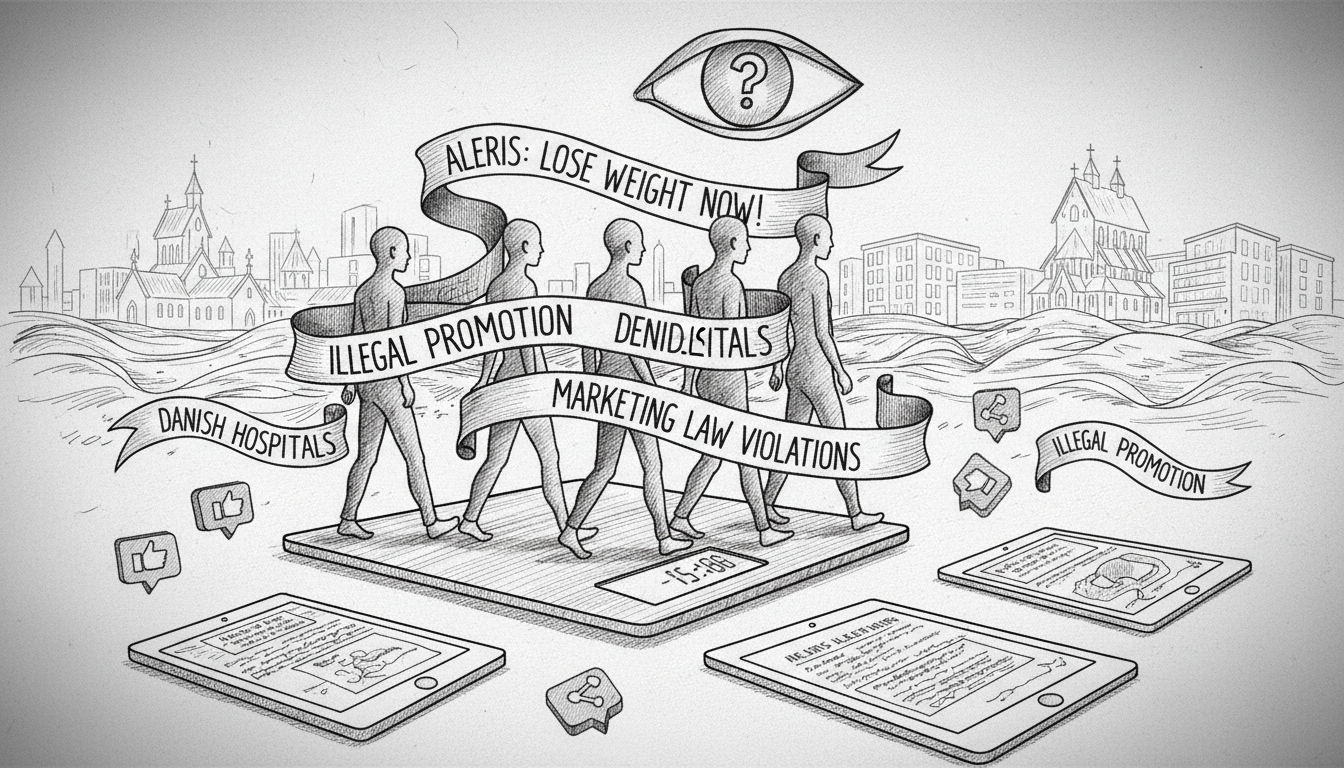
Multiple Danish private hospitals face scrutiny for systematically violating national advertising regulations through social media video campaigns promoting weight loss treatments. Recent investigations reveal widespread non-compliance across the healthcare sector, including major corporate players.
Danish law strictly prohibits marketing health services like weight loss programs through video content on external platforms. Companies may only use film materials on their own websites. Three independent legal experts examined 60 promotional videos and identified consistent regulatory breaches throughout the weight loss industry.
Heidi Højmark Helveg, a marketing law specialist at 3H Law, explained the rationale behind these restrictions. "There's a major difference between selling clothing and selling health services," she said in an interview. "We have stricter regulation for health services because of the risk of overtreatment. Consumers might purchase something they neither need nor can afford.
The investigation uncovered that Scandinavia's largest private healthcare provider Aleris, which operates multiple facilities across Denmark and generates over seven billion Swedish kronor annually, repeatedly violated marketing laws. The corporation employs more than 5,000 staff across Denmark, Sweden and Norway.
Aleris acknowledged the violations and committed to removing the criticized videos from Instagram. The company simultaneously accused competitor Privathospitalet Mølholm of similar infractions. Both healthcare providers have now admitted to unlawful social media marketing and promised to take down non-compliant content.
Birgitte Drewes, deputy director at the Danish Patient Safety Authority, admitted her agency lacks resources to monitor all social media marketing. "The internet and social media are enormous, with massive amounts of marketing content," Drewes stated. "It would be a huge task to follow up on everything."
The authority primarily relies on specific reports about companies conducting illegal marketing. When violations are identified, the agency contacts the company with removal orders. Failure to comply can lead to police reports and potential fines, though the authority itself cannot issue penalties directly.
Mona Ebdrup from the Association for Weight-Neutral Health criticized this enforcement approach. "If there aren't greater consequences, companies might just repeat the violations after six months or a year," Ebdrup argued. She pointed to Aleris as an example, noting the company received warnings in 2023 yet continued posting illegal videos.
Ebdrup expressed concern about emotional manipulation in weight loss marketing. "We get this glorified message that weight loss is the direct path to happiness and health," she observed. "These videos heavily play on emotions and try to make people feel they're not good or healthy enough."
The regulatory challenge reflects broader issues in digital age enforcement. Drewes acknowledged the fundamental limitation comes down to resources. "Ultimately, the controlling factor for what we can do is how many people we can pay to follow up on this," she said. "That's a political decision."
This situation highlights the tension between rapid digital marketing evolution and traditional regulatory frameworks. As healthcare companies increasingly turn to social media for patient acquisition, oversight mechanisms struggle to keep pace with both technological change and corporate creativity in circumventing rules.
The repeated violations by major corporations suggest current deterrents remain insufficient. Without meaningful financial penalties or stronger enforcement capabilities, the pattern of violation and temporary compliance seems likely to continue across Denmark's private healthcare sector.