
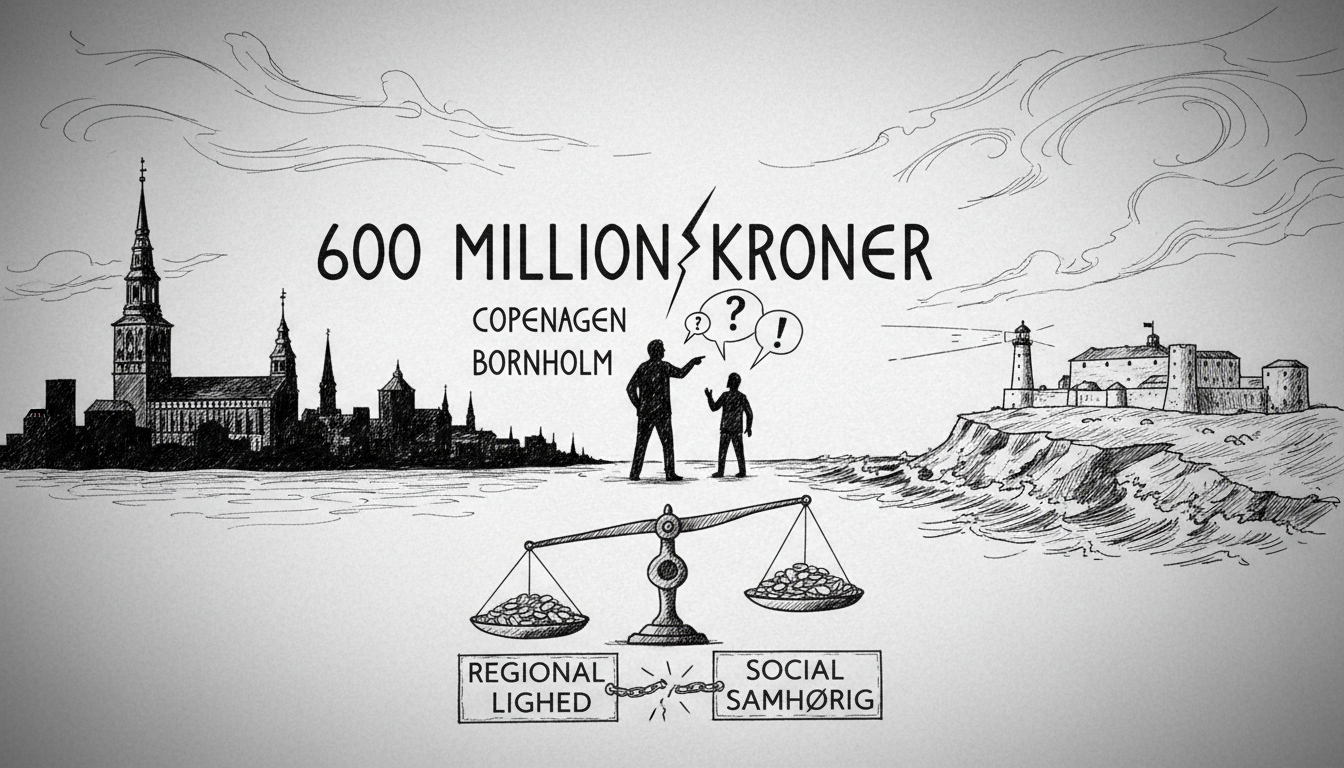
A heated debate over public broadcasting funding has erupted in Denmark. The core issue involves the annual allocation of nearly 600 million kroner for regional television stations. A recent expert proposal has ignited a fierce argument about resource distribution. Should Copenhagen and Zealand receive more funding and channels at the expense of Bornholm? This question now sits at the center of a national conversation about equity and regional representation.
The expert panel presented its recommendations earlier this week. Their suggestions for the future structure of regional television have drawn immediate criticism from multiple sides. The debate transcends simple media policy. It touches on deeper questions about Denmark's commitment to its remote communities. Bornholm, an island in the Baltic Sea, often feels disconnected from mainland political decisions. This funding fight exemplifies that tension in a very tangible way.
From an integration and social policy perspective, this conflict is telling. Public media serves as a crucial tool for social cohesion. It informs citizens and fosters a shared national identity. When funding discussions pit urban centers against rural areas, it risks weakening that unifying fabric. For international residents and new citizens, understanding local news and culture often starts with accessible public broadcasting. A reduction in regional coverage could hinder integration efforts outside major cities.
Community leaders in smaller municipalities frequently emphasize this point. They argue robust local media is vital for democratic participation. It allows residents to engage with issues affecting their daily lives. A spokesperson for a cultural center on Bornholm recently highlighted this concern. They said regional television is not just entertainment but a lifeline to the broader Danish society. Cutting that lifeline would have real social consequences.
The Danish welfare model is built on principles of fairness and equal access to services. This includes cultural and informational services. The current debate tests whether those principles extend to the media landscape. Will all Danes have equal access to locally relevant news and programming? Or will geography determine the quality of public service received? These are the underlying questions policymakers must answer.
Statistics on media consumption show a clear divide. Urban populations increasingly use digital and international platforms. Rural and older populations still rely heavily on traditional broadcast television. This technological shift adds another layer to the funding debate. Allocating resources requires understanding these changing habits. It also requires a commitment to serving all demographic groups, not just the most digitally connected.
The straightforward reality is this. Funding fights often reveal political priorities. The way Denmark resolves this dispute will signal what it values more. Is it the dense, influential population of the capital region? Or is it the principle of supporting all its territories equally? The answer will shape Danish society news for years to come. The discussion is about more than television. It is about who gets a voice and who gets seen in modern Denmark.