
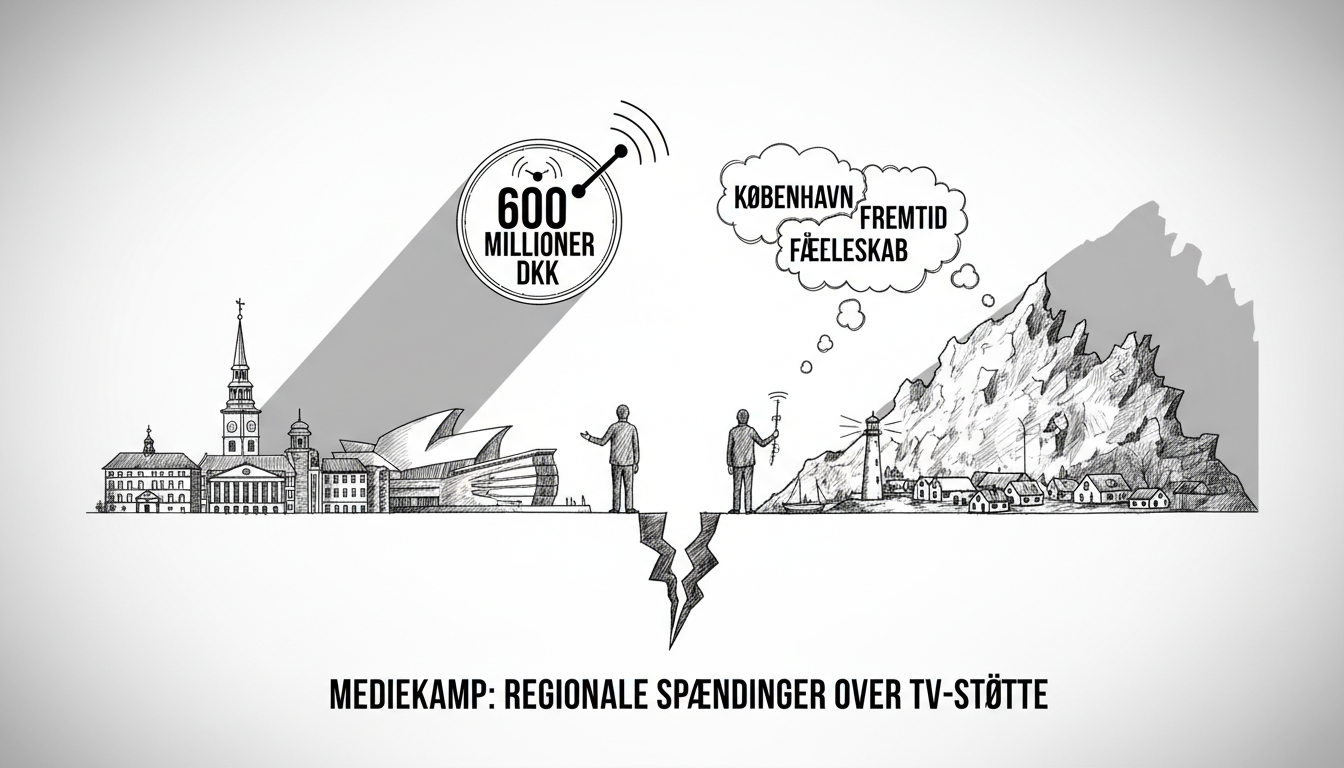
A fierce debate over public television funding has erupted across Denmark. The core issue involves nearly 600 million kroner allocated annually to regional TV stations. A new expert report proposes changes to how this money is distributed. This has ignited a political battle with clear regional winners and losers. The central question pits Copenhagen and Zealand against the island of Bornholm. Will the capital region gain more stations and funds at the expense of the smaller island community?
Experts presented their recommendations earlier this week. The proposals immediately faced criticism from multiple sides. Community leaders in remote areas express deep concern. They argue that regional media is a vital lifeline. It connects citizens to local democracy and cultural events. For islands like Bornholm, a local TV station is not just entertainment. It is a crucial tool for social cohesion and public information. Losing funding could mean losing a distinct regional voice.
This conflict reflects a persistent tension in Danish social policy. The welfare system aims for equitable service distribution nationwide. Yet urban centers often attract more resources and attention. The integration of diverse communities in Copenhagen receives substantial policy focus. Meanwhile, supporting remote Danish communities presents a different challenge. It requires investment in infrastructure and services to prevent population decline. Public broadcasting sits at the intersection of culture, information, and regional equality.
Municipal officials from smaller regions are vocal in their opposition. They say the proposed shifts contradict the principle of geographical balance. A community leader from a remote municipality framed it as a question of fairness. They asked if all Danish citizens deserve equal access to public service media. The answer seems uncertain as the debate intensifies. Copenhagen's dynamic media landscape and integration needs are real. But so are the needs of communities outside the capital.
Statistics on media consumption show clear patterns. Urban residents increasingly use digital and international platforms. In many rural areas, traditional regional TV maintains a stronger hold. This disparity informs the expert recommendations. Some analysts suggest the report simply acknowledges changing viewer habits. They argue it attempts to modernize a costly system. The political reality is more fraught. No government wants to be seen neglecting any part of the country.
The coming months will test Denmark's commitment to regional equity. The allocation of these 600 million kroner is more than a budget line. It is a statement about whose stories get told and whose communities are valued. The debate touches on core aspects of Danish society. It involves the welfare system's reach and the cultural integration of all regions. The final decision will reveal much about current political priorities. It will show whether economic efficiency or social cohesion carries more weight in today's Denmark.