
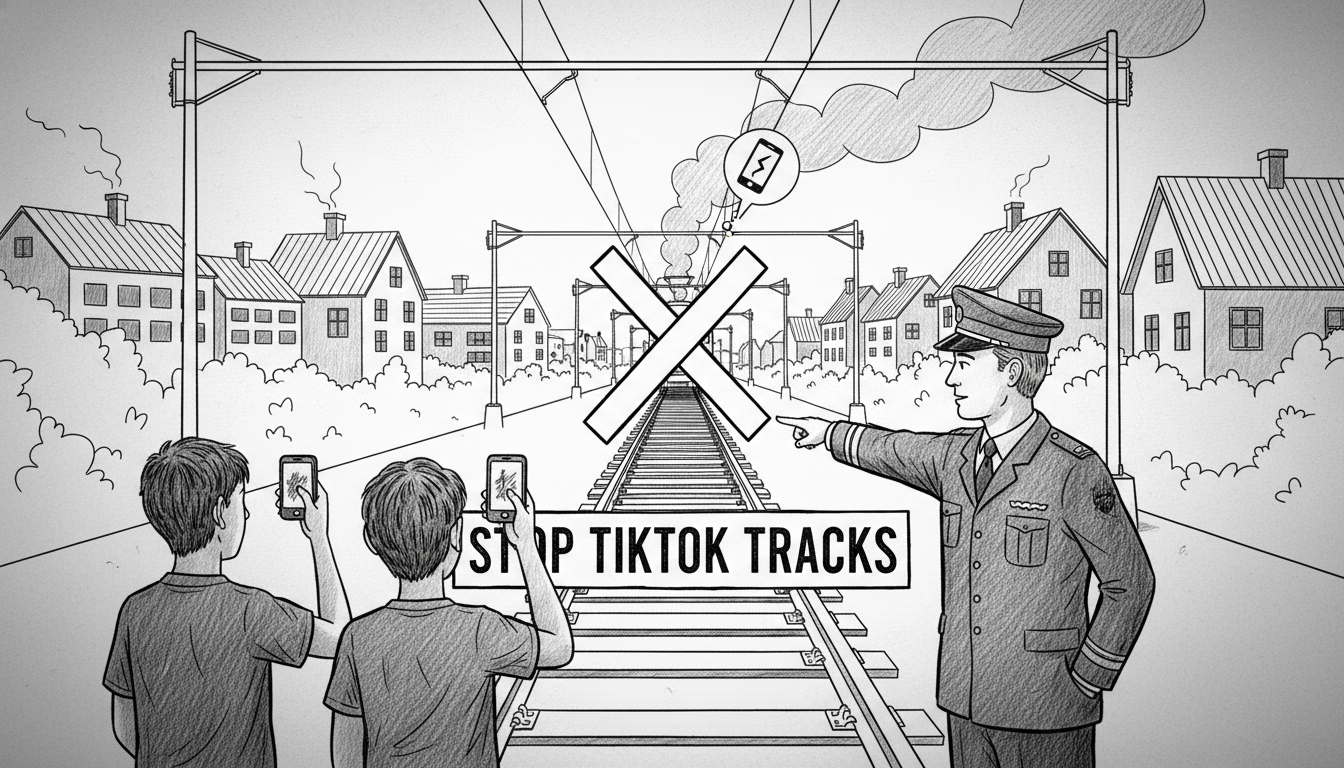
Danish railway authorities have launched a nationwide safety campaign targeting schools near train tracks. The initiative responds to growing concerns about children filming TikTok videos on active railway lines. Officials report over 78 dangerous incidents involving minors at railway stations and tracks this year alone.
Railway company representatives are visiting schools located near railway infrastructure. They deliver crucial safety messages about the dangers of trespassing on tracks. The program specifically addresses the trend of taking selfies and filming content on railway lines.
Camilla Halvorsen, a senior advisor with the railway authority, expressed serious concerns about this development. She said the increase in young people occupying tracks is worrying. Young people want to look cool taking selfies on the tracks, but they underestimate how dangerous this really is, Halvorsen explained in a public statement.
Trains cannot perform emergency stops quickly, even at low speeds. This physical reality makes railway lines extremely dangerous places for photography sessions. The campaign aims to educate children before accidents occur.
This situation reflects broader challenges in Danish society regarding youth behavior and public safety. Danish municipalities have long prioritized safety education in schools. Yet social media trends sometimes override these traditional safety messages.
The Danish welfare system typically addresses such issues through preventive education. This railway safety initiative follows that established pattern. It represents another example of Denmark's proactive social policy approach.
Integration policies in Copenhagen and other urban areas often focus on safety education for all residents. This railway safety campaign extends that principle to native Danish youth as well. It shows how social media trends create new safety challenges across all demographic groups.
Railway officials plan to continue their school visits throughout the current quarter. They aim to reach every school located within 500 meters of railway tracks. The program includes interactive presentations and real-life safety demonstrations.
Parents and teachers have largely welcomed the initiative. Many acknowledge struggling to compete with social media influences. This direct intervention from authorities provides crucial reinforcement of safety messages.
The Danish approach to this problem reflects the country's broader social welfare philosophy. Rather than waiting for tragedies to occur, authorities take preventive action. This demonstrates the practical application of Denmark's famous safety-first culture.
Similar educational campaigns have proven effective in other Nordic countries. Norway and Sweden have implemented comparable programs with positive results. The Danish version adapts these proven approaches to local conditions.
As social media continues evolving, such safety initiatives will likely become more common. They represent a necessary adaptation to new technological realities. The Danish model shows how traditional welfare systems can address modern challenges effectively.