
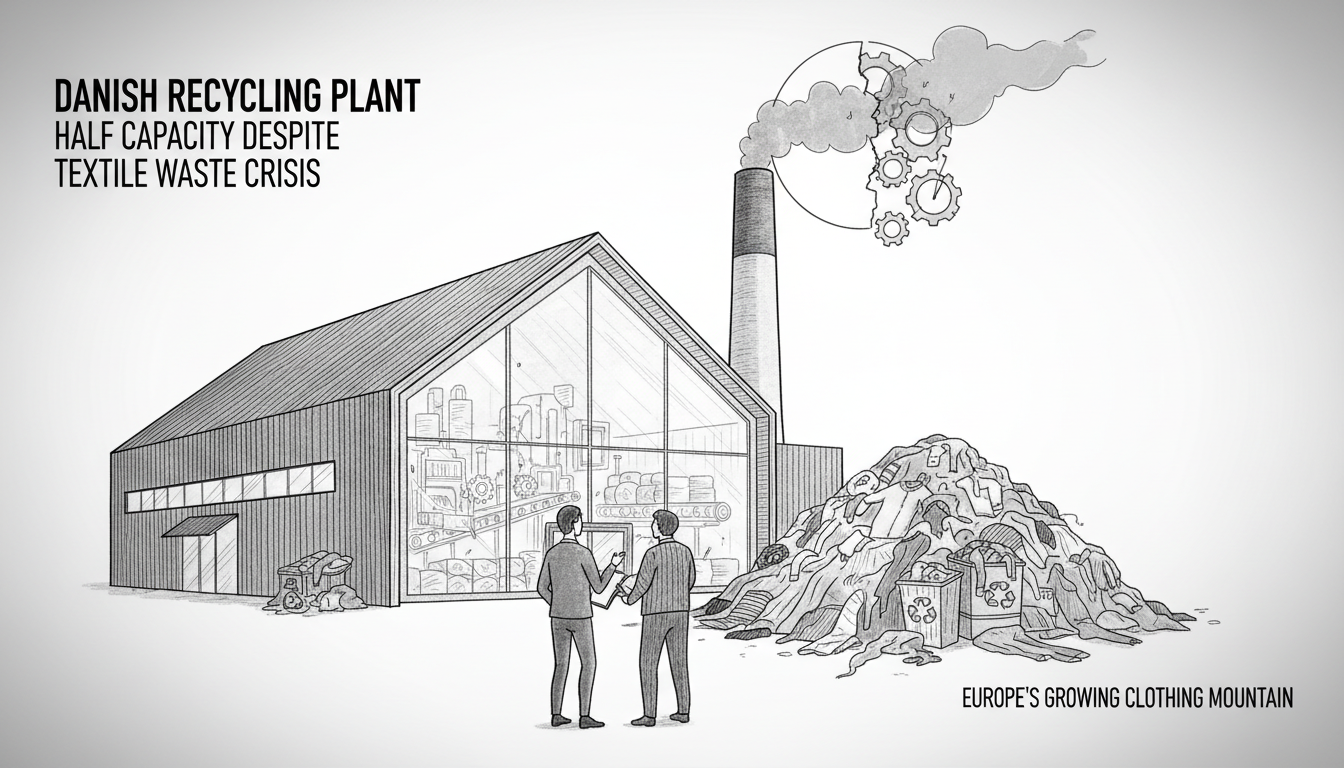
A Danish textile sorting facility possesses unique technology to handle Europe's clothing waste. The plant could process twice its current volume but shuts down daily at 2 PM. This happens despite growing mountains of discarded textiles across Scandinavia.
Truck after truck delivers worn-out clothing to Drammelstrup recycling center in Syddjurs. Each vehicle carries nearly 3,000 kilograms of textiles destined for the facility in Bjerringbro, Central Jutland. The cargo includes jeans, T-shirts, bedding, towels, and dresses that consumers no longer want.
Denmark textile recycling faces operational constraints that puzzle environmental experts. The plant represents one of Europe's few specialized facilities tackling fashion industry waste. Its advanced sorting technology can identify and separate different fabric types automatically.
Why does such a valuable resource operate below capacity? The answer involves complex funding models and municipal waste management contracts. Scandinavian countries typically lead in environmental innovation, making this underutilization particularly striking.
European Union regulations will soon require separate textile collection across member states. Denmark's early investment in sorting infrastructure positioned it ahead of this mandate. Yet the Bjerringbro facility's partial operation suggests implementation challenges remain.
Textile waste represents a growing environmental concern throughout the Nordic region. Fast fashion and shortened clothing lifecycles create unprecedented disposal problems. Each Dane discards approximately 11 kilograms of textiles annually, totaling over 60,000 tons nationwide.
The plant's situation reflects broader tensions in circular economy transitions. Technology exists to handle waste streams, but economic and logistical barriers persist. Municipal budgets, collection systems, and processing capacity must align for effective solutions.
What happens to textiles that don't reach sorting facilities? Many end up in incinerators or landfills despite their potential for recycling. Natural fibers could compost, while synthetics might be repurposed into new products.
International observers watch Nordic environmental solutions for transferable models. Denmark's partial success with textile sorting offers both inspiration and caution. The gap between technical capability and practical implementation remains significant.
Scandinavian waste management systems typically achieve high recycling rates for materials like paper and plastic. Textiles present unique challenges due to mixed materials and contamination. The Bjerringbro facility's advanced sorting technology addresses these difficulties but requires full utilization.
Looking forward, expanded operating hours and increased throughput seem logical next steps. Growing textile waste volumes demand corresponding processing capacity. Denmark's investment in specialized infrastructure should yield maximum environmental returns through optimized operation.