
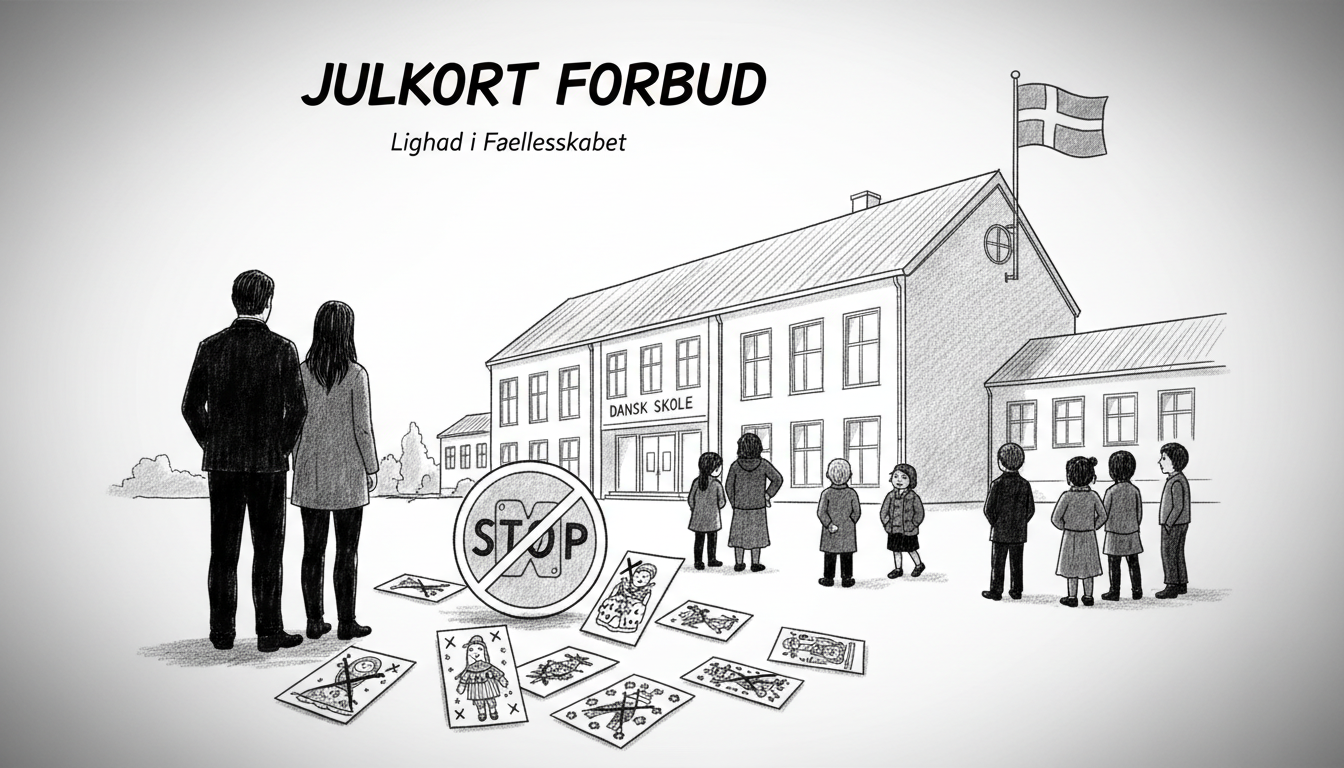
A primary school in Roskilde has taken a firm stance against a modern Christmas tradition. The school has banned students from bringing and trading collectible cards from the popular TV advent calendar 'Valdes Jul'. School principal Kasper Broeng explained the decision came after observing how the cards created social friction among pupils. He described how the trading led to an 'inappropriate dynamic' between children, with older students pressuring younger ones and competition over who had the most cards overshadowing the festive spirit. This move highlights a growing tension in Danish society between commercial childhood trends and the educational values promoted within the welfare state's school system.
Broeng framed the ban as part of the school's broader educational mission. 'The school is a training ground for the reality on the other side, and we take that task seriously,' he said. He compared the cards to mobile phones, arguing that schools must carefully manage such influences. The core issue, he stated, is that the cards create a dynamic based on which parents shop at specific stores. 'That is not what we want to support as a school,' Broeng concluded. This reflects a classic Danish social policy approach where public institutions are seen as buffers against market forces, aiming to create an equal playing field for all children regardless of family background.
The cards are distributed through a major retail promotion. To obtain a pack containing three cards, consumers must spend 100 Danish kroner at stores owned by the Salling Group. With 48 different cards in the complete set, acquiring them all requires significant spending. A retail group spokesperson stated the promotion is 'not a good business' financially but is done because many families enjoy it. The group also noted it donates a portion of proceeds to children's charities. Meanwhile, the television broadcaster behind the advent calendar emphasized that collecting the cards is entirely optional and not required to enjoy the program.
Reactions from other educational stakeholders show this is a widespread, if inconsistently managed, phenomenon. Regitze Spenner, chair of a national parent-school organization, confirmed schools handle the card trend in various ways. 'Some choose to have days where you can bring cards. Some choose that you do not have the cards at school at all, and others have no restrictions or guidelines,' she said. She supported the Roskilde school's specific ban as a fine solution for their context. Spenner suggested all school boards should discuss such trends to determine if they need a formal stance to create the best school day for every child.
The trading frenzy extends far beyond the schoolyard. Online Facebook groups dedicated to buying, selling, and swapping these cards have thousands of adult members, showing the trend's deep cultural penetration. This creates a complex challenge for educators. They must navigate a popular cultural event that brings joy to many families while mitigating its negative social consequences within the school's protected space. The situation touches on core themes in Danish society news: integration of commercial culture into public life, the role of schools in social policy, and maintaining community cohesion in Copenhagen and other municipalities.
From an integration and social policy perspective, this story is about more than just Christmas cards. It is a microcosm of how Danish institutions actively shape social norms to support egalitarian values. The school's intervention is a direct application of the principle that the welfare system should compensate for inequalities that arise in the private sphere. By removing the cards, they remove a visible marker of economic disparity and consumer activity from the classroom. This aligns with Denmark's broader immigration and integration policy, which often emphasizes shared public values over individual or commercial pursuits. The goal is a unified community, even if it means regulating seemingly harmless childhood fads. The honest reality is that this represents a constant negotiation in Danish society between personal freedom and collective responsibility, a balance that is fundamental to the social contract here.