
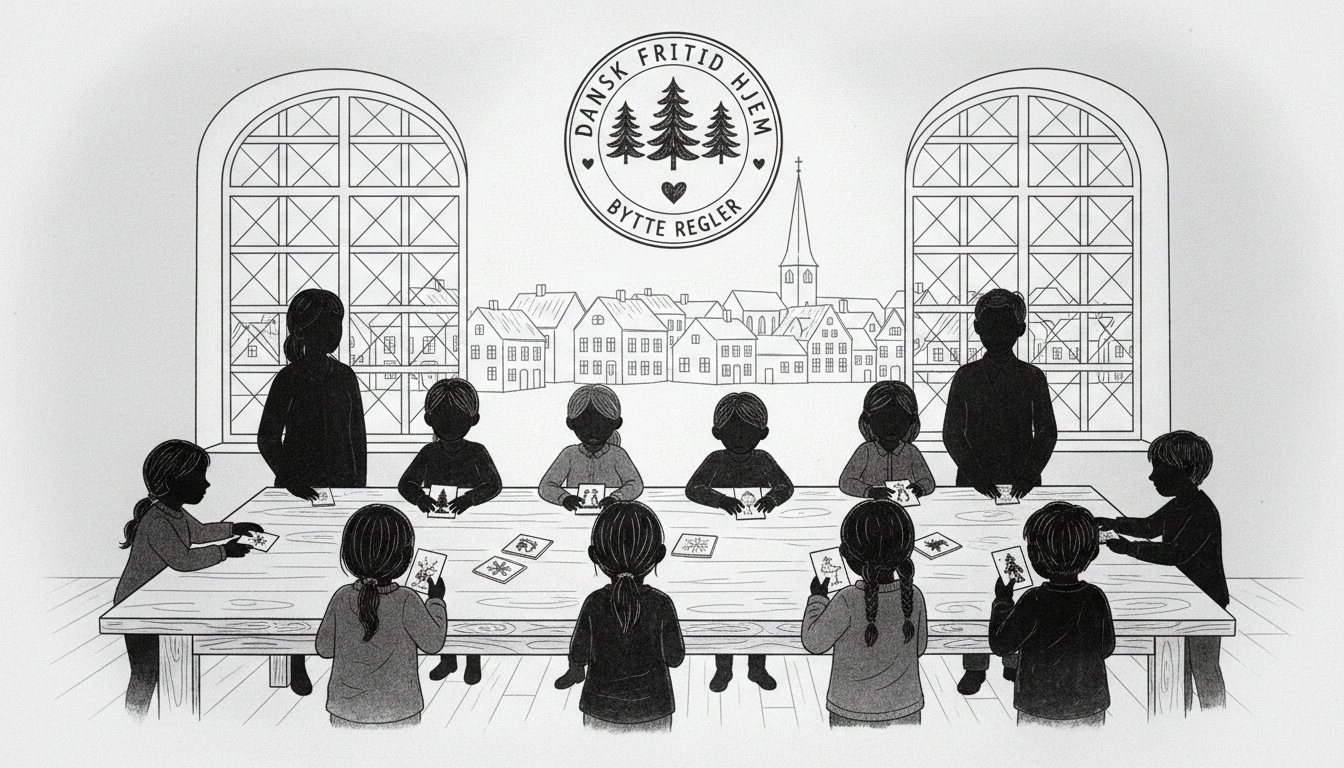
In a small Danish school, a seasonal tradition created unexpected classroom tension. The annual exchange of collectible cards from television advent calendars, a cherished part of the Christmas build-up for many children, began to disrupt lessons and cause playground disputes. Educators at Hedensted School's after-school program, known as SFO, noticed a problem. Children were trading cards during class time, and conflicts arose when rare cards were swapped and later regretted, especially in unsupervised areas like the cloakroom.
Katrine Fogsgaard, a teaching assistant at the school, explained the issue. She said the children were trading cards during lessons, which was disruptive. The fun was happening in the wrong place. More seriously, some children became upset after trading away a prized card they could not get back. Others felt excluded from the trading circles, left out of the social play. The school staff decided to intervene constructively. They established a new, supervised framework for the popular activity.
Their solution was simple but effective. The card exchange is now confined to specific days, Tuesdays and Thursdays, within the SFO. A classroom is opened, children sit at tables, and an adult is present to facilitate calm and fair trades. Fogsgaard stated that the children appreciate this structure. They are happy that no one gets angry or sad during the holiday season. The adults can quickly step in to help resolve any disagreements that do arise, ensuring the activity remains a positive experience for all.
This local story reflects a broader theme in Danish society and its approach to social policy. Denmark's welfare model places a strong emphasis on creating inclusive, structured environments, especially for children. The proactive stance of the SFO staff mirrors the Danish municipal system's focus on early intervention and communal well-being. It is a micro-example of the social integration principles often discussed on a larger scale in cities like Copenhagen. The goal is to prevent social friction and ensure all participants benefit from communal activities.
Statistics from the Danish Ministry of Immigration and Integration show that successful social integration often hinges on these small, everyday interactions and the frameworks that guide them. Educational environments are primary arenas for teaching conflict resolution and fair play. The Hedensted School's approach demonstrates how Danish social policy concepts are applied practically at the local level. It is about managing enthusiasm within boundaries that protect the group's harmony, a principle that extends from schoolyards to wider societal cohesion.
From a personal perspective, having observed various integration initiatives, this story underscores a fundamental Danish value. The community's well-being often takes precedence over unfettered individual activity. The school did not ban the card trading, which would have been the easiest path. Instead, it channeled the children's excitement into a safer, more equitable format. This thoughtful mediation is a hallmark of the Danish welfare system's pragmatic approach. It solves a real human problem with a simple, enforceable rule that has the children's own endorsement. In a season of joy, the school ensured that a source of potential conflict became a lesson in fairness and shared enjoyment.