
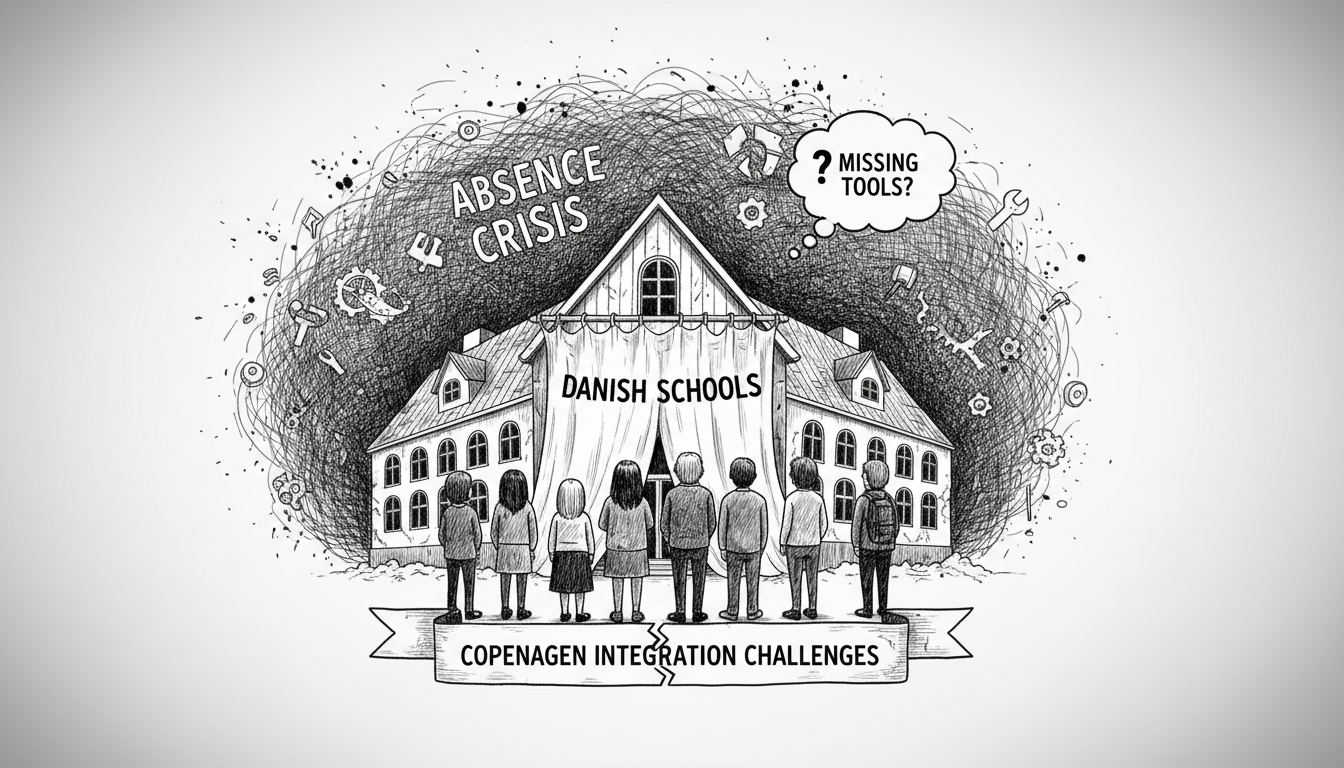
Thousands of Danish children struggle to attend school regularly as long-term absence rates continue climbing each term. The government's new action plan to combat this worrying trend faces sharp criticism for being insufficient. Education officials defend their approach while schools lack basic understanding of the underlying causes.
Teachers and school administrators express deep concern about the growing absence crisis. They report classrooms with consistent empty seats and children falling behind academically. The problem appears most acute in urban areas like Copenhagen where integration challenges compound attendance issues. Many immigrant families face additional barriers to regular school participation.
Government ministers recently presented their strategy to address chronic school absence. Their plan includes monitoring systems and early intervention protocols. Critics immediately called the measures inadequate for the scale of the problem. They argue the approach fails to address root causes or provide schools with necessary resources.
One Copenhagen school principal described the situation as deeply frustrating. "We see the same patterns year after year but lack the tools to break the cycle," the principal said in a statement. "Teachers need more than monitoring systems—we need understanding and practical solutions."
The Danish welfare system traditionally prides itself on educational equality, yet this crisis reveals systemic gaps. Municipal social centers report increasing numbers of families needing support with school attendance. Many cases involve complex social problems that extend beyond the classroom.
Integration challenges in Danish society often manifest in school settings. Children from immigrant backgrounds sometimes struggle with language barriers and cultural adaptation. These factors can contribute to school avoidance and chronic absence patterns. Copenhagen integration programs attempt to address these issues but face funding limitations.
Denmark immigration policy increasingly focuses on early integration through education. Yet schools report feeling unprepared for the specific challenges some newcomer students face. The current absence crisis highlights this preparation gap.
Education researchers point to several contributing factors beyond immigration status. Mental health issues among young people have risen noticeably in recent years. Economic pressures on families create additional stress that affects children's school attendance. The digitalization of education during pandemic periods also changed attendance patterns.
Municipal officials acknowledge the complexity of the problem. They note that solutions require coordination between schools, social services, and healthcare providers. Current systems often operate in isolation rather than providing integrated support.
The government maintains its action plan represents an important first step. Education authorities emphasize they're collecting better data to understand absence patterns. They promise additional measures will follow once they identify the most effective interventions.
Parents express mixed reactions to the government's approach. Some welcome increased attention to the problem while others worry about stigmatization. Families dealing with complex situations fear being labeled rather than supported.
This school absence crisis reflects broader challenges within Danish social policy. The renowned welfare system faces pressure from multiple directions simultaneously. Education remains central to Denmark's social contract yet current systems show strain.
The coming months will test whether the government's approach can reverse the troubling absence trend. Schools continue operating without the fundamental knowledge needed to understand and prevent this growing problem. Teachers face daily challenges in classrooms where consistent attendance becomes increasingly rare.