
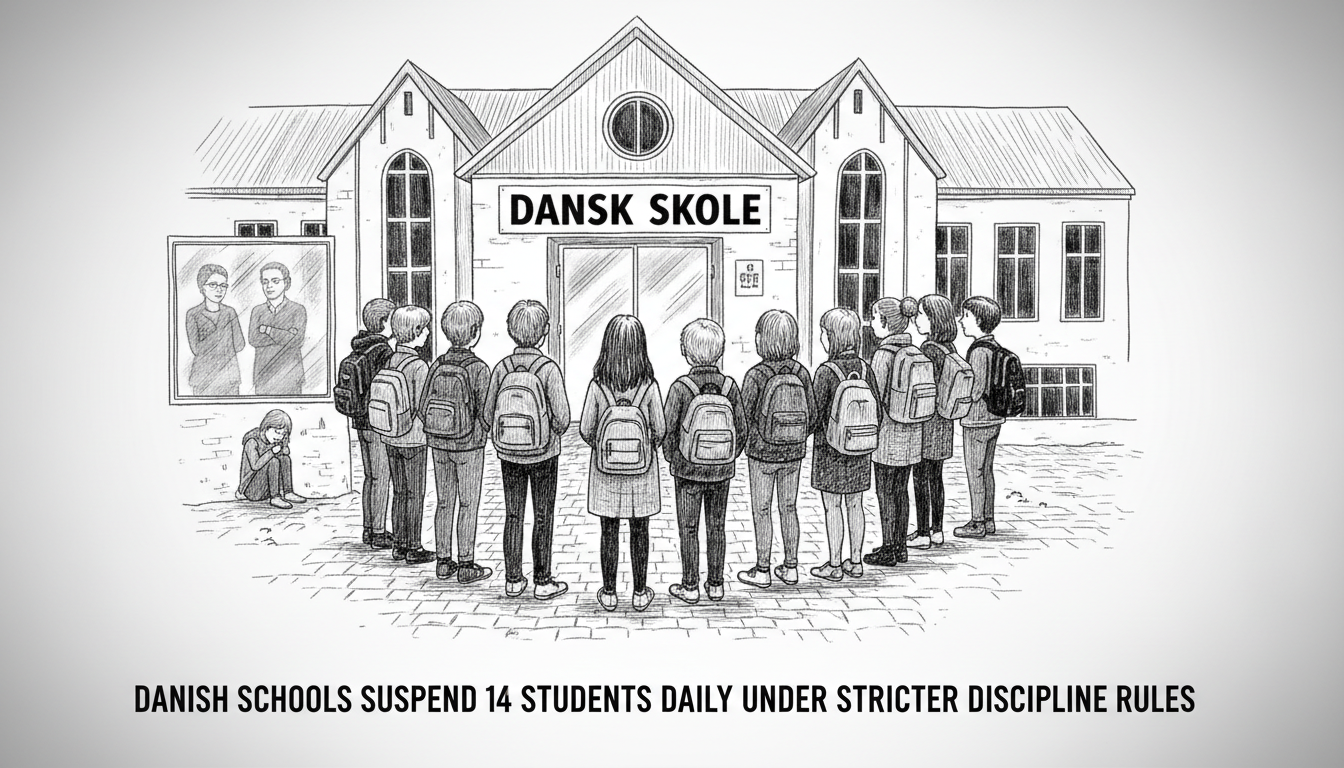
Danish public schools suspended students 1,450 times during the first half of the year. This follows new disciplinary regulations introduced nationwide.
On average, 14 students faced suspension every school day. The data comes from 789 schools across Denmark.
Most suspensions resulted from physical fights or violence between students. The suspensions typically last up to ten school days.
Education Minister Mattias Tesfaye expressed satisfaction with the increased use of suspensions. He supports what he calls 'consequence pedagogy'.
Children benefit from seeing clear consequences when they cross boundaries, the minister stated. He emphasized that prevention and dialogue remain important educational tools.
The new numbers indicate a rise in suspensions since the year began. This coincides with stricter disciplinary measures aimed at improving order in public schools.
Earlier data showed 355 schools suspended students 1,778 times over two years. That equaled one suspension per school monthly.
Current figures reveal significant variation among schools and municipalities. 448 schools reported no suspensions during the first half of the year. Meanwhile, 341 schools suspended at least one student.
Sønderborg Municipality recorded the highest suspension rate with 96 incidents. Larger municipalities like Aalborg and Aarhus reported 41 and 11 suspensions respectively. Copenhagen is still compiling its data.
School researcher Louise Klinge described the suspensions as problematic. She referenced a recent report showing one in six eighth-grade students experienced domestic violence.
Suspended students risk being physically punished when they return home, Klinge warned. She serves on Denmark's Children's Council.
A teacher survey previously revealed that over half of educators see increasing violence among students. The survey included 9,782 public school teachers.
The government's push for stricter discipline appears to be producing measurable results, though educators debate whether suspensions address root causes of student behavior.