
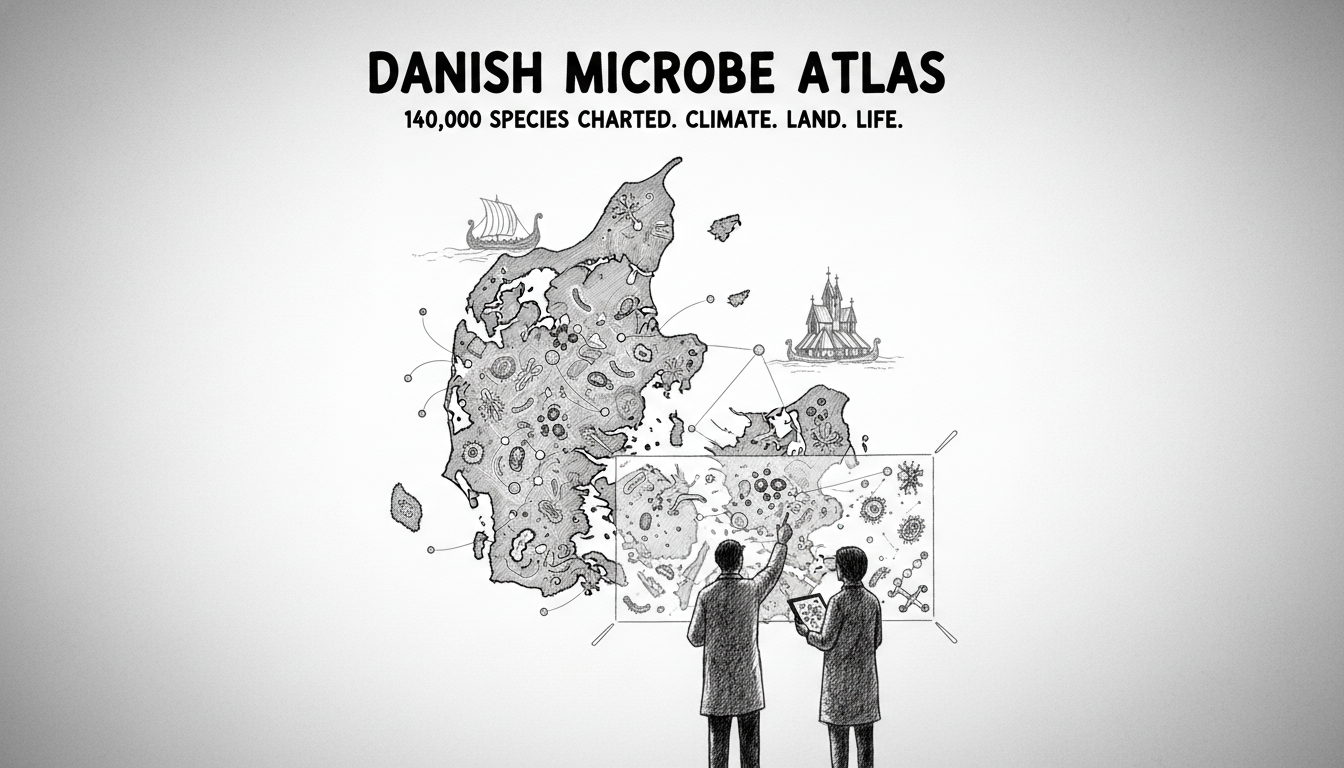
Danish researchers have completed the world's first national atlas of soil microorganisms, charting a previously unseen world beneath our feet. A team from Aalborg University identified 140,000 distinct bacterial species across Denmark. A staggering 80 percent of these species were previously unknown to science. This project, named 'Mikroflora Danica,' mirrors the historic 18th-century botanical survey 'Flora Danica' but for the microbial age.
Professor Mads Albertsen from Aalborg University's Department of Chemistry and Bioscience led the groundbreaking work. He described the map as a major untapped resource. 'We have just started to get the technologies to investigate the millions of microbes around us in nature,' he said in a statement. 'Having an overview allows us to influence our society in a positive direction.'
The implications stretch far beyond academic curiosity. Microorganisms are already crucial in producing everyday items like detergent, cheese, beer, and textiles. Their most critical role now may be in climate regulation. Specific microbes consume nitrogen and potent greenhouse gases like methane. This new map provides essential data for policymakers and agricultural planners. It can guide decisions on land use, such as identifying which agricultural areas to take out of production for environmental benefit. 'It is vital we understand if we have good or bad bacteria in the areas we change,' Albertsen explained. 'This directly affects which greenhouse gases are released.'
Over a thousand of the newly discovered species have been named after their locations, creating a unique microbial geography. Names like Hadersleviella, Glyngoereum, and Rungstediana now link microscopic life to towns like Haderslev, Glyngøre, and Rungsted. Albertsen calls the effort a 'voyage of discovery into the world of microbes,' but stresses the journey is just beginning. The published map in the journal Nature provides a foundational tool. It enables other scientists to explore the vast, unused potential of this invisible ecosystem.
From a Danish societal perspective, this research exemplifies the nation's strong tradition of systematic, state-supported scientific cataloging. It bridges historical natural science with modern biotech ambitions. The work has direct relevance for Denmark's green transition and agricultural policy, key pillars of the national welfare and environmental strategy. While the science is global, the methodical, nationwide approach is distinctly Danish. It provides a concrete tool for balancing economic land use with ecological responsibility, a constant tension in Danish social policy. The map turns abstract climate goals into actionable, localized data, showing how foundational science can inform practical governance.