
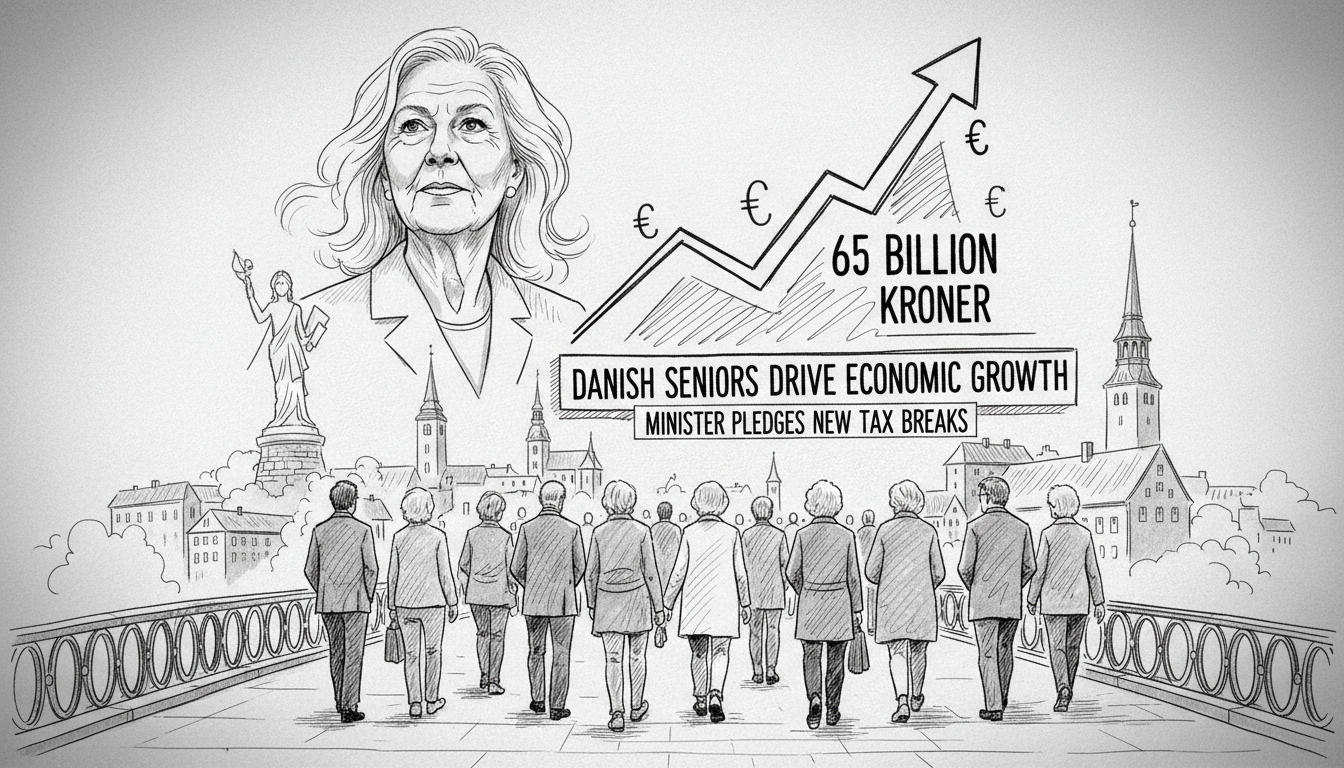
A new government report shows Denmark's seniors are a powerful economic engine. Over 400,000 people aged 60 and older are now employed. This figure represents 14 percent of total employment, a sharp rise from just 4 percent three decades ago. The trend places Denmark at the top of European rankings for senior employment, with its position strengthening each year.
Economy Minister Stephanie Lohse expressed strong approval of the development. She said the growing senior workforce is good for both the individuals and the national economy. It provides vital labor and keeps economic wheels turning, she noted in a recent interview. The report estimates the economic contribution of working seniors at approximately 65 billion kroner over a recent five-year period.
This substantial impact has prompted a new policy initiative. The government will introduce an additional employment tax deduction for seniors in the five years leading up to the state pension age. Minister Lohse believes this measure will encourage longer careers and reduce reliance on early retirement schemes. The move aims to sustain the current positive momentum.
The report reveals clear sectoral trends. Seniors are predominantly employed in education, culture, and leisure. They are less common in industrial sectors and care professions like daycare centers and nursing homes. This shift indicates many seniors transition to less physically and cognitively demanding roles later in their careers. Many also seek reduced working hours and greater flexibility.
The employment rate is particularly high for the 63 to 69 age group. Demographic change is a key factor, with the population share over 60 rising from 20 to 27 percent in the studied period. However, the connection to the labor market has strengthened even more. The proportion of seniors in employment has more than doubled, showing a profound shift in work patterns.
For Danish businesses, this trend is a crucial buffer against labor shortages. Companies in Copenhagen's business districts and across the Øresund region have benefited from this experienced talent pool. The sustained participation helps maintain productivity and supports export sectors. While positive, the concentration in certain fields suggests not all industries benefit equally. The government's new deduction is a direct attempt to broaden this impact. The policy recognizes that financial incentives can shape retirement decisions and bolster the national workforce. Denmark's approach offers a model for other aging economies seeking to harness the potential of their senior populations.