
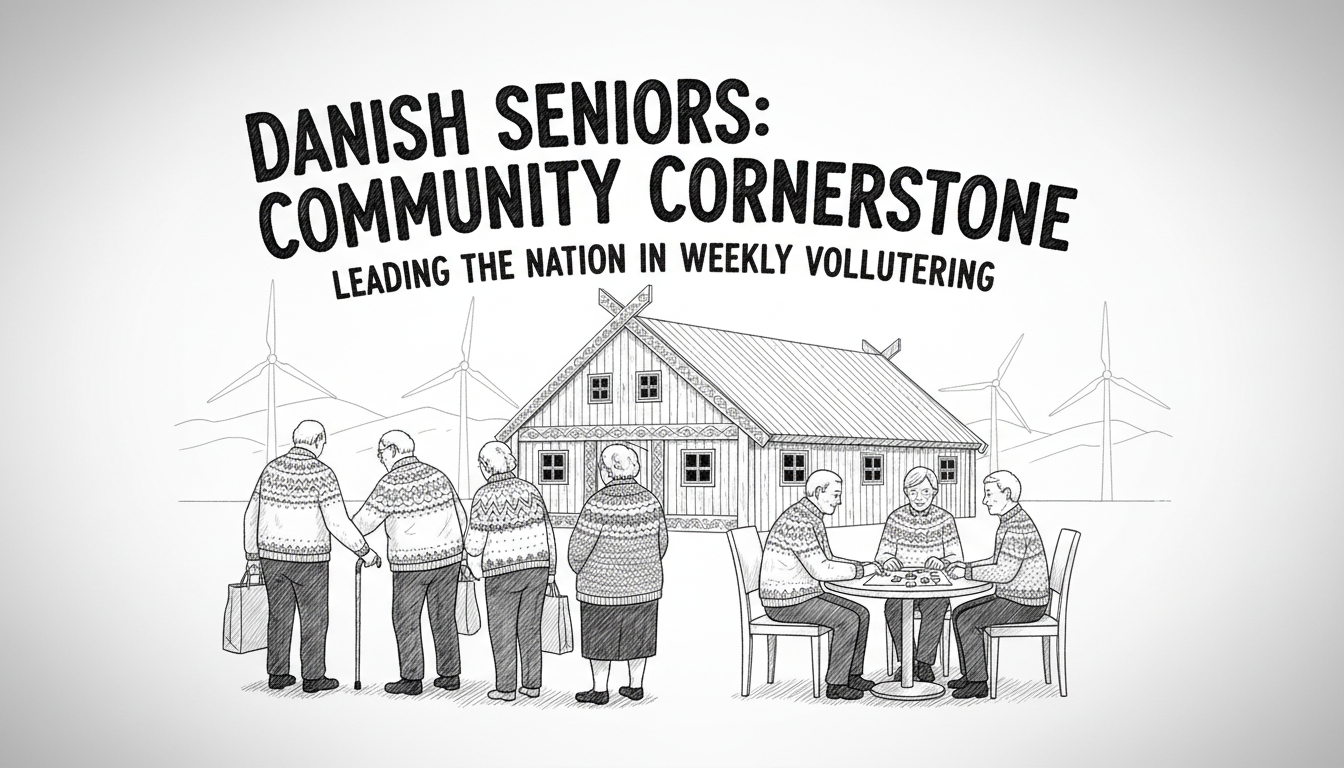
A quiet social revolution is unfolding across Denmark's towns and cities. New data reveals a striking generational divide in community participation. While younger adults focus on leisure, senior citizens are volunteering at remarkable rates. This trend carries deep implications for Denmark's social fabric and its celebrated welfare model.
Official statistics show that one in four Danes aged 75 and older performed volunteer work at least weekly. This figure represents the highest participation rate of any age group in the country. The data comes from a major national survey of cultural and social habits. In stark contrast, fewer than ten percent of younger adults aged 25 to 34 volunteered with the same weekly frequency. The national average for all adults settled at fourteen percent.
The type of volunteer work also splits along generational lines. Seniors overwhelmingly choose roles within the social sector and their immediate local communities. They assist at senior centers, visit isolated neighbors, and support municipal social programs. Younger volunteers typically gravitate toward sports clubs or hobbies. They coach youth teams or help organize cultural festivals.
This pattern speaks volumes about Danish society and its approach to integration. The senior cohort often represents a generation deeply embedded in the traditional welfare state ethos. Their volunteerism acts as a direct social investment, strengthening community bonds. For many municipalities, these volunteers are an indispensable supplement to public services. They provide human contact and local knowledge that formal systems sometimes lack.
What does this mean for Copenhagen integration efforts and broader social policy? The data suggests a vast reservoir of social capital resides with the elderly. Their consistent community involvement offers a stabilizing force in neighborhoods experiencing demographic change. These volunteers often become informal ambassadors, helping newcomers navigate Danish society. Their work in local social centers creates natural meeting points across cultural divides.
Yet the low engagement among younger adults raises questions. Are economic pressures leaving them with less time for unpaid community work? Or have the avenues for meaningful civic participation shifted? Some community leaders point to digital platforms and single-issue activism as new forms of engagement not fully captured by traditional surveys.
The Danish welfare system has long relied on a blend of state provision and civic participation. This high level of senior volunteerism reinforces that model but also highlights a potential vulnerability. It shows the system depends heavily on one generation's commitment. Policy makers must ask if this level of engagement will be replicated as today's younger adults age. The sustainability of Denmark's social contract may hinge on the answer.
For international observers, this is a nuanced lesson in Scandinavian social cohesion. It is not solely a top-down state project. It flourishes through the daily, quiet contributions of ordinary citizens, particularly its eldest members. Their weekly volunteer work weaves a stronger, more resilient social fabric for everyone.
Fatima Al-Zahra is the Danish Society Reporter for NordicsToday.com, focusing on integration and social policy.