
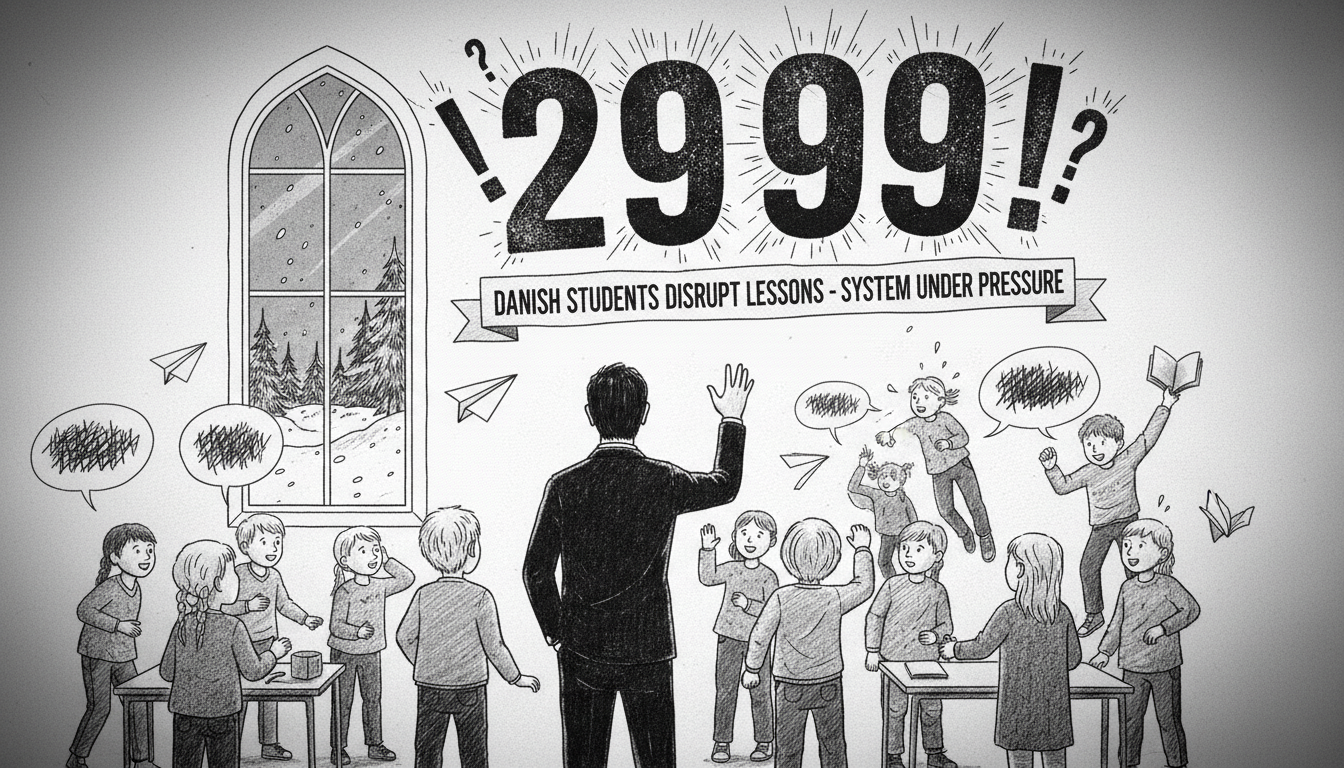
Danish classrooms face serious disruption problems. Students interrupt lessons an average of 29 times per class session according to a new observational study.
The research followed four experienced teachers across eight classes in Aarhus schools for two weeks. In the most chaotic lesson, teachers recorded 99 separate disruptions.
Aarhus School Leaders Association chairman Jens Mathiasen called the findings alarming. He said the numbers show a system under severe pressure.
I had not imagined it was actually this bad, he admitted.
Louise Pedersen from the parent organization School and Parents Aarhus expressed similar shock. She expected occasional outbursts but not continuous disruption throughout lessons.
The study covered first, fourth, fifth and eighth grade classes at three different schools. All teachers involved were experienced professionals working in schools considered typical rather than particularly challenged.
Disruption levels varied dramatically by age group. Early grade classrooms averaged 66 disruptions per lesson. One first-grade class reached 99 interruptions in a single session.
In that most disruptive class, the teacher had to stop teaching 67 additional times to address student behavior.
Education researcher Andreas Lieberoth from Aarhus University said while some disruption is normal, these numbers are far beyond typical. He noted classroom noise and disruption has increased in recent years.
Disruption creates inequality in classrooms, Lieberoth explained. Students who struggle academically suffer most from constant interruptions. Those who grasp concepts quickly manage better despite the chaos.
Aarhus City Councilor Thomas Medom acknowledged the school system faces significant pressure. He said teachers are working overtime to manage classroom needs.
The city has invested substantial funding in schools through recent budget agreements. But Medom admitted more support will likely be needed.
Two major funding increases are not enough, he stated. We probably need three to five more budget agreements like those of the past two years.
The constant interruptions prevent quality teaching time and particularly harm students who need extra support to succeed.