
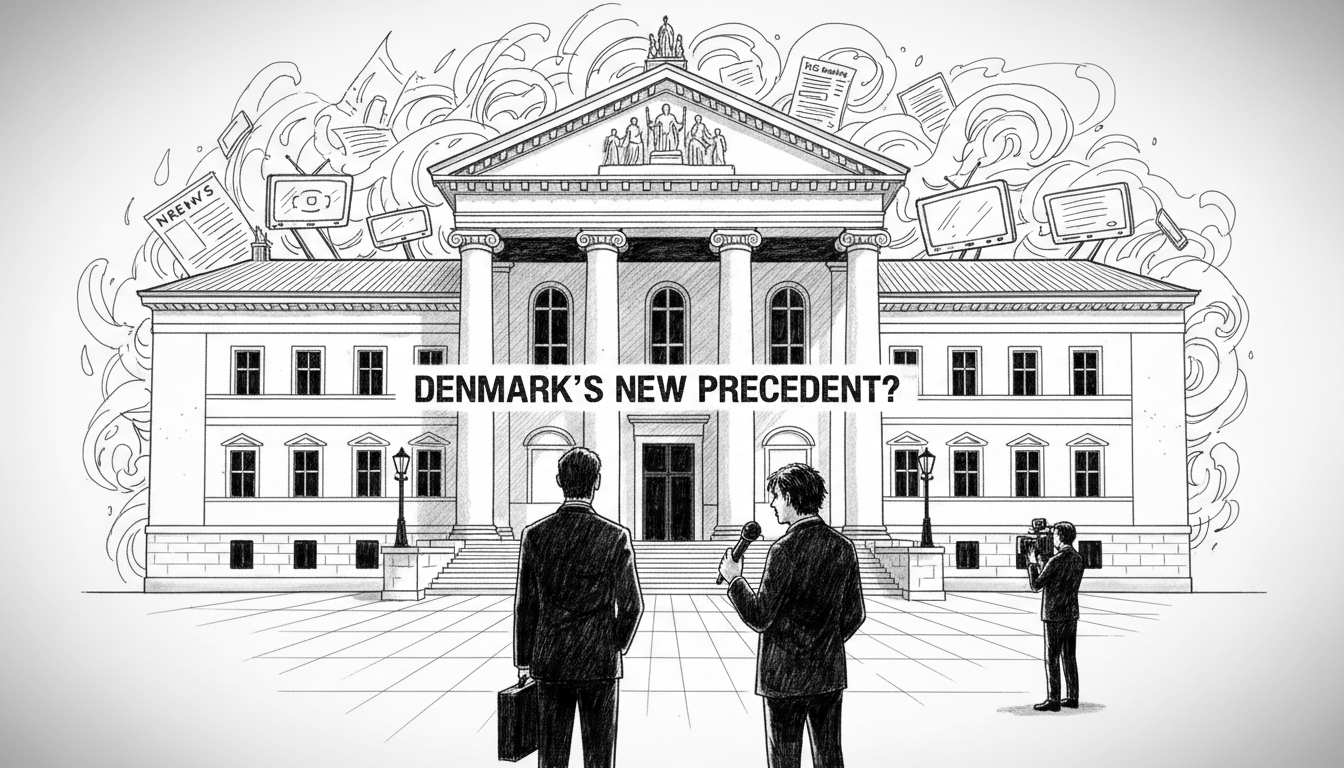
The Danish Supreme Court will hear a case this week with implications for professional accountability and media ethics. Former television host Jes Dorph-Petersen seeks compensation of nearly two million kroner from lawyer Yvonne Frederiksen. The claim stems from a 2020 investigation into alleged sexual harassment at a major broadcaster, which led to Dorph-Petersen losing his job. The case raises fundamental questions about legal responsibility toward third parties in Danish society.
Danish law distinguishes between contractual and non-contractual compensation claims. This case involves the latter, as Dorph-Petersen had no direct contract with the lawyer. The broadcaster commissioned the investigation. The former host is considered a third party. The Eastern High Court previously ruled that Frederiksen did not act negligently. It found she owed less responsibility to a third party than to her direct client.
The Supreme Court's decision will set a precedent. It will clarify the extent of lawyer liability to third parties for alleged flaws in their work. This principle could affect many professional fields in Denmark's tightly regulated society. The outcome may influence how media organizations handle internal investigations and their consequences for individuals. It touches on themes of reputation, due process, and professional standards.
From my perspective covering Danish integration and social policy, this case reflects broader tensions. Denmark's social model relies on strong institutions and clear rules. Yet individual lives can be profoundly altered by institutional decisions. The welfare system and social policies aim for fairness, but legal battles like this expose complex human costs. They show how professional actions ripple through communities.
Community leaders in Copenhagen often discuss the need for transparent processes in workplaces and institutions. This case underscores that need. When investigations lead to job loss, the stakes are high for integration and social cohesion. People need to trust that systems operate justly. The Supreme Court's ruling will either reinforce that trust or highlight gaps in accountability.
What does this mean for Denmark's social fabric? The case sits at the intersection of media, law, and employment. It questions how professionals balance duties to clients with potential impacts on others. The Danish preference for consensus and rule-following faces a test. The court must weigh strict legal boundaries against real-world consequences for a person's career and standing.
The decision will be studied by legal experts and media analysts. It may prompt discussions about reform. Could guidelines for internal investigations need strengthening? Should third-party impacts receive more consideration? These questions matter for a society that values both robust institutions and individual welfare. The ruling will provide answers, but likely spark further debate about balancing these priorities in modern Denmark.