
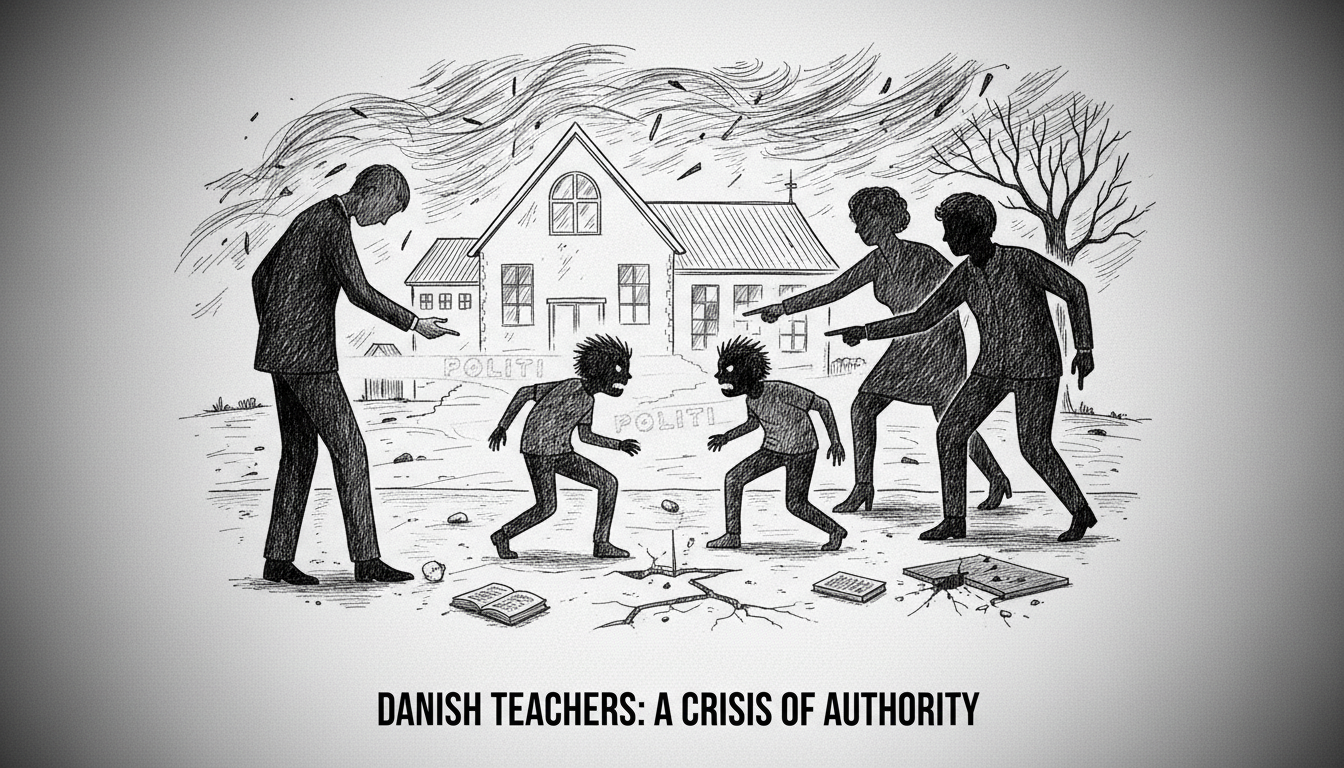
A troubling trend is unfolding in Danish classrooms. Teachers across the country are increasingly being reported to the police by parents, accused of violence against students. This development points to deep fractures in the relationship between schools, families, and the welfare state's social contract. The Danish Teachers' Union confirms a steady rise in such cases, with a total of 14 police reports filed against public school teachers in a recent quarter. For the educators involved, the consequences are severe, often leading to job loss and personal trauma even when exonerated. The situation reveals a crisis of authority, resources, and shared responsibility in Denmark's famed education system.
Legal experts and psychologists point to a profound cultural shift. They identify a changed parenting culture and a lack of stable adult relationships as core drivers. Children are growing up in environments where authority is questioned and conflict resolution bypasses dialogue. 'There has been a failure in upbringing where parents always side with their child,' said child psychologist John Halse in an interview. He argues that by shielding children from all adversity, parents are doing them a disservice. The traditional path of parents first contacting the school has eroded. Now, accusations frequently escalate directly to law enforcement, stripping away any chance for mediation.
This loss of teacher authority is a recurring theme. 'Respect for teachers is gone, and their status has crumbled,' stated child psychologist Niels Peter Rygaard. He connects the rise in violent student behavior to a fundamental lack of secure attachments. Modern childhood, he notes, is often marked by unstable home environments, frequent teacher changes, and school consolidations. Children react to this insecurity naturally, with some becoming anxious, withdrawn, or outwardly aggressive. The solution, according to Rygaard's Fairstart Foundation, is not punishment but building secure communities within schools, in cooperation with parents and the local municipality.
The political response has been to propose granting teachers more explicit legal powers. The Minister for Children and Education previously put forward a bill to allow physical guidance, brief restraint, and removal of students from situations. This legislative move acknowledges the teachers' perceived powerlessness but focuses on reactive measures. Many professionals on the ground call for a different approach. Teacher and psychologist Jette Lentz sees the teachers' expression of helplessness as a cry for resources and time. She advocates for far greater investment in prevention rather than crisis management, emphasizing the need to build trust between parents and teachers as shared stewards of child well-being.
The Danish Teachers' Union echoes this call for resources. Their legal chief, Camilla Bengtson, stated that having two teachers in classrooms would make a significant difference. It would reduce false accusations and create a better learning environment. The current model, she implies, leaves single teachers isolated and vulnerable. This is not just a school issue but a societal one, testing the foundations of Danish integration and social policy. When the bonds between key institutions—family, school, state—fray, the first casualties are often the professionals caught in the middle and the children they are trying to educate. The path forward requires rebuilding those connections, not just writing new rules for physical intervention.