
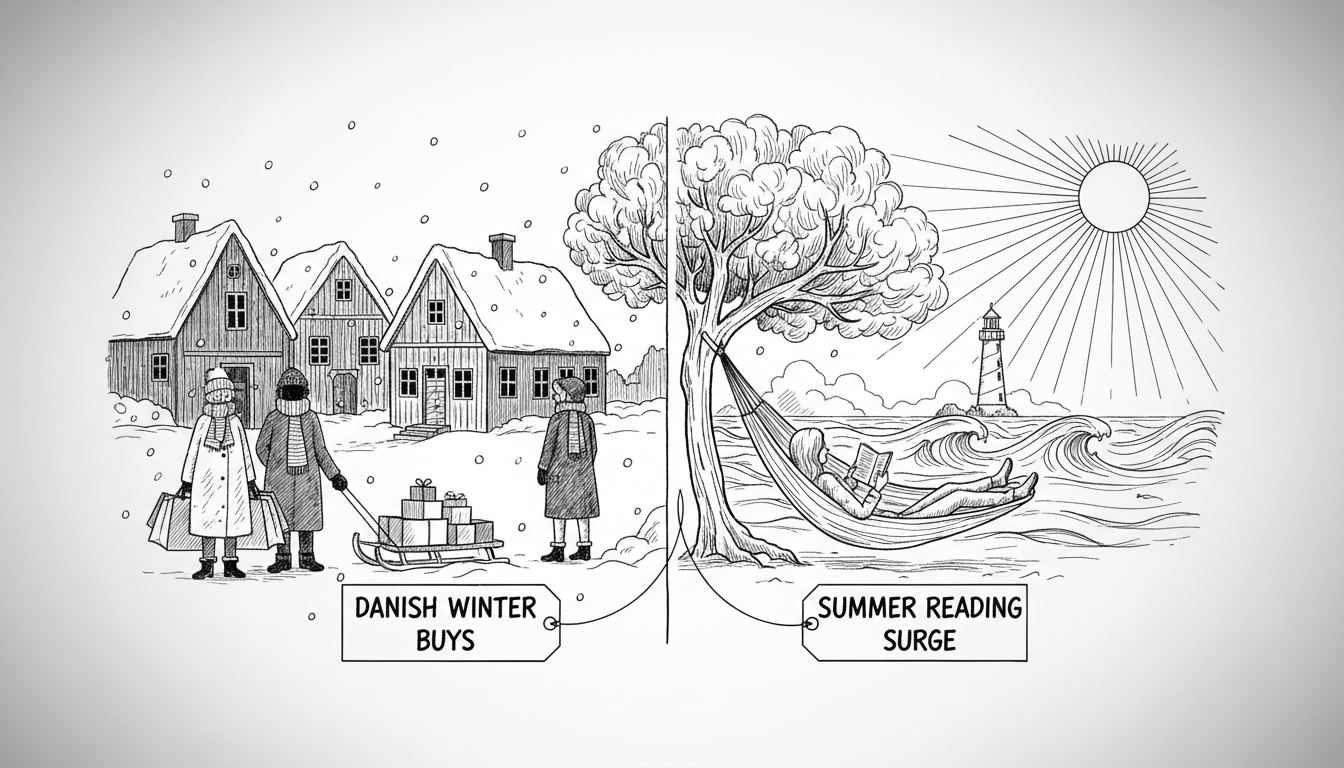
Danish winter book purchases surge while summer sees a major reading spike, new national data reveals. This seasonal paradox defines the nation's literary rhythm, driven by 'hygge' culture and long summer holidays. Danmarks Statistik's latest figures show a clear split in habits, where buying and consuming books are distinct seasonal acts. The pattern highlights how environment and tradition shape intellectual life in the Nordic welfare state.
The Data Behind the Seasonal Split
While specific annual sales figures are pending, historical data consistently shows a peak in Danish book sales during November and December. This aligns perfectly with the Christmas gift-giving season and the cultural embrace of indoor coziness. Conversely, library lending statistics and consumer surveys indicate a significant increase in actual reading volume during June, July, and August. The light of the Nordic summer, coupled with widespread holiday time, creates ideal conditions for diving into novels. This creates a fascinating economic and cultural lag between purchase and consumption.
Experts point to Denmark's robust library system as a key enabler of summer reading. Public libraries see a marked uptick in loans of fiction and popular nonfiction as schools break for summer. "We plan our acquisitions around this cycle," says Mette Kierkegaard, a head librarian in Copenhagen. "Our 'Sommerbøger' (Summer Books) displays go up in late May. It's about providing accessible, engaging reads for people's free time, complementing the books they received at Christmas."
Hygge's Literary Influence and the Summer Escape
The winter buying boom is inextricably linked to the Danish concept of 'hygge'. This pursuit of cozy contentment finds a perfect companion in book-buying. Gifting beautifully bound books is a cherished Christmas tradition. Furthermore, long dark evenings encourage the purchase of substantial reads—biographies, history, and complex fiction—that promise deep engagement. The act of buying and receiving these books is itself a hygge ritual, a promise of future immersion.
Summer flips the script psychologically. The desire shifts from deep engagement to relaxation and escapism. Long, bright evenings and vacation time foster a different kind of literary consumption. Lighter novels, thrillers, and travel literature dominate beach bags and park blankets. The reading is often more prolific but focused on entertainment. This seasonal shift isn't about quality but about function: winter reading for depth and enrichment, summer reading for pleasure and leisure.
Expert Analysis: More Than Just Weather
Publishing industry analysts see clear economic and behavioral drivers. "The Q4 sales peak is absolutely critical for publishers' and authors' annual revenue," explains Lars Thomsen, an industry consultant. "It funds the publication of diverse titles throughout the year. The summer reading period, while less lucrative for direct sales, is vital for building readership and driving library demand." This ecosystem relies on the complementary cycle of commercial winter sales and intensive summer consumption.
The trend also reflects Denmark's strong social contract and work-life balance. Generous holiday allowances ensure Danes have the time to read for pleasure in summer. High literacy rates and a culture that values literature, supported by state arts funding, provide the foundation. This isn't a passive habit but an active cultural practice supported by policy. The seasonal pattern showcases a society that creates time for both reflective winter study and expansive summer enjoyment.
The Library's Role and Digital Shifts
Danish municipalities heavily invest in public libraries, making them central to this reading rhythm. They seamlessly bridge the seasonal gap. In winter, they host author events and reading groups for newly purchased books. In summer, they transform into providers of easy-access entertainment. This public service model ensures that reading habits are not solely dictated by purchasing power, reinforcing equitable access to culture year-round.
The rise of e-books and audiobooks adds a new layer to this pattern. Digital loans from libraries see massive summer spikes, convenient for travel. Yet, the winter preference for physical books as gifts appears resilient, suggesting the tactile experience remains part of their hygge value. The digital shift may be intensifying the summer reading surge by making books even more portable, while leaving the traditional winter gift economy intact.
Implications for Culture and Commerce
This seasonal cycle has real-world implications. Authors and publishers time their releases strategically. Major literary novels and heavyweight biographies often launch in autumn to capture the Christmas market. Lighter commercial fiction is frequently promoted in late spring for the summer season. Marketing campaigns and literary festival schedules align with these ingrained national habits.
The data also offers a subtle insight into Danish well-being. The pattern indicates a population that consciously uses books for different psychological needs throughout the year. It reflects a balance between intellectual ambition and relaxed enjoyment, between social gifting and personal indulgence. In a digitally saturated age, the resilience of this printed-word rhythm is noteworthy.
Looking ahead, the question is whether this cycle will hold. As climate change brings warmer, potentially wetter summers, and digital formats evolve, habits may adapt. Yet, the deep cultural roots of Christmas book-giving and the cherished summer holiday seem firmly established. For now, the Danish year continues to turn on two distinct literary seasons: one for buying and studying, the other for reading and dreaming. This duality captures a key aspect of the nation's intellectual and cultural life.