
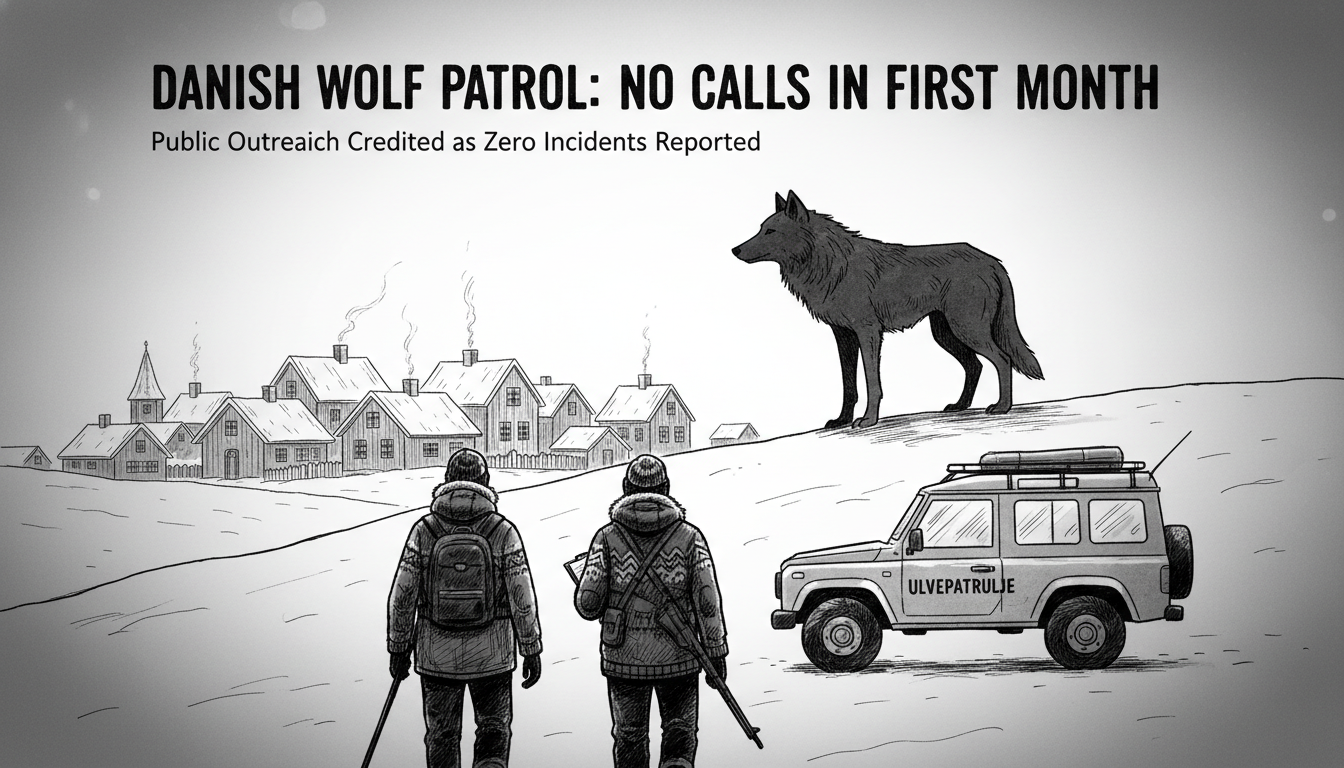
A specialized wolf patrol established in a rural Danish municipality has not received a single emergency call since its launch. The team, based in Oksbøl in Southwest Jutland, was created as part of a broader government action plan to address public safety concerns regarding wolves near populated areas. Its mandate is to respond to sightings in urban settings and safely scare the animals away.
The patrol leader, Thomas Sørup Mortensen, said the lack of calls does not surprise him. He explained the group's purpose in a recent radio interview. 'This was a proposal for how to solve the insecurity that has been in the town,' Mortensen said. 'These were the options available, based on what the minister presented at a press conference.' When asked if the unused service represented wasted public funds, Mortensen acknowledged the point but defended the patrol's existence. He suggested the investment from the Nature Agency was not large and argued that simply having a dedicated phone line provides value.
This initiative stems from a comprehensive wolf management plan announced earlier this year by the relevant minister. The plan aims to further protect Danish citizens from so-called 'problem wolves.' The creation of rapid-response patrols was one of its key public-facing measures. The political context here is crucial. Danish environmental and agricultural policy often walks a tightrope between conservation efforts, rural livelihoods, and suburban expansion into traditional wildlife habitats. The wolf's return to Denmark after a long absence has become a potent symbol in this ongoing negotiation between nature and society.
The current challenge appears to be public awareness. Mortensen admitted that communication is difficult. The team is working to distribute flyers with contact information directly to households, as not all residents use social media where the number has been promoted. 'Things take time,' he noted, indicating a rollout period for public services that is often longer than anticipated.
From an integration and social policy perspective, this story reflects a common Danish approach: creating structured, state-sanctioned systems to manage perceived societal risks. The welfare model extends here into human-wildlife conflict, preferring an official channel over ad-hoc solutions. It is a system-heavy response, characteristic of Danish administrative culture. The immediate cost-benefit analysis is straightforward—no calls means no direct impact. Yet, the symbolic value of a prepared state institution might provide intangible reassurance to a nervous public, which is a legitimate policy goal in itself. The real test will come if a wolf is sighted, and whether citizens know who to call.