
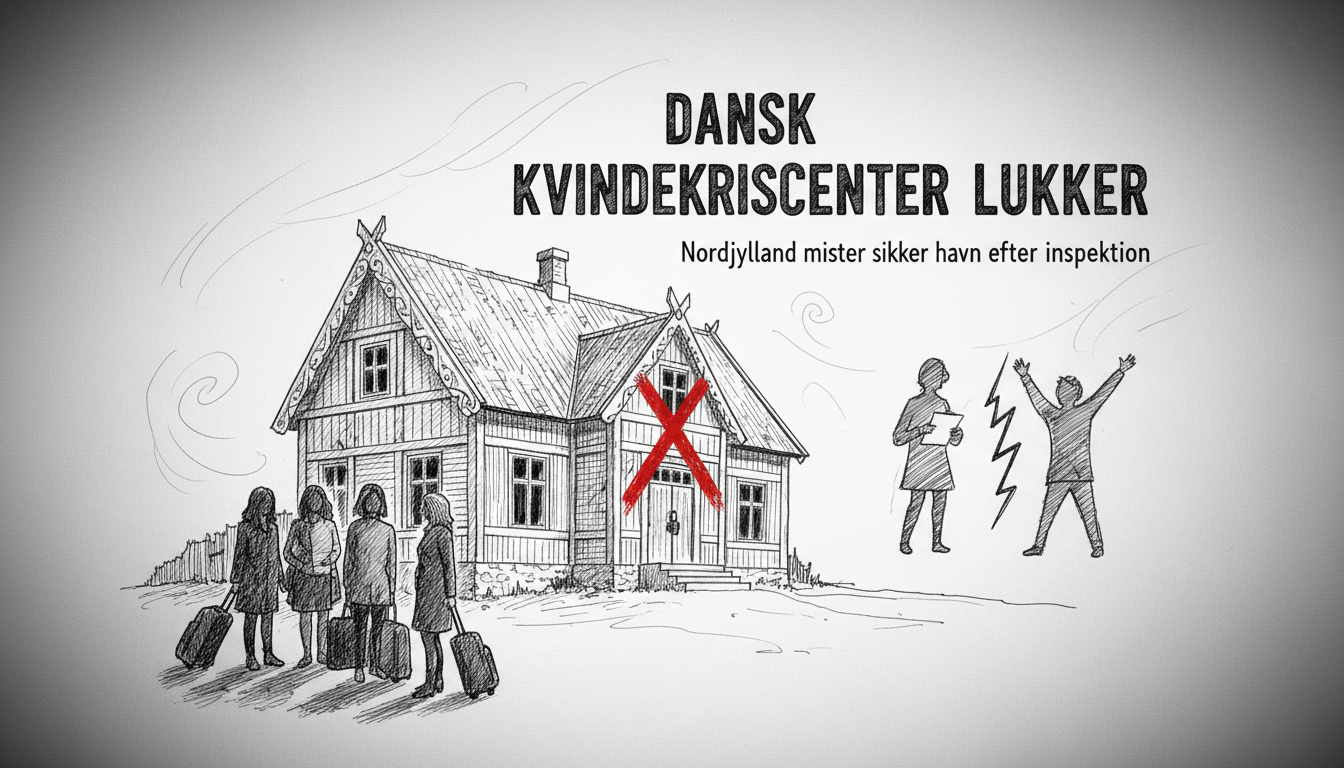
A women's crisis center in North Jutland has lost its official approval and must close its doors. The decision by the Danish Social Appeals Board follows a critical inspection of Søhavegård Kvindekrisecenter in Mosbjerg near Sindal. The center has provided a refuge for women and children fleeing domestic violence and coercive control for eight years. The board concluded the facility lacked the necessary quality standards for continued operation. This closure highlights the tightrope walk between regulation and service provision within the Danish welfare system. It also raises urgent questions about the availability of safe havens in rural municipalities.
The center's owner and director, Christian Tække, expressed deep frustration with the process. He stated the critical assessment was based partly on an inspection visit lasting only twenty minutes. Tække feels he was not given a proper chance to defend the center's operations or address the concerns raised. Officials from the oversight board countered this view. They said the evaluation was comprehensive and not based solely on that brief visit. The final assessment found the center did not meet the required conditions for its license. For the women who relied on it, this means one fewer sanctuary in a country where demand for such spaces often outstrips supply.
This incident touches a nerve in ongoing debates about Copenhagen integration policies and their translation to rural areas. Crisis centers are a critical component of Denmark's social safety net, especially for vulnerable immigrant women. Their closure can have disproportionate effects on communities already facing barriers. Statistics show that access to specialized support is a key factor in successful long-term integration and independence. When a center shuts down, it does not just close a building. It dismantles a network of trust and security that can take years to build.
The Danish social policy framework mandates high standards for protected housing, which is right and necessary. Yet the practical consequence is a reduction in total bed capacity at a time of need. Local community leaders often point to a gap between regulatory ideals and on-the-ground resources. Municipalities are tasked with providing these services but operate under strict budgetary and regulatory constraints. The closure forces North Jutland authorities to find alternative placements for current residents, likely in already strained facilities elsewhere in the region.
What does this mean for the future of such social centers? It underscores a systemic tension. The Danish welfare system is built on a promise of high-quality, uniform support. Enforcing standards is non-negotiable for protecting vulnerable citizens. However, the mechanism of enforcement can sometimes feel abrupt and leave communities with fewer options. The loss of a local center particularly impacts those without the means or mobility to seek help farther away. This story is not just about one inspection. It is about how a society balances quality control with the imperative to simply provide enough shelter. The answer to that balance defines the real-world impact of Denmark immigration policy and social care for all its residents.