
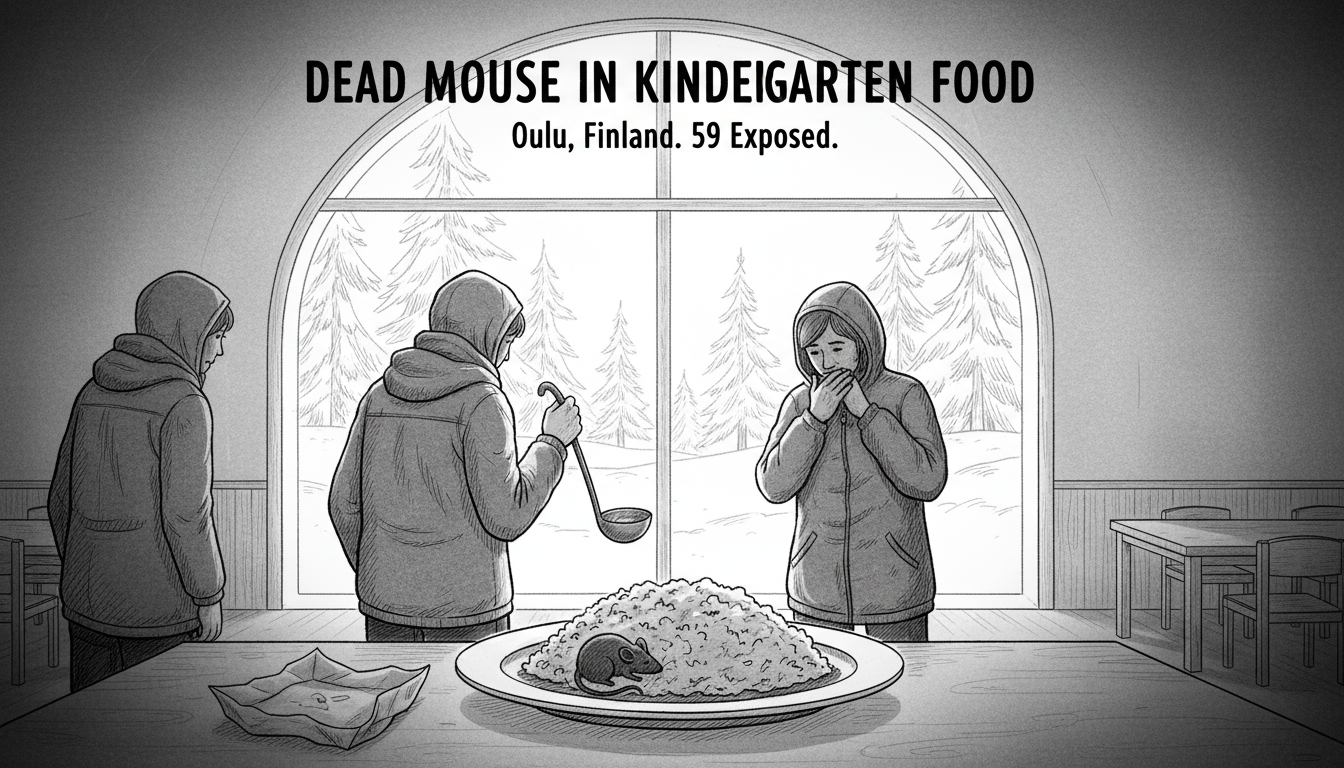
A dead mouse was discovered in food served at a kindergarten in Oulu, Finland. The incident occurred at Asema Kindergarten in the Haukipudas district. Officials immediately stopped food service when staff found the rodent during meal distribution.
The contaminated food had been prepared at Haukiputaa Comprehensive School. ISS Palvelut provides catering services for the school kitchen. Preliminary reports indicate the mouse entered the facility with uncooked pasta supplies. Kitchen staff then boiled the pasta in 100-degree Celsius water.
This specific food batch also went to two other facilities besides the kindergarten. Tsemppi Activity Center and Hoivatien child protection special unit received portions from the same preparation. In total, 59 people had been served food from this batch before discovery.
Food safety authorities have collected samples for laboratory testing. The City of Oulu promised to provide additional updates about their investigation. They will release more information on Thursday.
This incident highlights ongoing concerns about food safety in institutional catering. Finland typically maintains high food safety standards, making such discoveries particularly alarming. The country's national food authority, Ruokavirasto, sets strict protocols for commercial kitchens.
Kindergarten food safety incidents trigger automatic reviews of supplier contracts. Municipalities often reconsider relationships with catering companies following such events. Parents naturally question how rodents could enter sealed food supplies in modern facilities.
Food preparation facilities face serious consequences for hygiene failures. Finnish law mandates immediate closure orders for kitchens violating safety standards. Regular inspections typically prevent such incidents in the Nordic country.
This case resembles previous food contamination incidents in Nordic institutions. Similar discoveries have occurred in Swedish schools and Norwegian care homes in recent years. Each case prompted temporary suspensions of food service contracts.
The incident raises questions about supply chain monitoring for institutional food. How did the mouse survive packaging and transportation processes? Were proper quality checks conducted on incoming dry goods?
Parents and guardians deserve transparent communication about such incidents. The kindergarten must reassure families about future meal safety. Temporary alternative food arrangements may be necessary during investigations.
Food safety scandals often lead to contractor dismissals in Finnish municipalities. ISS Palvelut now faces scrutiny over its quality control measures. The company provides catering services throughout the Nordic region.
This event serves as a reminder that even developed nations face food safety challenges. Continuous vigilance remains essential in mass food production systems. All Nordic countries prioritize preventing such incidents in public institutions.