
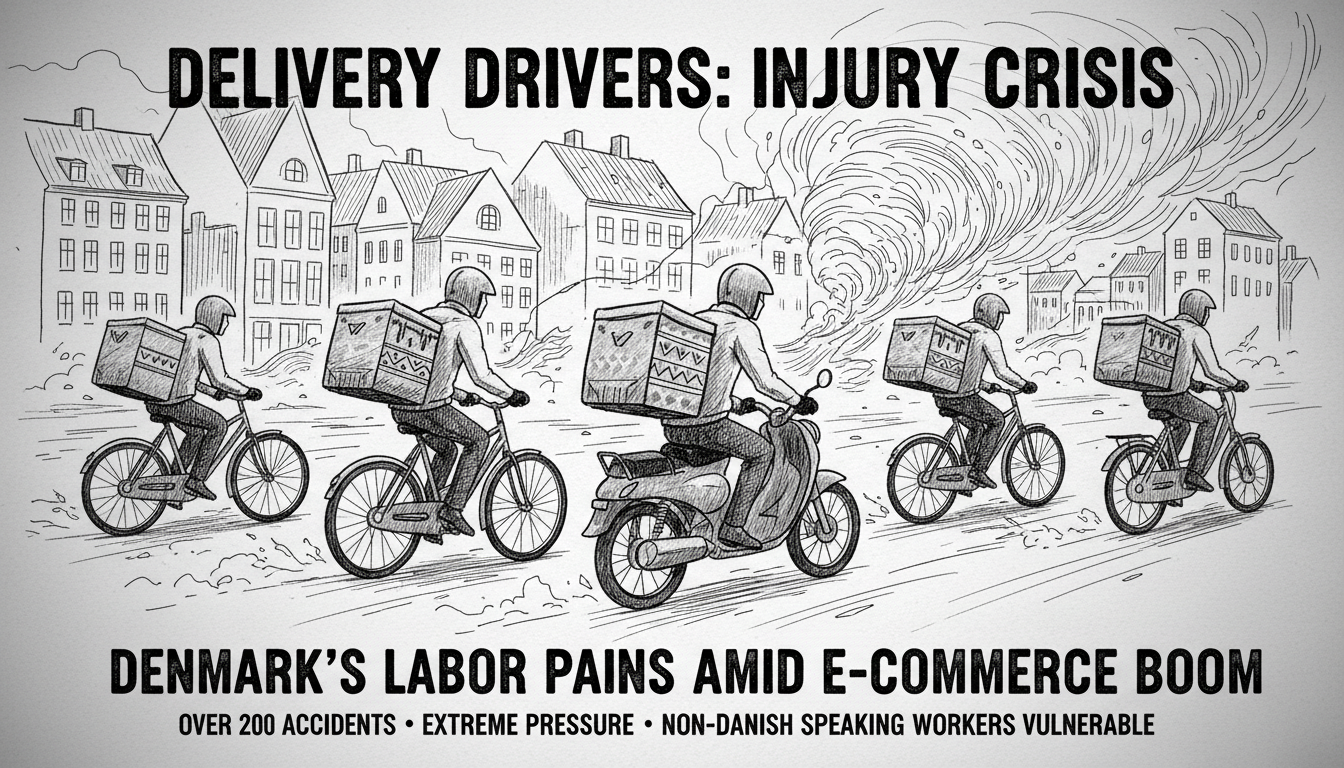
A quiet crisis is unfolding on Danish streets and in distribution centers. Delivery drivers, the backbone of the nation's booming e-commerce sector, are getting hurt at an alarming rate. New data reveals over 200 workplace accidents reported so far this year, averaging six incidents per week. This trend has been climbing steadily for several years, with an average of 300 annual accidents now reported across the postal and courier industry nationwide. The human cost of next-day delivery is becoming impossible to ignore.
Jørgen Nielsen, a union chairman, describes a pattern of injuries ranging from falls and cuts from box knives to traffic accidents. He points directly to intense pressure and long hours as the root cause. Drivers are simply pushed too hard, he explains, and injuries become inevitable under such strain. His union is now calling for a fundamental change: formal driving and rest time regulations, similar to those governing truck drivers, for parcel couriers. Currently, only an 11-hour daily rule and a weekly day off apply, and Nielsen states that even these minimal standards are sometimes ignored by employers.
This issue intersects sharply with themes of integration and labor rights in Danish society. Nielsen highlights a critical vulnerability. Many workers in this sector are non-Danish speakers, he notes, and they find it much harder to say no to an employer than native speakers. This is a fact observed across agriculture and construction as well. The fear of job loss, and potentially of being sent home, creates a power imbalance. For new arrivals dependent on work for residency, the risk of speaking up is profound.
This situation presents a complex challenge for Denmark's social policy and its celebrated welfare model. The system relies on strong worker protections and social trust. Yet, the gig economy and logistics pressures are testing these foundations. Municipalities and social centers in cities like Copenhagen often become the first point of contact for injured workers navigating a foreign system. The data suggests current integration efforts must better address workplace rights education. Without it, a segment of the workforce remains exposed.
What does this mean for Denmark's social contract? The statistics are more than numbers. They represent individuals, often from immigrant backgrounds, bearing the physical brunt of consumer convenience. The union's push for specific 'køre-hviletid' (driving and rest time) rules is a direct test of whether Danish labor law can adapt to new economic realities. It asks if protections will extend to all workers equally, regardless of language or origin. The answer will say much about the future of integration and fair work in the Danish welfare state.
The path forward requires action from multiple sides. Policymakers must examine if existing frameworks are sufficient. Companies must audit their subcontracting chains and pressure. And support systems, from unions to community groups, need resources to reach and empower every worker. The safety of those delivering our packages is a litmus test for a cohesive and just society.