
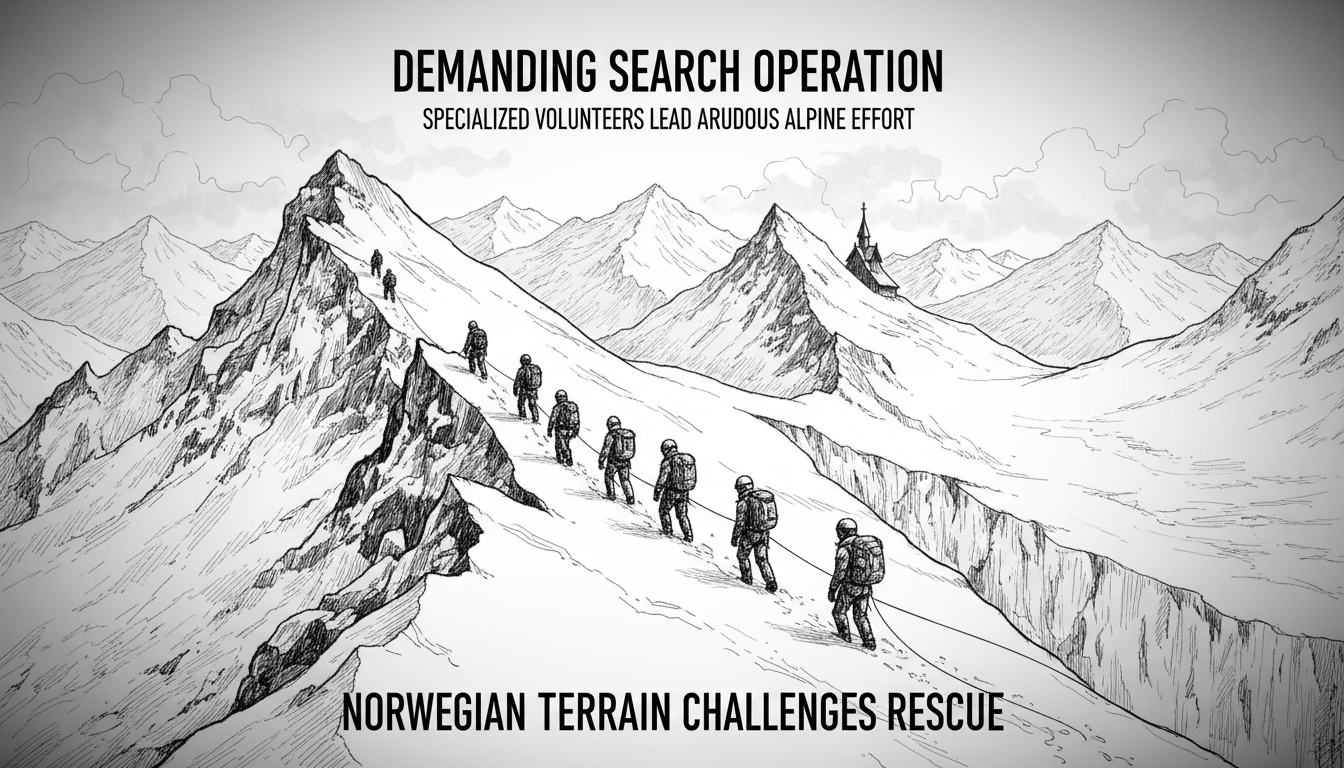
Norwegian police are coordinating a demanding search operation for a woman reported missing over the weekend. The search is concentrated in the area between Ravnejuvsvingen and Lårdalsstigen, where challenging terrain complicates rescue efforts. Police describe the landscape as steep with dense vegetation and icy underfoot conditions. A specialized team from the Norwegian Alpine Rescue Group has been deployed to assist local police crews. The operation highlights the inherent risks of Norway's wilderness, even in areas accessible from populated regions.
Police operations leader Tor Einar Bakken detailed the conditions on the ground. He said the terrain is steep with thick vegetation. The ground is also quite icy, making the search difficult. These factors significantly slow down search teams and increase operational risks. The involvement of the alpine rescue group indicates the technical nature of the terrain, requiring specialized climbing and safety expertise. Such operations are a regular, though resource-intensive, part of police work in Norway's varied landscape.
This incident underscores a critical aspect of Norwegian public safety infrastructure. The country maintains a highly trained, volunteer-supported rescue service capable of responding to emergencies in remote locations. The Norwegian Alpine Rescue Group, known as NARG, is a key component of this system. They specialize in mountain and cliff rescues that are beyond the scope of standard emergency services. Their deployment signals that this search area presents specific alpine hazards.
For international observers, this operation reflects broader themes in Norwegian society and governance. There is a strong cultural expectation that authorities will mount comprehensive search operations, regardless of terrain difficulty. This commitment is backed by substantial public funding and community volunteerism. The response also illustrates the practical challenges of governing a nation with a vast coastline, deep fjords, and mountainous interiors. Search and rescue capabilities are a non-negotiable part of national infrastructure, much like roads or broadband.
What happens next depends on the findings of the search teams. Police will likely continue the ground search as long as conditions allow and there is a reasonable chance of success. They may also deploy aerial assets like helicopters if visibility improves. The outcome will be closely watched, as these operations test the limits of Norway's much-admired emergency response systems. The difficult conditions between Ravnejuvsvingen and Lårdalsstigen serve as a stark reminder of nature's power, even in a highly developed nation.