
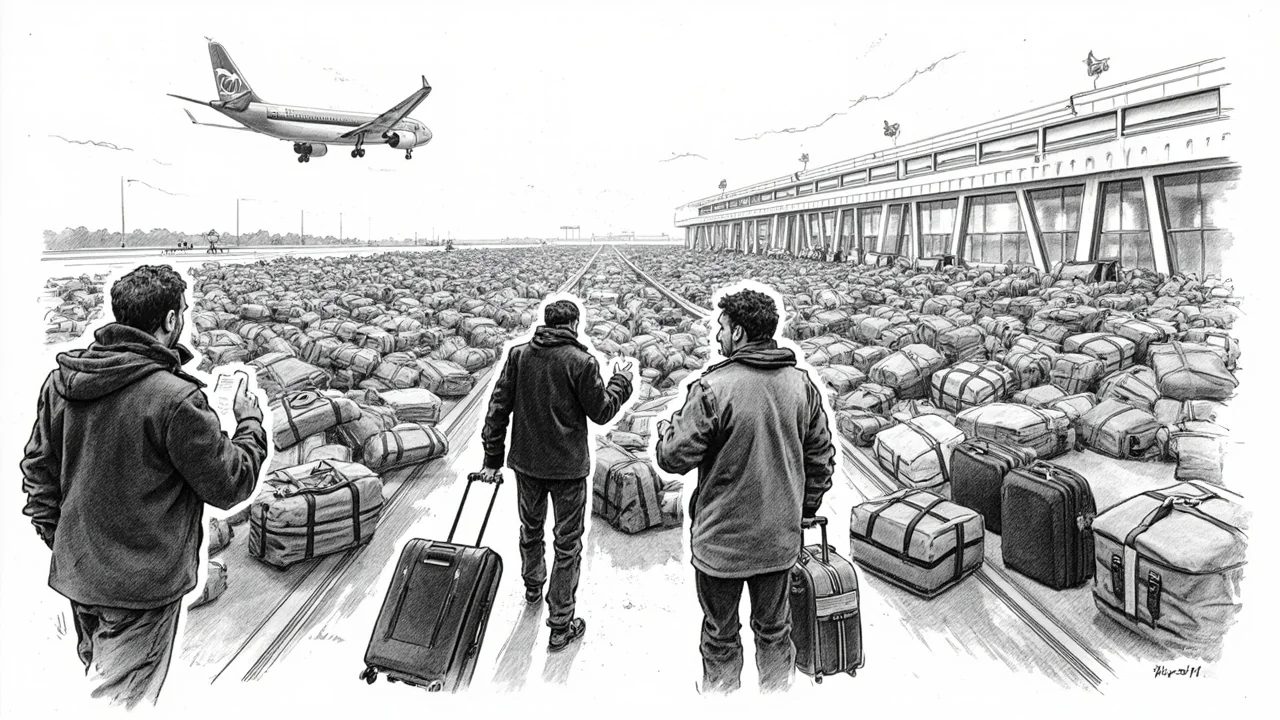
Denmark's Copenhagen Airport technical failure stranded 7,000 pieces of luggage over a chaotic weekend, exposing the fragility of a critical national transport hub. The baggage sorting system at Scandinavia's busiest airport broke down Friday night, creating a logistical nightmare for thousands of travelers. Normal operations only resumed by Sunday morning after technicians worked around the clock. For a country that prides itself on efficiency and seamless public infrastructure, the incident struck a nerve far beyond the terminal walls.
As a reporter who has covered Danish society for years, I see these operational failures through a dual lens. They are immediate crises for affected families and business travelers, but also stress tests for the social contract. Denmark's welfare model and high-trust society are built on reliable systems. When a key piece of national infrastructure like the airport stutters, it prompts uncomfortable questions about our preparedness and resilience.
A Weekend of Travel Disruption
The problems began without warning on Friday evening. Automated machines that route checked luggage from check-in counters to the correct aircraft belts stopped functioning. This triggered a manual, labor-intensive process that could not handle the volume. Images and videos shared on social media showed growing piles of unclaimed suitcases in baggage halls. For 48 hours, the airport's public-facing message was one of apology and ongoing repair work.
Communications Director Lise Agerley Kürstein confirmed the scale of the disruption. "In total, 7,000 pieces of baggage have been delayed on departure due to the technical problems," she stated. The number represents a significant portion of daily traffic, creating a domino effect of missed connections and frustrated plans. The airport's website became the primary source for updates, advising passengers to travel with carry-on luggage only if possible.
The Ripple Effect on Trust and Efficiency
The incident's impact extends beyond inconvenience. Copenhagen Airport is more than a travel hub; it is a symbol of Denmark's global connectivity and operational excellence. For international visitors, it is often their first and last impression of the country. Such breakdowns challenge the narrative of flawless Scandinavian functionality. They also place immense strain on airline staff and ground handlers, who bear the brunt of passenger anger while managing an abnormal situation.
From a policy perspective, this failure intersects with ongoing debates about public investment in infrastructure maintenance versus expansion. How much redundancy is built into these vital systems? The speed of the repair—concluded within roughly 36 hours—suggests a capable technical response. Yet the fact it happened at all points to potential vulnerabilities. In an era where climate and digital transitions demand robust infrastructure, this event serves as a case study.
Passenger Stories and Systemic Stress
While the airport provided a macro number—7,000 bags—the real story is found in thousands of micro-stories. Families arriving without strollers or car seats, business travelers missing crucial meetings without their presentation materials, tourists losing holiday essentials. The baggage system is an invisible utility until it fails, then it becomes the central character in every traveler's journey. The social contract in Danish society implies that such core services will function, allowing citizens to plan their lives with confidence.
This contract is tested during these failures. The response from airport authorities, including clear communication and a dedicated recovery effort, is part of upholding that trust. The incident lacked the prolonged chaos seen in similar failures elsewhere, suggesting contingency protocols did exist. However, for the passengers affected, the distinction between a 36-hour delay and a week-long delay feels minimal in the moment. Their experience is one of personal disruption, not statistical recovery time.
Lessons for Critical Infrastructure
What can be learned? First, transparency is crucial. The airport's direct communication via its website and through spokespeople provided a central truth in a maelstrom of rumor. Second, the value of manual override capabilities was proven. While automated systems drive efficiency, the ability to revert to human-driven processes is a necessary safety valve. Finally, the event highlights the interconnected nature of modern travel. A single technical fault in a sorting system can impact hundreds of flights and tens of thousands of people across global networks.
For Denmark, a nation investing heavily in its green and digital future, the reliability of physical infrastructure remains the bedrock. The weekend's baggage chaos is a reminder that ambition must be matched by maintenance. It also shows how quickly a localized technical issue can escalate into a national news story, reflecting the airport's outsized role in the country's identity and economy. The repair is complete, but the conversation about resilience is just taking off.
Looking Beyond the Terminal
As normal operations resume, the focus shifts from crisis management to prevention. Airports worldwide are aging, and their automated systems face increasing strain. Proactive investment, rather than reactive repair, will define the passenger experience in the coming decades. For Copenhagen, maintaining its status as a premier European hub depends on learning from this weekend. It must demonstrate that its systems are not only smart but also sturdy, capable of weathering both predictable loads and unexpected faults.
The 7,000 delayed bags will eventually reach their owners. The memories of a stressful weekend will fade for most travelers. But for the planners and engineers, the work to ensure this scene isn't repeated has entered a new, urgent phase. In a society built on trust, every broken promise—even an unwritten one about baggage delivery—requires a thoughtful and substantive response. The true test of the system begins now, in the quiet analysis of what went wrong and the committed action to make it right.