
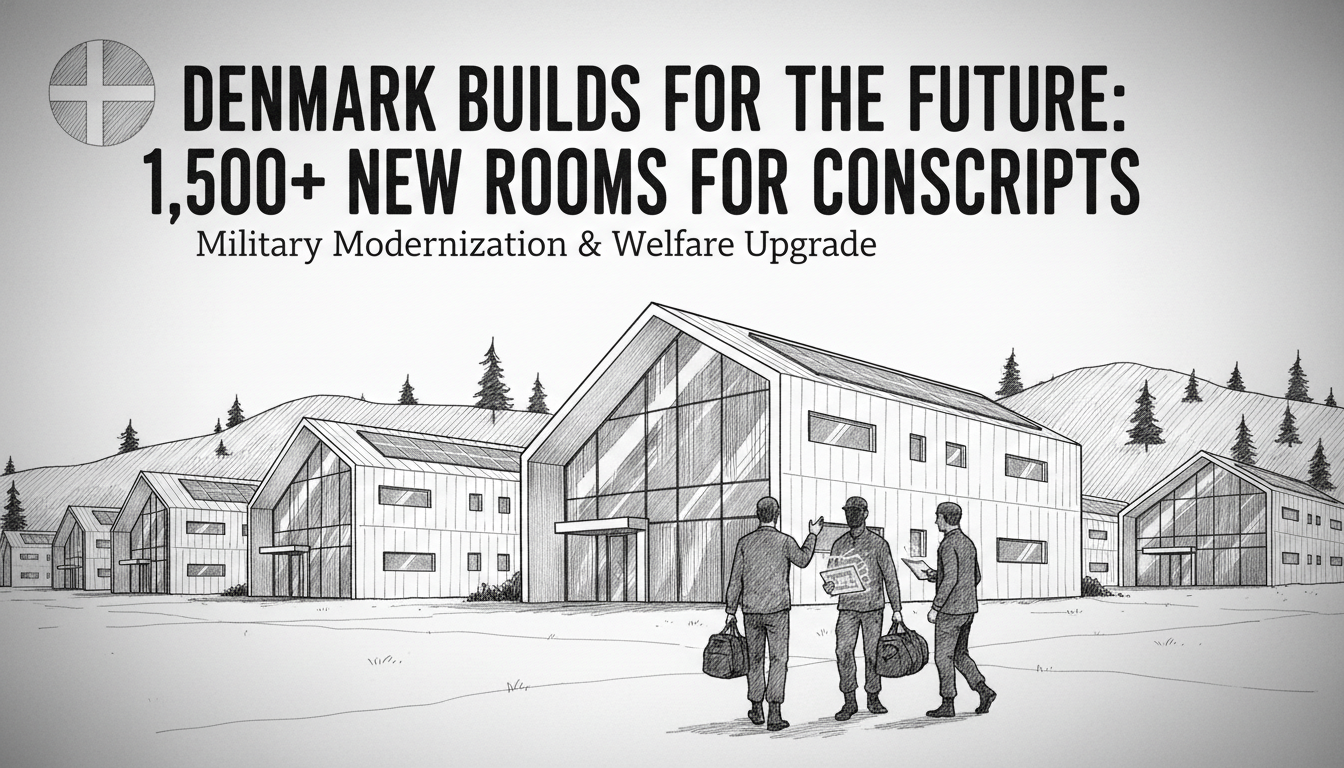
Denmark is launching a major construction project to improve living conditions for its conscripts. A public-private partnership will build 1,566 new rooms across 11 military bases nationwide. This initiative responds directly to the government's plan to increase the number of people serving in the national service program. Defense officials state the goal is to provide better facilities for those joining the Danish defense forces.
The project, led by a consortium headed by PensionDanmark with MT Højgaard, involves constructing 31 new buildings. Work is scheduled to take place between 2026 and 2028. The new accommodations will be built at Flådestation Frederikshavn, Bangsbo, Aalborg Kaserne, Skive Kaserne, Flyvestation Karup, Holstebro Kaserne, Varde Kaserne, Oksbøl Kaserne, Ryes Kaserne, Flådestation Korsør, and Antvorskov Kaserne. Rooms will be designed for two or four persons, with space for equipment and private bathroom facilities.
This represents a substantial investment in Danish social policy and the welfare system. The twenty-year contract is valued at seven billion Danish kroner, with an initial three billion kroner investment. Under the public-private partnership model, the private consortium holds responsibility for construction, operation, and maintenance throughout the contract period. The Defense Ministry will make ongoing payments for the service.
From my perspective covering Danish society news, this move is more than a facilities upgrade. It is a strategic investment in the future of Denmark's conscription model at a time of heightened regional security concerns. Improving living standards is a direct tool for recruitment and retention. Better barracks can make mandatory service more appealing to young Danes, which is crucial for maintaining a robust, volunteer-supplemented defense force.
The expansion across eleven locations also has implications for local communities and Copenhagen integration narratives. Military bases are often significant employers in their regions. This construction wave will bring economic activity to these areas, from Jutland to Zealand. It reinforces the military's physical presence as a pillar of community life outside the major cities.
What does this mean for the average conscript? The shift from older, often communal living arrangements to modern rooms with private bathrooms marks a cultural change. It aligns military service more closely with contemporary youth expectations for privacy and personal space. This could help bridge the gap between civilian life and military discipline, potentially easing the transition for new recruits.
Officials have framed this as necessary for improving conditions. The Defense Minister stated that conscripts deserve better terms when they become part of the Danish defense. This project answers that call with concrete action. The scale of the investment shows a clear political commitment to not just expanding conscript numbers, but also enhancing their quality of life during service. The success of this partnership will likely influence future Danish infrastructure projects beyond the military sphere.