
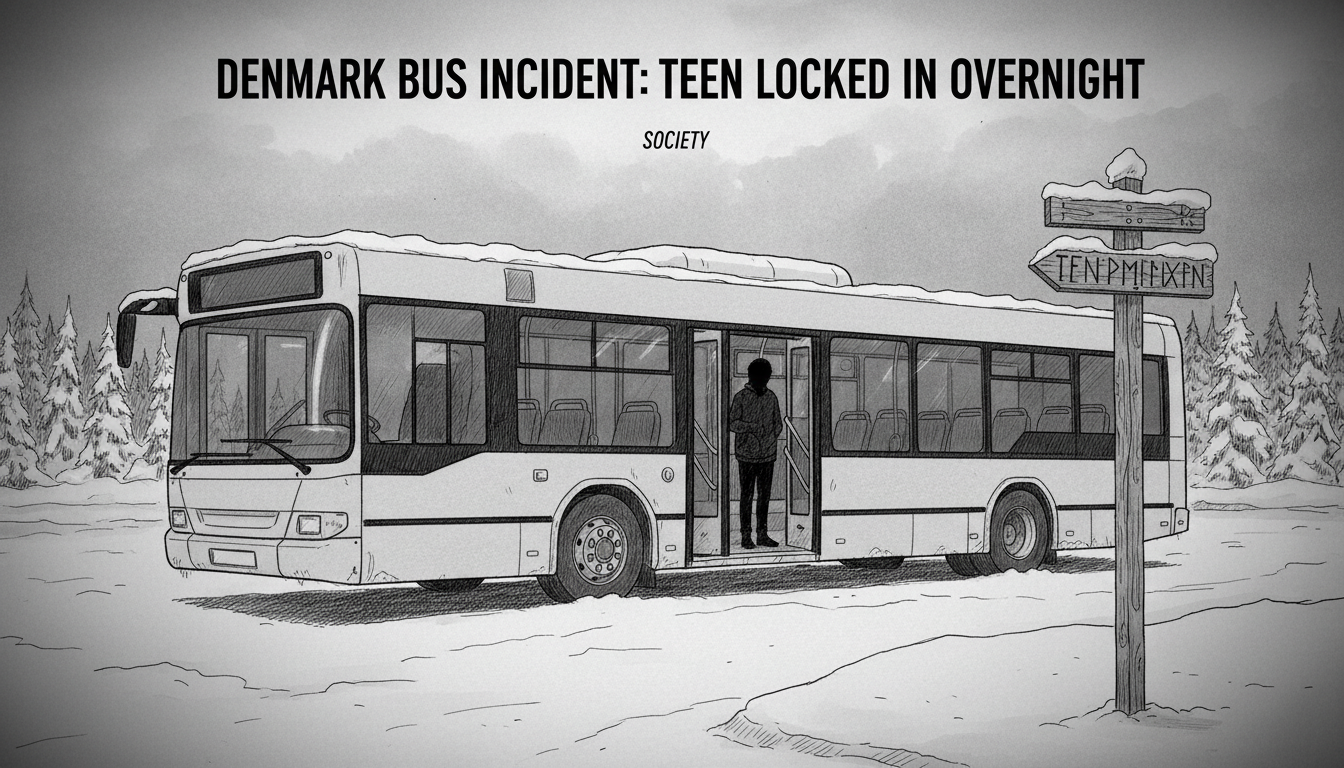
Denmark public transportation safety faced a startling test when a 14-year-old girl woke up locked inside a dark, empty bus in Næstved. The incident occurred at 8:45 PM last Thursday on Banegårdspladsen, the city's central station square. After falling asleep during her journey, the teenager found herself alone after the driver had parked, shut down, and secured the vehicle for the night. She called police, who then contacted the bus company to arrange her release. This event has sparked immediate questions about the checks and balances within Denmark's otherwise trusted transit system.
A Routine Journey Turns Into a Nightmare
Public transport is a backbone of daily life across Denmark, with buses in cities like Næstved providing essential links. Passengers, including unaccompanied minors, rely on its famed efficiency and safety. The system operates on a foundation of public trust, built over decades of reliable service. This trust was fractured for one young passenger last week. Her ordinary trip home transformed into an isolating and frightening experience, highlighting a potential gap between procedure and practice. The psychological impact of such an event on a child is significant, involving fear and a sudden loss of security in a familiar environment.
The Protocol Gap: Who Checks the Bus?
Industry experts point to a critical moment in any bus driver's shift: the end-of-service check. Standard operating procedures for bus companies across Danish municipalities mandate a visual sweep of the vehicle before locking up. This final walk-through is a fundamental safety step, designed precisely to prevent such incidents. "The driver's last task is to ensure the bus is empty," stated a veteran transport operations manager who requested anonymity. "It's a basic but non-negotiable part of the job. Fatigue, distraction, or assuming the bus is clear because it's the end of the line can lead to a failure in this protocol." The incident in Næstved suggests this final check either did not occur or was insufficient.
Local police confirmed they handled the situation swiftly once alerted. Their role shifted from law enforcement to public assistance, coordinating with the bus operator to resolve the crisis. The response was effective, but reactive. The core issue remains a proactive failure in the operator's safety chain. This raises questions about training reinforcement and accountability measures within the company involved. Danish transport authorities have guidelines, but their implementation rests with individual operators and their staff on the ground.
A Parent's Worst Fear and Societal Trust
For parents, the story taps into a deep-seated fear. Allowing children to navigate public transit alone is a rite of passage in Denmark, underpinned by confidence in the system's safety. This incident challenges that confidence. It is not merely about a procedural error but about a breach of the social contract. The welfare system and the famed Danish sense of collective care extend to these shared public spaces. When a child is left behind in a locked bus, that contract feels violated. Community reaction in Næstved has been one of concern and surprise, with many parents reconsidering their assumptions about this aspect of their children's independence.
Social policy experts note that successful integration into Danish society relies on predictable, safe public institutions. Newcomers and young citizens alike build their understanding of community through these daily interactions. A failure in a basic service like a bus check can have an outsized impact on perceived safety. It subtly undermines the trust that binds the social fabric. While not an immigration policy issue per se, the incident touches on universal themes of protection and institutional responsibility that are central to the Danish social model.
Operator Accountability and Systemic Safeguards
The involved bus company, which has not been publicly named by authorities, now faces scrutiny. Beyond internal disciplinary action, the event may trigger a review by Trafikselskabet, the regional public transport authority. Possible systemic safeguards include mandatory check-back procedures, where a second employee verifies the bus is empty, or technology-based solutions. These could range from simple alarm buttons at the rear of the bus to motion-sensor scans that alert the driver's console before shutdown. However, such solutions come with cost implications for operators working within tight municipal contracts.
Other Danish transport companies are likely reviewing their own protocols in light of this news. The incident serves as a stark case study for training programs nationwide. It emphasizes that routine checks are the last line of defense for passenger safety. A spokesperson for the Danish Bus and Coach Federation stated that member companies take safety "extremely seriously" and that protocols are robust. They acknowledged, however, that "human vigilance is the final, critical component." The challenge is ensuring that vigilance is unwavering at the end of a long shift.
The Way Forward: Rebuilding Confidence
The girl was physically unharmed, but the emotional residue of the event lingers for her and her family. For the broader public, the incident is a wake-up call. It demonstrates that even in a system lauded for its reliability, single points of failure can exist. The path to rebuilding full confidence requires transparent communication from the operator and the transport authority. It demands a clear explanation of how the mistake happened and what concrete steps will prevent a recurrence. The community will be watching for these assurances.
This event in Næstved is a reminder that safety is a daily practice, not a permanent guarantee. It relies on individuals within systems performing their duties with consistent care. As Denmark continues to promote public transit as a sustainable life choice, ensuring every passenger—especially the youngest—arrives safely at their destination, both intended and final, is paramount. The locked bus door in Næstved wasn't just a physical barrier; it was a breach in a trusted system. Repairing that breach requires more than just a key; it requires renewed commitment from the ground up. Can Denmark's transport system turn this isolated failure into a universal lesson in vigilance?