
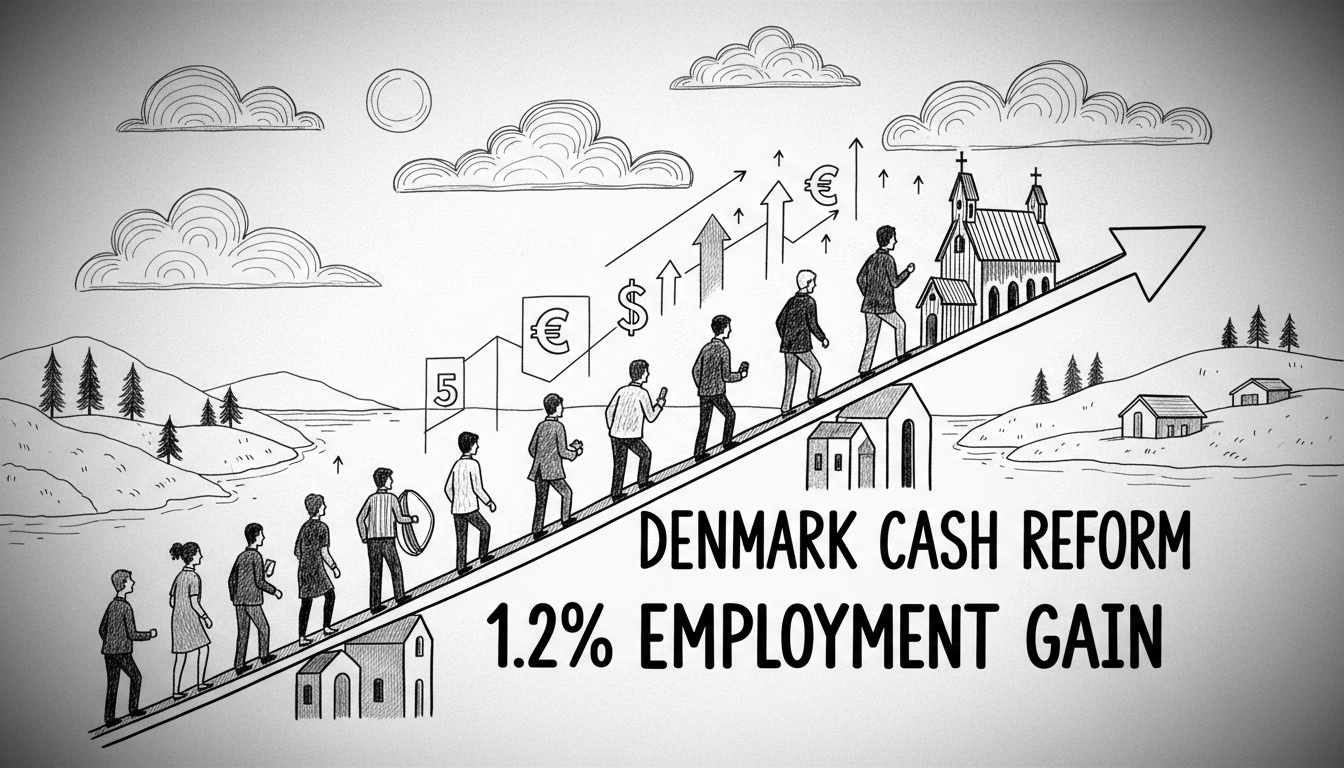
Denmark's controversial cash assistance reform, designed to push people into work, has yielded a minimal employment increase. Data shows only a 1.2 percentage point rise in working recipients one year after major changes. This modest result clashes with the government's core argument that cutting benefits would incentivize labor market participation. Thousands now face deeper poverty with reduced incomes.
For people like Miriam, a 48-year-old Copenhagen resident, the reform's mathematics are painfully clear. Her cash benefit was reduced, and the special housing allowance for recipients was abolished. The promise that she could earn more by taking a small part-time job without penalty has not materialized into stable work. "The pressure is constant, and the safety net is gone," she says, describing a new layer of anxiety over bills. Her story echoes in social centers across Danish municipalities, where caseworkers report more clients struggling to make ends meet.
The Promise of Work Incentives
The kontanthjælpsreformen (cash assistance reform) represents a classic Danish social policy dilemma. How does a society balance a generous welfare system with the need to encourage employment? The government's answer was to significantly restructure the rules. A central pillar was making it more financially attractive to take on minor jobs. Recipients can now earn more from part-time work before their benefits are reduced. Officials argued this would create a clear pathway from dependency to self-sufficiency. They framed cutting base benefits and removing the housing supplement as difficult but necessary steps to make work pay.
"The intention is to break with a culture of passive support," a senior official from the Ministry of Employment said in a statement. "We must have a system where it always pays to take a job, even for a few hours a week." This logic follows decades of welfare adjustments aimed at sustaining Denmark's famous model. The reform targeted a specific group: long-term recipients of cash benefits, a group that often includes immigrants, people with health challenges, and those with low formal education.
The Reality of Modest Gains
Newly released figures tell a different story. The anticipated surge in employment among recipients has not happened. The increase of 1.2 percentage points is statistically slight. In practical terms, it means the vast majority of recipients have not found work despite the altered incentives. Analysts point to a flawed assumption. "The reform presupposes that jobs are readily available and that recipients can easily access them," says Karen Møller, a social economist at the University of Copenhagen. "It ignores barriers like unrecognized credentials, health issues, and discrimination in the labor market, especially in major cities like Copenhagen."
Integration experts note that for many non-Western immigrants, who are overrepresented in the cash benefit system, these barriers are particularly high. Language proficiency and network gaps are not solved by changing benefit calculations. The reform has therefore achieved a perverse outcome. It has reduced the immediate income of vulnerable groups while failing in its primary goal of moving them into employment. Community leaders in neighborhoods like Nørrebro and Vollsmose report increased reliance on food banks and charity.
Expert Analysis and Criticism
The data fuels fierce criticism from opposition parties, charities, and academic circles. They argue the human cost is too high for such a negligible effect on employment. "The modest effect cannot legitimize that this reform pushes many people into poverty," says Pia Olsen Dyhr, leader of the Socialist People's Party. This sentiment is backed by poverty researchers who warn of a creeping increase in economic exclusion. When basic housing costs become unmanageable, the resulting stress can further diminish a person's capacity to seek work or training.
Some municipal social offices express frustration. While implementing the state-mandated reform, they are on the frontline dealing with the consequences. "We are now using our local funds for emergency financial aid more than before," notes a social department head in Aarhus, who asked not to be named. "It shifts the burden from one part of the system to another without solving the core problem." This highlights a tension between national policy and local reality in Denmark's welfare system.
Looking Ahead
The debate over this reform touches the very heart of Denmark's social contract. It questions how effectively employment can be legislated through economic incentives alone. The 1.2% figure will likely become a key point in future political negotiations over social policy. Critics demand a rollback of the deepest cuts, while the government may point to the need for longer-term evaluation.
The experience of the cash assistance reform offers a sobering lesson. Complex social challenges like long-term unemployment are rarely solved by simple economic levers. A successful policy likely requires a more integrated approach. This would combine fair economic incentives with substantial investment in upskilling, health support, and targeted job creation. As Miriam puts it, "I want to work. But I need a real chance, not just a smaller benefit." The future of Danish welfare policy may depend on listening to that distinction. Denmark's commitment to both social cohesion and a dynamic labor market is now being tested by the real-world results of this ambitious reform.