
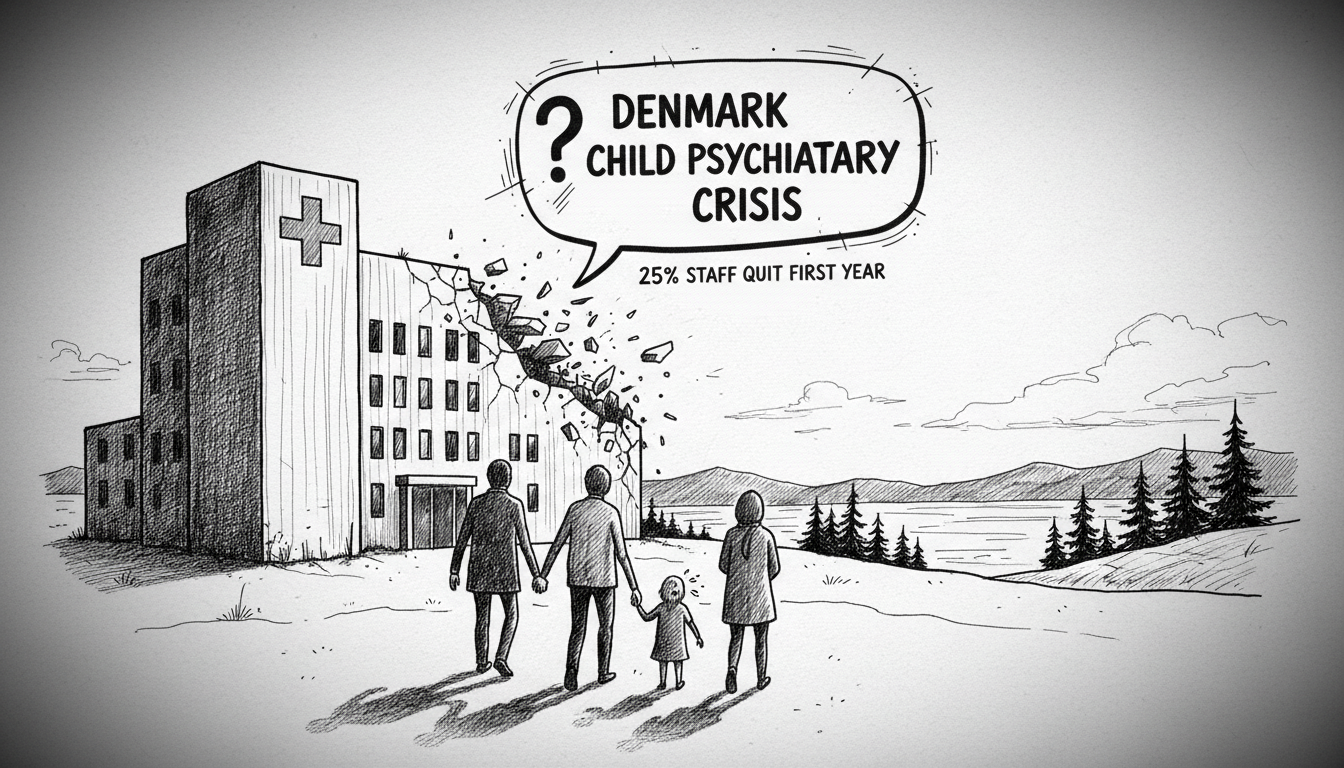
Denmark's child psychiatry system is hemorrhaging staff at a rate that threatens its core function. In the Capital Region, one in four new hires in child and adolescent psychiatry leaves within their first year, a stark figure that illuminates a system at breaking point. This exodus turns the critical task of reducing waitlists for vulnerable young people into a modern-day Sisyphean labor. I have reported on Danish society and integration for years, observing how pressure points in the welfare system eventually crack. This is one of the loudest cracks yet, echoing through clinics and family homes across Copenhagen and beyond.
A System Pushed to the Brink
The statistics are a clear distress signal. A 25% first-year turnover rate among new staff is unsustainable for any healthcare service. For child and adolescent psychiatry (BUP), it is catastrophic. This specialty requires highly trained professionals—psychiatrists, psychologists, nurses, and social workers—who build deep, trusting relationships with young patients. Constant staff churn disrupts these essential therapeutic bonds. It forces remaining colleagues to manage larger caseloads, perpetuating a vicious cycle of burnout and departure. The Capital Region, responsible for healthcare for over 1.8 million people, is the epicenter of this crisis but the problem is national. Wait times for an initial assessment can stretch to six months or more, far beyond clinical guidelines. Treatment waits are longer still, leaving families in agonizing limbo.
The Human Cost of the Churn
The impact of this staffing crisis is not abstract. It is measured in the deteriorating mental health of children who wait, and in the exhaustion of those trying to help. ‘It feels like we are constantly running just to stand still,’ a psychologist who left the public system after 18 months told me, requesting anonymity due to career concerns. ‘You are hired with idealism, wanting to make a difference. But you immediately face impossible caseloads, bureaucratic paperwork, and the moral injury of knowing children are worsening on waitlists you cannot clear.’ This sentiment is common. The work becomes a relentless push against overwhelming demand, mirroring the myth of Sisyphus condemned to roll a boulder up a hill only for it to roll down again. For parents, the experience is one of desperate advocacy. Karen Møller, a mother in Lyngby, spent over a year seeking help for her anxious son. ‘Every time we got close to starting therapy, our contact person would change,’ she says. ‘We had to retell our story three times. It’s retraumatizing, for him and for us.’
Why Are They Leaving?
Experts point to a confluence of factors driving the exodus. First is simply overwhelming demand. Awareness and diagnosis of conditions like anxiety, depression, and ADHD have risen sharply. The system, despite incremental funding increases, has not expanded capacity in step. Second is workload intensity. The cases are complex, involving not just the child but schools, municipalities, and social services. The administrative burden documenting everything for multiple agencies is immense. Third is a competitive job market. Qualified professionals can find less stressful, better-paid work in private practice, for corporations, or in other Nordic countries. ‘We train them, and then the system burns them out,’ says Lars Bo Jørgensen, a union representative for healthcare professionals. ‘The starting salary for a psychologist in the region is not competitive with the private sector. When you add the unsustainable pressure, the choice for many is simple, even if painful.’
Structural Flaws and Political Challenges
The crisis exposes deeper structural issues within Danish healthcare and social policy. Child psychiatry sits at a problematic intersection between regionally-run healthcare and municipally-run social services. Coordination between these entities is often clumsy, with referrals lost and responsibilities blurred. Furthermore, national political focus has often been on cutting wait times through top-down mandates without adequately addressing the workforce capacity needed to achieve those goals. It is a classic pressure without support. The Capital Region acknowledges the problem. In a statement, the head of the children and adolescents area noted, ‘We are deeply concerned about the turnover. We are working on initiatives to improve the working environment, including better onboarding and mentorship for new colleagues.’ Yet these measures, while positive, seem insufficient against the tidal wave of demand. Analysts argue for a fundamental re-think. ‘We need to look at tiered models of care, digital tools for milder cases, and much stronger recruitment and retention incentives,’ suggests Mette Lindgaard, a healthcare policy analyst at a Copenhagen think tank. ‘But ultimately, it requires a significant, long-term investment that politicians have been reluctant to make.’
A Path Forward?
Solutions are complex but evident. First, retention must become the priority. This means tangible improvements: realistic caseloads, reduced administrative burdens, competitive salaries, and clear career pathways. Second, the model of care needs innovation. Can specialized educational psychologists in schools handle more front-line screening? Can secure digital therapy platforms triage and treat milder cases, freeing specialists for severe ones? Third, the funding model must reflect reality. Annual budgets cannot sustain this service; multi-year, capacity-focused investment is required. Some municipalities have begun local partnerships to bridge gaps, but a national strategy is crucial. The alternative is a continued degradation of a service fundamental to Denmark's social contract. The nation prides itself on a welfare system that supports citizens from cradle to grave. This crisis directly undermines that promise for its youngest and most vulnerable. The children on waitlists today will become the adults requiring more intensive, costly social and healthcare support tomorrow. The economic argument for early, effective intervention is as strong as the moral one. As one veteran nurse in a Copenhagen outpatient clinic told me, ‘We are the canary in the coal mine. If this system fails, it tells you something profound is breaking. These kids are our future. What does it say if we won’t help them now?’ The stone is at the bottom of the hill again. The question for Denmark is whether it will finally give Sisyphus the tools, and the help, he needs to push it to the top.