
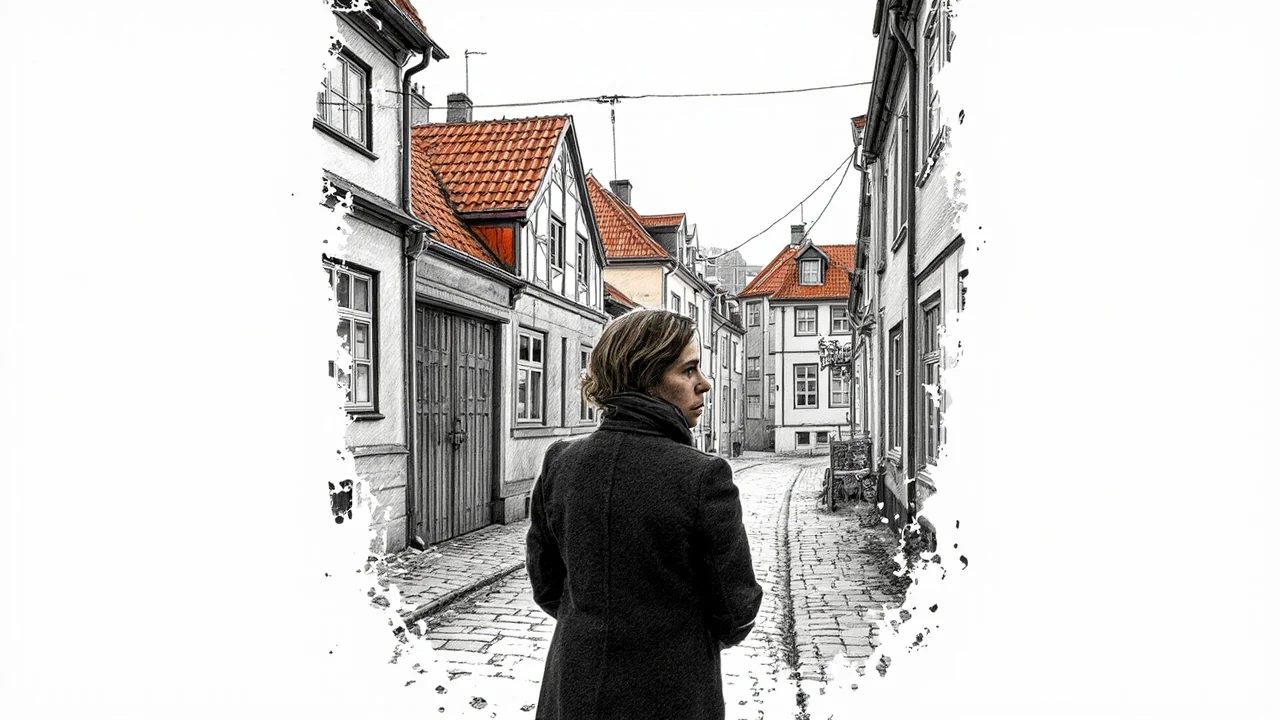
Denmark's cherished sense of public safety was violently shaken last Friday morning on a busy Copenhagen street. A mother pushing her three-week-old daughter in a stroller near Nørrebro Runddel allegedly had a man attempt to snatch her infant from the pram. The incident, occurring in broad daylight around 10:40 AM, has sent shockwaves through the local community and sparked urgent conversations about security in urban spaces. For the young mother, a routine walk transformed into a moment of primal terror. She managed to prevent the abduction, but the psychological aftermath lingers. Copenhagen Police have confirmed the report and launched an investigation, seeking video surveillance from the area to clarify the events. This single act of attempted violence challenges the foundational trust parents place in their surroundings.
A Community's Immediate Response
The mother turned to her local network in the immediate aftermath, posting in the Facebook group 'Det sker på Nørrebro'. Her message was a plea for witnesses and a stark warning to other parents. 'There were many people in the area at that time, so if you were nearby and saw something, or have other relevant information, I would be very grateful to hear from you,' she wrote. This digital outreach highlights how community vigilance has become a first line of defense. The post quickly circulated, generating hundreds of comments expressing solidarity, fear, and anger. Such groups have evolved from simple noticeboards into vital neighborhood watch platforms, especially in densely populated areas like Nørrebro. They facilitate a rapid, grassroots response that official channels cannot always match.
Police confirmed the woman contacted them twice—first immediately after the incident and again on Saturday morning to file an official report. 'We are now investigating the case and are investigating, among other things, by obtaining video surveillance from the area so we can clarify the course of events more closely,' a police supervisor said in a statement. The transition from personal shock to formal procedure is a difficult path for any victim. It underscores the dual trauma of the event itself and the subsequent bureaucratic process of seeking justice. For many, reporting such a crime is an act of profound hope in a system they now view with heightened suspicion.
The Psychology of Public Fear
Child abduction attempts are exceptionally rare in Denmark, a fact that magnifies their psychological impact when they occur. The randomness and brutality of the alleged attack disrupt the social contract. Public parks and sidewalks are not meant to be battlegrounds. Child psychologist Mette Holmberg, who has worked with families after traumatic events, explains the lasting effect. 'An incident like this doesn't just affect one family,' Holmberg notes. 'It seeds a latent anxiety in an entire community of parents. The world instantly seems less safe, and that perception alters behavior—where people walk, how closely they guard their children, their level of constant alertness.' This collective anxiety can erode the very social cohesion that defines Danish neighborhoods.
The mother stated she is 'okay under the circumstances' but naturally shaken. This understatement is telling. Danish society often values resilience and a sober response to crisis, yet the internal turmoil for this family will be significant. The infant, though physically unharmed, was at the center of a violent intrusion. The mother's sense of security as a primary protector has been fundamentally challenged. Recovery is not simply about forgetting the event but rebuilding a sense of agency and safety in a world that has proven unpredictably dangerous. Community support will be crucial, but the shadow of the event may linger for years.
Policing and Prevention in Urban Spaces
This case forces a re-examination of policing and urban design in Copenhagen's diverse districts. Nørrebro is known for its vibrant street life and cultural mix, factors that usually contribute to natural surveillance. The alleged attempt happened not in a secluded alley but in a populated area, suggesting either extreme brazenness or a disturbed mental state in the suspect. Police investigations now hinge on technical evidence—CCTV footage—to identify the individual. This reliance on technology highlights both a tool for justice and a potential gap in human, on-the-ground presence that might deter such acts.
Municipal social policy often focuses on long-term integration and welfare, but acute public safety incidents demand immediate, tangible responses. There is an inherent tension between maintaining open, inviting public spaces and implementing security measures. Do cities install more cameras, increase police patrols, or foster stronger community bonds as a deterrent? Each approach carries different implications for the social fabric. For parents in Copenhagen, the abstract concept of 'safety' has been replaced by a specific, frightening image. They will now judge policy effectiveness by a simple metric: can they walk their child to the park without fear?
A Broader Look at Safety and Society
Statistically, Denmark remains one of the safest countries in the world for children. The violent crime rate is low, and the welfare system provides a strong safety net. Yet, statistics offer little comfort to a mother who has stared into the face of a potential kidnapper. This incident exposes the difference between macro-level safety data and micro-level personal experience. One violent act can undo years of perceived security. It raises uncomfortable questions about mental health services, social alienation, and what drives an individual to such a desperate, horrific act against a defenseless infant.
The story also intersects with ongoing debates about gender and public space. Women, and mothers in particular, often navigate cities with an ingrained awareness of vulnerability. This event codifies a worst-case scenario, potentially limiting the freedom of movement that is a basic right. Will parents think twice before a solo stroll with their baby? The answer, unfortunately, is likely yes. This reduction in freedom is a silent cost of the attack, one that diminishes the quality of urban life. The social contract requires trust, and that trust has been damaged.
Moving Forward: Vigilance vs. Freedom
As the police investigation continues, the community of Nørrebro and parents across Denmark are left in a state of heightened awareness. The mother's ordeal is a chilling reminder that safety can never be taken for granted. It calls for a balanced response—one that prioritizes support for the affected family, thorough police work, and community solidarity without succumbing to generalized fear. Danish society is built on principles of trust and openness. The true test will be whether it can absorb this shock without letting those principles erode. Can vigilance and freedom coexist, or does one inevitably diminish the other? The path forward requires protecting the most vulnerable without imprisoning everyone in a fortress of suspicion. The hope is that the collective response will reinforce the community bonds that are the ultimate defense against isolated acts of terror. For now, a mother's walk home will never feel quite the same, and a city is left to wonder how to heal the breach in its peaceful facade.