
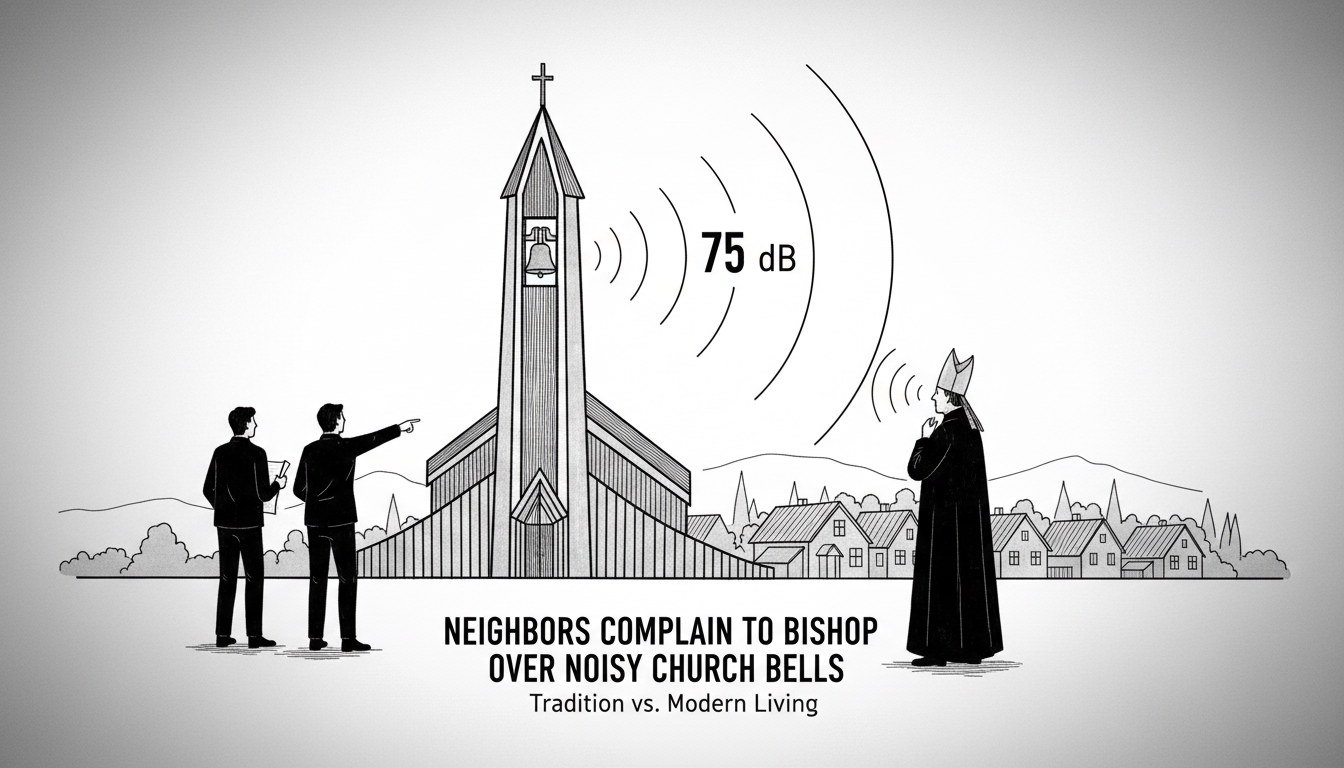
Every morning at 8 AM, the bells ring at Højvangen Church in Skanderborg. The sound pounds in residents' chests, according to several neighbors.
Rune Kier Nielsen lives next to the church. He says the bells cause physical discomfort.
"It's not just about being woken up. The sound echoes in your head for up to half an hour after the bells stop. If you have a migraine or headache, it's hard to find the peace you need," Nielsen explained.
Ten neighbors have complained to the Aarhus Diocese bishop about noise from the church bells. The church is less than a year old.
Residents feel ignored by local church authorities. They previously spoke with the Skanderborg Parish Council without success.
The church installed a carbon hood to dampen the bell sounds. Nielsen acknowledges this made the sound less shrill but says volume remains unchanged.
Neighbors measured the bells using smartphone apps. Readings showed up to 75 decibels.
Local noise regulations for residential areas range from 35 to 45 decibels depending on time and day. Churches are exempt from these rules under Danish law.
Nielsen argues this exemption is unfair. "If a church announces its presence in a residential area, it should follow the same rules as everyone else," he said.
Church officials express regret about the complaints. Laura Gylden-Damgaard, Dean of Skanderborg Deanery, says they're seeking solutions.
"We've also received many expressions of joy about having bell sounds in the area. It's a balance between those who love church bells and those bothered by them," she noted.
The church will commission professional sound measurements. They want to compare Højvangen's bells with two other churches in town.
For Nielsen, the issue isn't about disliking bell sounds—it's about volume.
"It's not pleasant to be woken by noisy bells. Not even if they play Vivaldi. We're the closest neighbors experiencing the highest volume. If the church would just turn down the volume, we could all coexist," he stated.
Church officials say reducing bell volume isn't simple. Laura Gylden-Damgaard explains technical and financial challenges.
"Turning down the bells isn't something you do easily. It's both technically difficult and expensive. The effort and effect must be balanced," the dean said.
Nielsen questions why churches have special legal status. He wonders what local politicians think about noise rules they set but cannot enforce against churches.
"There's something principled about this case. I really want to know how politicians feel about noise limits they establish not being followed—and that they can't do anything about it," Nielsen said.
He's correct that local politicians cannot act against the church. Skanderborg Mayor Frands Fischer confirmed this in a written statement.
"The sound from church bells is regulated in a very special way in legislation, and we have no possibility to act on this. Regarding this matter, I can only appeal for dialogue with the church and parish council and encourage good neighborliness," Fischer wrote.
Peter Kruse, lead candidate for Liberal Alliance in Skanderborg, believes laws should apply equally.
"The church has societal importance, but if it causes serious nuisance to neighbors, I must look at how we can solve it," Kruse said.
He hopes neighbors and church can resolve the matter themselves.
The situation highlights a common tension in Nordic countries where historic institutions operate within modern residential communities. Churches maintain traditional practices while new residents expect contemporary noise standards.