
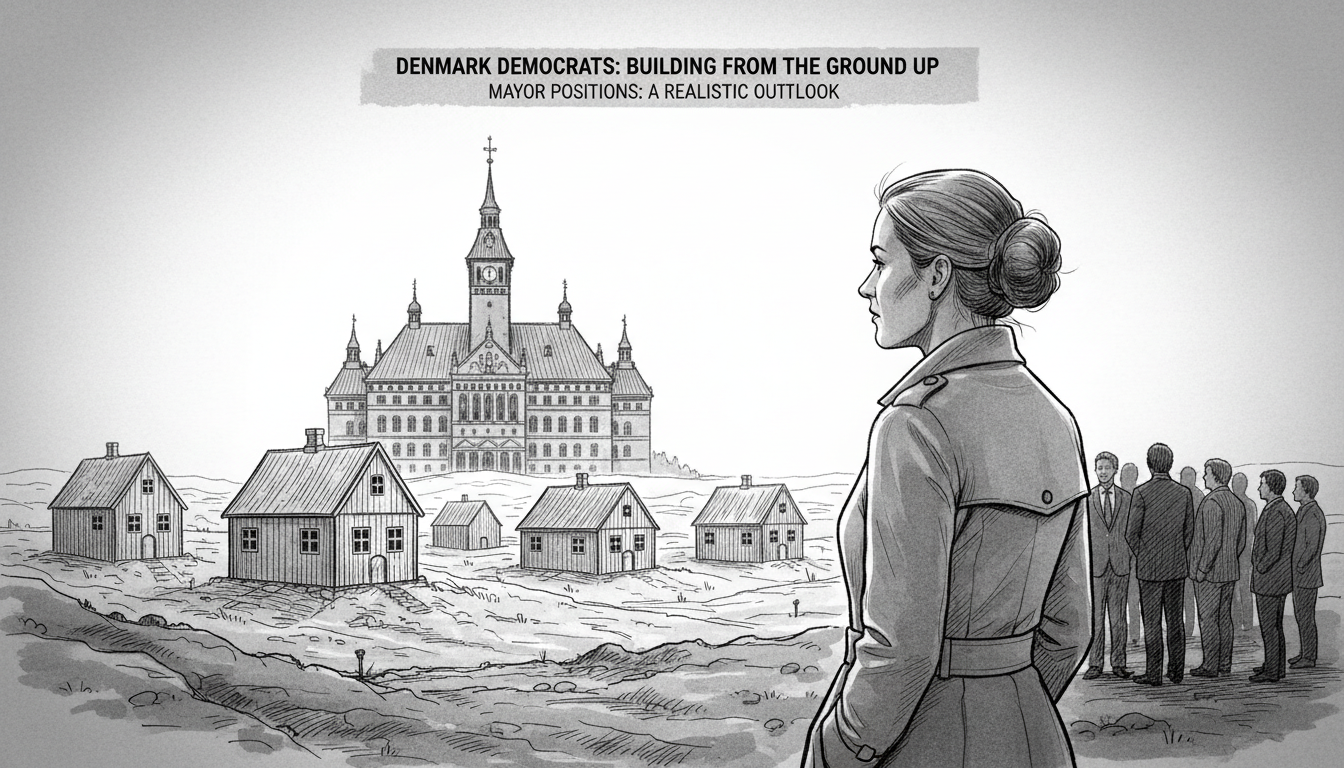
Denmark Democrats leader Inger Støjberg maintains realistic expectations about her party's chances of securing mayor positions despite strong polling numbers. The party founder voted in Hadsund Hall on election day while tempering expectations about immediate political victories.
Støjberg emphasized that success means gaining as many seats as possible in municipal councils. She acknowledged the challenges facing new political movements. Many voters choose familiar candidates, she noted, while most Denmark Democrats candidates remain unknown to the public.
This marks the first municipal election for the Denmark Democrats since their establishment. The party gained parliamentary approval and won 14 seats in the national parliament during its initial year. Despite this early success, Støjberg consistently downplays expectations about securing leadership positions at the municipal level.
When asked about potential victories in municipalities where her party might outperform established parties like Venstre, Støjberg maintained her cautious stance. She repeated that she doesn't consider such outcomes realistic at this stage.
The political landscape in Mariagerfjord Kommune adds context to Støjberg's tempered expectations. The municipality's Venstre mayor Mogens Jespersen concludes his 12-year tenure with this election. Denmark Democrats' lead candidate in the area is Svend Madsen, though Støjberg declined to specify her personal vote beyond supporting her party.
New parties face particular challenges in Danish local politics. The system favors established networks and familiar faces. Denmark Democrats appear on ballots in 82 of Denmark's 98 municipalities under the ballot designation Æ. This broad presence demonstrates the party's national ambitions despite its newcomer status.
Støjberg's transportation to the polling station reflected her party's grassroots approach. She arrived in a minibus featuring the party leader's portrait. This visual symbolism underscores the personal nature of her political movement while highlighting the resource differences between new and established parties.
The Denmark Democrats represent a growing trend of personality-driven political movements in Nordic countries. These parties often struggle to translate national recognition into local government success. Municipal elections test organizational strength and local connections more than national popularity.
Støjberg's consistent message about realistic expectations serves multiple purposes. It manages supporter expectations while positioning the party as pragmatic rather than overly ambitious. This approach could benefit the party long-term by allowing them to claim success with modest gains while building local foundations for future elections.
Danish municipal elections determine local leadership for the next four years. Mayors wield significant influence over local services, planning, and budgets. Securing these positions requires both electoral success and coalition-building skills that new parties often lack initially.