
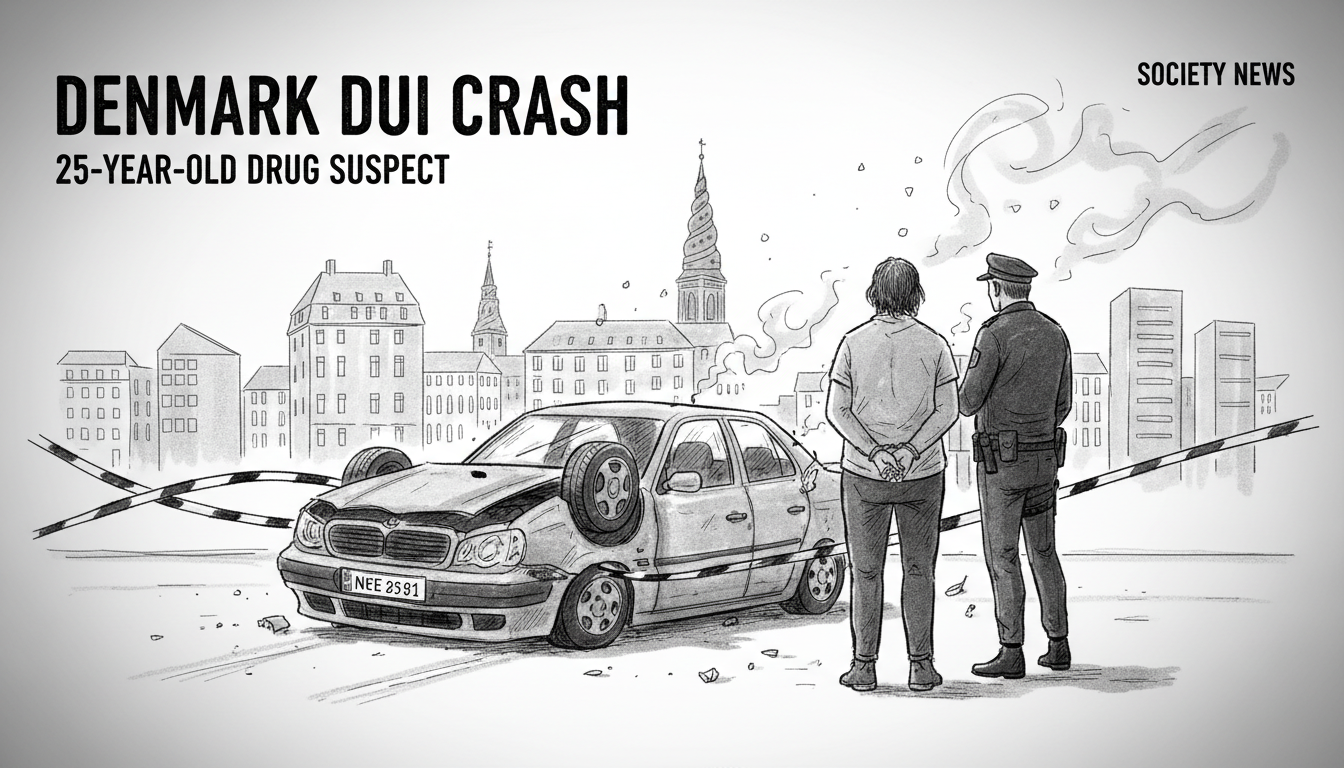
Driving under the influence contributes to a significant percentage of Denmark's road accidents each year. That grim statistic turned visceral on Tuesday evening when a 25-year-old man, suspected of drug impairment, triggered a chain-reaction crash into a house wall in Terndrup. The incident on Hadsundvej saw his vehicle strike a parked car, propelling it into a third car before impact with the residential property. North Jutland Police have formally charged the driver, highlighting a persistent challenge within Danish society news and road safety policy.
A Terrifying Chain Reaction
Tuesday's crash unfolded around 6:15 PM in the quiet community of Terndrup. According to police reports from Himmerland, the sequence began when the 25-year-old driver collided with a stationary vehicle. The force of that impact sent the parked car careening into another, with the final car striking a house wall. Fortunately, no serious injuries were reported from the scene, but the material damage and psychological shock for residents are considerable. Such events resonate deeply in close-knit Danish municipalities, where traffic safety is a cornerstone of local welfare.
This case immediately shifted from accident report to criminal investigation. Officers at the scene suspected drug impairment and conducted standardized tests. The 25-year-old was subsequently charged, his case now entering the Danish legal system. This swift response is typical of Denmark's proactive stance on impaired driving, a key element of its social policy framework aimed at protecting public safety.
The Legal Framework: Denmark's DUI Laws
Denmark enforces some of Europe's strictest laws against driving under the influence. The legal blood alcohol content (BAC) limit is 0.05%, lower than many countries. For drugs, there is a zero-tolerance policy for substances like cannabis, cocaine, and amphetamines. Penalties for DUI offenses are severe and escalate with severity. First-time offenders can face hefty fines and a driving ban. Repeated or aggravated cases, especially those causing accidents, often result in imprisonment and lengthy license revocations.
Police conduct regular and random roadside checks, a visible enforcement strategy known as 'alkokontrol'. These checks are integrated into daily patrols and larger coordinated campaigns. The system is designed for deterrence, creating a perceived high risk of getting caught. From my perspective covering Danish welfare systems, this approach reflects a societal consensus: individual freedoms end where they endanger communal safety.
Enforcement and Social Costs
The Danish Road Safety Agency consistently cites impaired driving as a major factor in serious collisions. While exact figures fluctuate, it remains a leading cause of fatal accidents. Beyond the immediate legal consequences, drivers convicted of DUI face significant social and professional repercussions. A criminal record can hinder employment, especially in fields requiring clean driving records or high public trust.
Community policing plays a vital role here. Local officers in areas like Nordjylland build relationships that aid in both prevention and reporting. After an incident like Terndrup's, social services in the municipality may also engage, particularly if substance abuse is identified as an underlying issue. This connects to broader integration and social policy, where support systems aim to address root causes rather than just punish outcomes.
Expert Insights on Prevention
Road safety experts I consult emphasize that impaired driving destroys judgment and reaction times. 'The science is clear,' one expert told me. 'Even small amounts of alcohol or drugs drastically increase crash risk. Denmark's laws are strong, but constant vigilance and education are essential.' They advocate for sustained public awareness campaigns, targeting young drivers in particular, and investing in roadside testing technology.
These experts also point to the need for holistic strategies. This includes accessible substance abuse treatment and promoting alternatives like public transport. In larger cities such as Copenhagen, integration policies often link mobility to social inclusion, ensuring new residents understand these critical laws. The goal is a cultural norm where driving unimpaired is non-negotiable.
A Broader Societal Mirror
Incidents like the Terndrup crash are more than isolated news items. They reflect ongoing debates about personal responsibility, legal boundaries, and social welfare. Denmark's high trust in state institutions relies on consistent application of such laws. When they are breached, it challenges the social contract.
As a reporter focused on integration, I see parallels. Successful integration involves adopting societal rules, including traffic safety norms. The response to this crash—swift police action, potential legal consequences, and community discussion—demonstrates the system in motion. It shows how Danish social policy operates from the local level up, aiming for collective security.
The Road Ahead for Terndrup
The 25-year-old suspect now awaits his day in court. His case will proceed through the Danish judicial system, where evidence of drug use will be examined. For the residents of Hadsundvej, repairs will begin, but the memory of the crash will linger. It serves as a stark reminder during the summer months, when traffic increases and vigilance is paramount.
Danish society continues to grapple with ensuring road safety for all. This event reinforces why the rules exist. It also prompts questions about support for those struggling with addiction. Will this driver receive rehabilitation help if needed? How can communities better prevent such incidents? The answers lie in the balance between enforcement and compassion that defines the Danish approach. The wall in Terndrup can be rebuilt, but rebuilding trust in road safety requires every driver's commitment.