
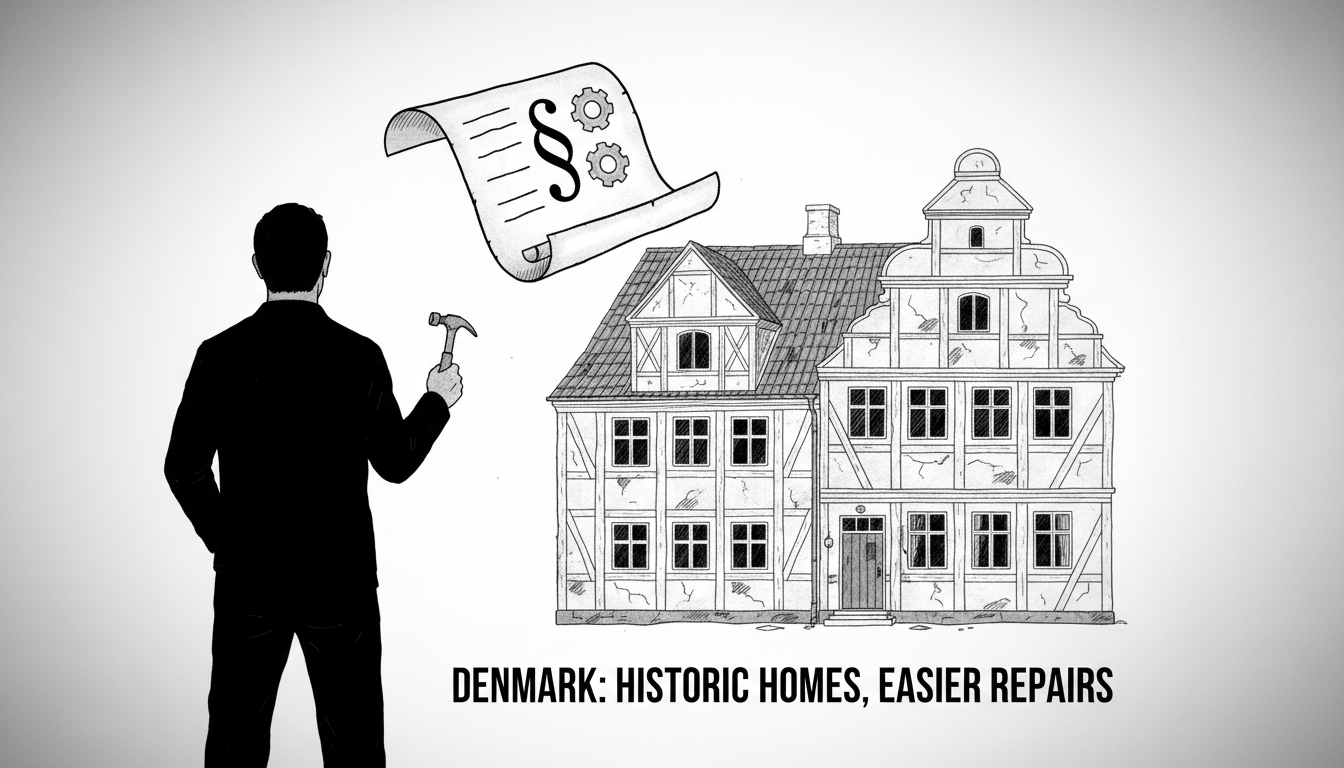
Owners of Denmark's protected historic buildings may soon face less red tape for minor repairs and modifications. An expert group has proposed significant simplifications to the current system, aiming to make daily life easier for residents while preserving cultural heritage. The recommendations focus on allowing more work without prior permission from the Danish Agency for Culture and Palaces.
This includes repairs to plaster on walls and ceilings or installing handrails for people with disabilities. In many cases, owners could receive a digital instant decision, allowing work to begin immediately. Culture Minister Jakob Engel-Schmidt stated the current process is too cumbersome for ordinary homeowners. He expressed support for the changes, which he believes will prevent protected buildings from becoming empty, decaying museums.
There are approximately 7,100 protected buildings across Denmark today. The minister warned they risk becoming less attractive to buy or maintain if the process involves excessive hassle. He emphasized that permission would still be required for fundamental changes or alterations to a building's appearance. The core goal is to balance preservation with practical livability.
From my perspective covering Danish society and integration, this policy shift touches on deeper themes of housing accessibility and community sustainability. Historic buildings are not just monuments. They are homes, businesses, and community centers. Overly strict preservation can unintentionally push people out, reducing urban diversity and creating sterile districts. This is a tangible example of social policy affecting daily integration. When people can modify their homes for accessibility, it supports aging in place and inclusive communities.
The expert group also recommends categorizing protected buildings into three clear tiers. A building where only the exterior is protected would be in a different category than one with protected interior elements. The most significant buildings would receive special attention in the approval process. This clarity is crucial. Many owners currently navigate a confusing web of rules, unsure what they can and cannot touch.
The proposed changes would mean less administration for the cultural agency. The minister referred to a 'nice administrative saving,' though the exact figure remains unspecified. This reflects a broader trend in Danish welfare and regulatory systems. There is a growing push to simplify citizen-state interactions, reducing bureaucratic friction while maintaining core protections. It is a pragmatic attempt to make historic preservation work for the people who live with it every day.
The success of this initiative will depend on its implementation. Clear guidelines must prevent the erosion of heritage while granting genuine flexibility. Municipalities and local social centers often become the first point of contact for confused residents. Streamlining this process could free up municipal resources for more complex integration and social support tasks. It is a small but meaningful step in adapting historic policy to modern living needs.