
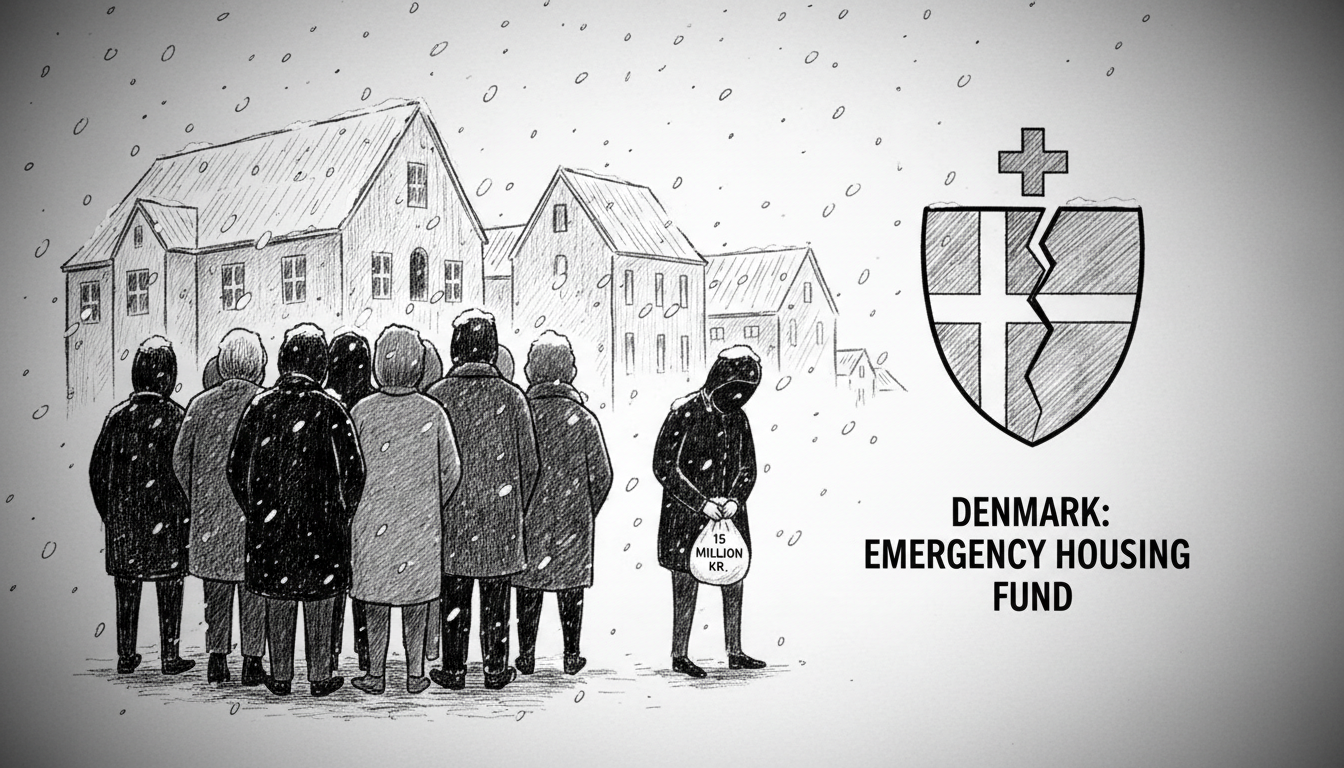
The Danish government has announced an extraordinary 15 million kroner fund to prevent citizens from losing their homes. This move follows intense criticism of a recent welfare benefit reform. Social and Housing Minister Sophie Hæstorp Andersen will present the temporary rent subsidy proposal in early December. The funds should reach vulnerable citizens by mid-February. The initiative aims to provide a direct lifeline to those at risk of homelessness.
A government minister recently acknowledged the connection between the new fund and the controversial benefit reform. This admission stands in contrast to the Social Minister's earlier position. The Social Minister had previously stated the need for housing assistance could not be directly attributed to the reform. This divergence highlights internal tensions within the coalition government regarding policy consequences. The temporary rent subsidy represents a significant policy adjustment after sustained public pressure.
This situation reveals a core tension in Danish social policy. The nation's renowned welfare system balances universal support with strict eligibility requirements. Integration statistics often show that new arrivals and long-term benefit recipients face the highest housing insecurity risks. Municipal social centers in Copenhagen and other cities report increased demand for emergency services. Community leaders in neighborhoods with diverse populations have voiced concerns for months. They warned that reduced benefits would push vulnerable families toward eviction.
Denmark's immigration policy and integration framework are deeply intertwined with its social safety net. Policy changes in one area often create unintended consequences in another. The 15 million kroner fund, while urgent, is a reactive measure. It addresses a symptom rather than the systemic causes of housing precarity. Experts question whether a one-time subsidy can solve a structural problem. The debate centers on whether the welfare system's primary goal is temporary relief or sustainable inclusion.
What does this mean for Copenhagen integration efforts? Stable housing is the foundational step for successful integration into Danish society. Education and employment outcomes improve dramatically when people have a secure home. The current crisis threatens to undo years of progress in certain communities. Local municipalities now bear the responsibility of distributing the new funds fairly. They must identify those most at risk before winter deepens. The coming months will test the resilience of Denmark's social contract.
The proposed legislation is a clear acknowledgment that the benefit reform created real hardship. It is a corrective action, but it arrives late for some families. The government's challenge is to provide immediate relief without abandoning its broader policy objectives. This episode serves as a reminder that social policy requires constant evaluation and adjustment. The true cost of reform is measured in human stability and community cohesion. Denmark's approach to this dilemma will be watched closely by other Nordic nations facing similar pressures.