
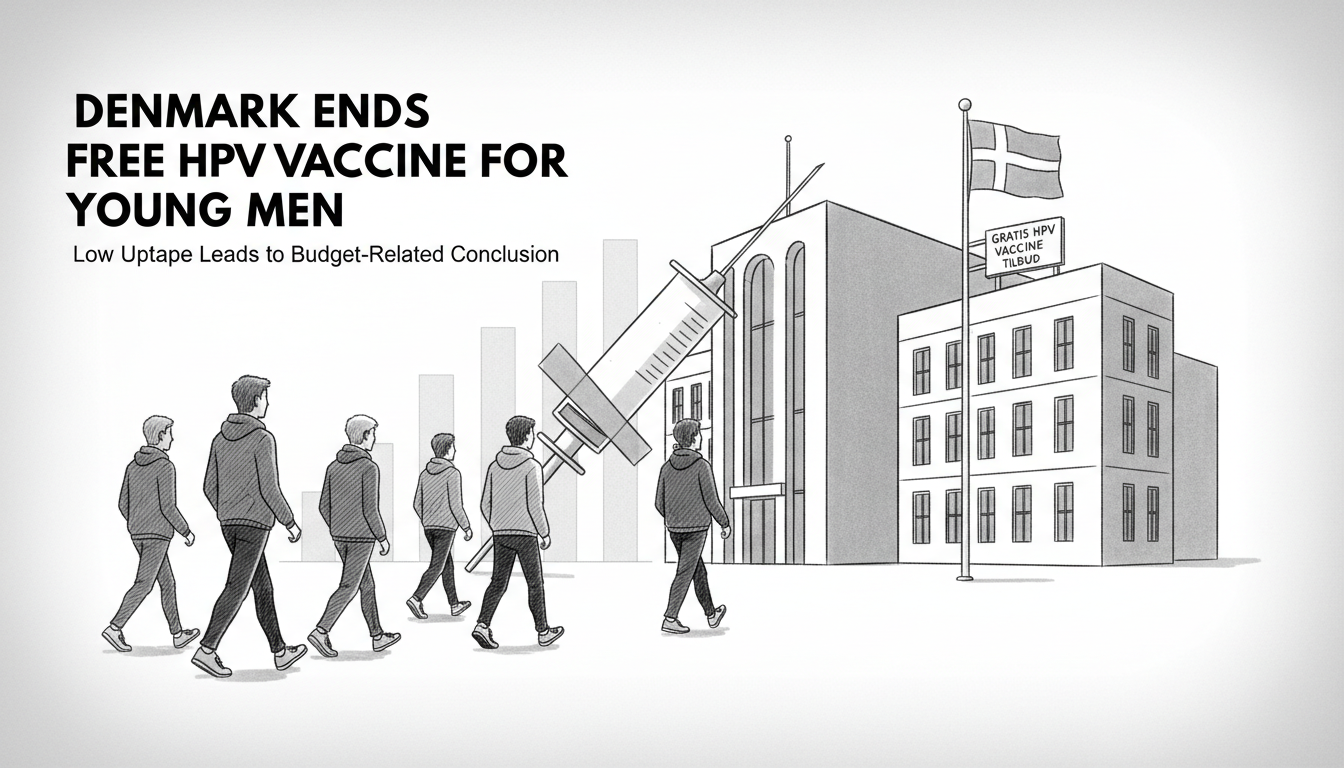
A special offer for free HPV vaccinations for a specific group of young Danish men is ending. The program targeted men born in 2005 who missed the routine childhood immunization. This initiative was part of a time-limited 'catch-up' effort funded by a specific budget allocation. The funding for this particular program is not being renewed, officials confirm. The decision follows vaccination rates that experts describe as disappointing.
Data from the national health institute shows a clear picture. Before the campaign started, only 31 percent of the eligible cohort had received their first dose. By early December, that figure had risen to 45 percent. The number of fully vaccinated individuals reached 31 percent. Public health officials had hoped for stronger participation. The program had a dedicated budget of 24 million Danish kroner. These funds were allocated in the annual finance law for a single year. No similar allocation appears in the next year's budget plan.
The Ministry of the Interior and Health clarified the situation in a statement. They said the one-year catch-up program for this specific target group was always planned with 2025 funding. Permanent funding continues for offering the HPV vaccine to boys as part of the standard childhood vaccination program. All children in Denmark are offered the vaccine when they turn 12. The program for girls began in 2009, and boys were included a decade later. The catch-up effort aimed to fill the gap for those who aged out before the universal offer.
HPV is a sexually transmitted virus. Nearly all sexually active people contract it at least once. Most infections clear on their own, but persistent infections with high-risk types can lead to cancer. The vaccine prevents these high-risk infections. The Danish welfare system typically provides such preventative care free of charge. This makes the conclusion of a targeted free offer a notable policy shift. It reflects a calculation on cost-effectiveness versus public health benefit for a smaller group.
From an integration and social policy perspective, vaccine uptake can vary across communities. Studies in Copenhagen and other municipalities sometimes show different health participation rates. Community centers and local clinics often play a key role in outreach. The end of this national campaign places responsibility on local health services. They must now encourage vaccination through standard channels. Young men who started their vaccination series before a late summer deadline will receive their remaining doses for free. Others must now pay for the vaccine themselves if they want it after the year ends.
The broader question is what this says about health communication and young men. Why was the uptake not higher for a free, preventative cancer vaccine? Some community leaders point to a need for more targeted information in schools and social centers. Others suggest the offer's temporary nature may have caused confusion. The Danish welfare system is built on high participation in public health programs. This case shows that even with a strong system, reaching every demographic equally remains a challenge. The story is not just about a budget line ending. It is about engaging young citizens in their long-term health within a society known for its robust social safety net.