
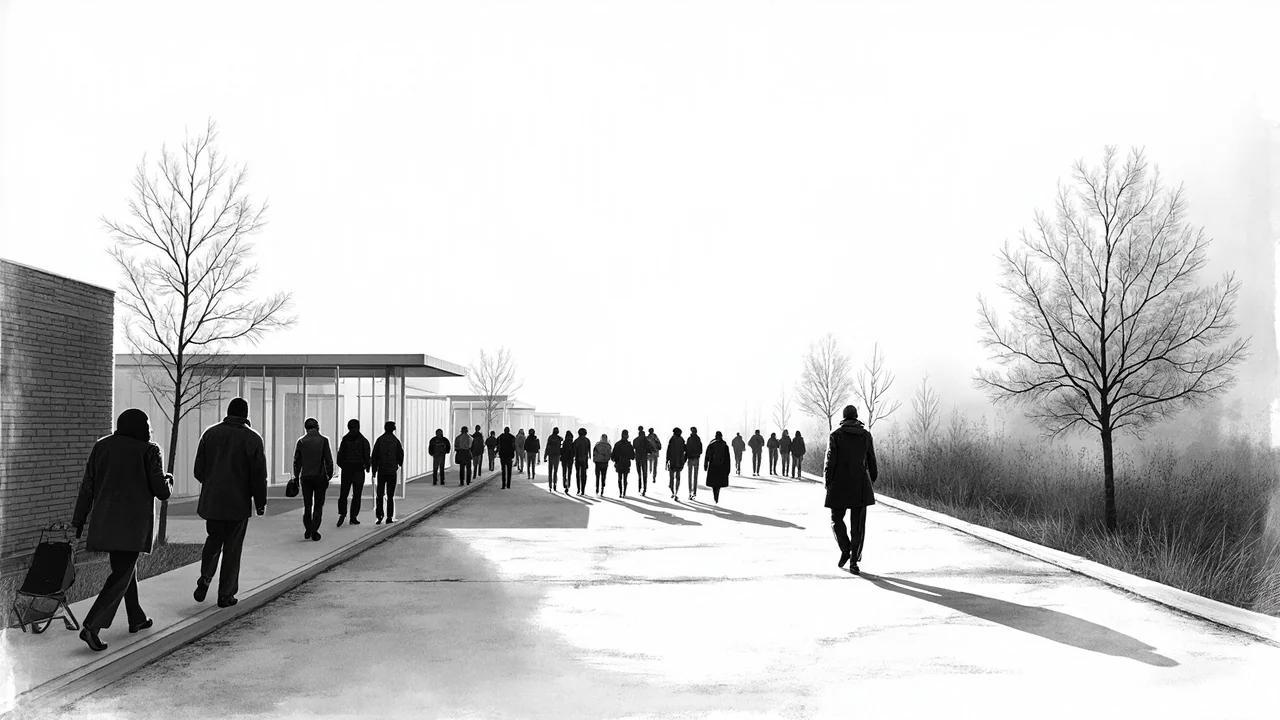
Danish emergency protocols were activated Sunday afternoon as a major transport and shopping complex in Aarhus was swiftly evacuated. Aarhus Central Station and the connected Bruuns Galleri shopping centre emptied within minutes after an automatic fire alarm sounded shortly after 3:00 PM. The incident, later confirmed as a false alarm, tested the coordination between first responders, private security, and municipal crisis plans, demonstrating the seamless public response expected in Danish society.
A Sunday Afternoon Disrupted
For hundreds of shoppers and travelers, a routine Sunday turned suddenly procedural. The sharp sound of the alarm cut through the ambient noise of the bustling centre, triggering immediate action. Within moments, the familiar flow of people reversed direction as security personnel and station staff began directing everyone toward the exits. Brian Arendtsen, operations chief for the East Jutland Emergency Services, indicated the high likelihood of an automatic alarm being the culprit, not fire or smoke. Fire engines arrived on scene minutes after the alarm first sounded, a standard and rapid response time that underscores Denmark's prepared infrastructure.
The evacuation proceeded in an orderly fashion, a testament to both public compliance and clear emergency planning. People spilled out into the cold afternoon, away from the interconnected buildings that form a vital nerve centre for the city. The incident halted regional train services and disrupted commerce, creating a ripple effect of delays and inconvenience. Yet, the priority remained unambiguous: human safety over schedule or sales. This value is deeply embedded in Danish public policy and building management regulations.
The Machinery of Public Safety
Events like this reveal the often-invisible framework of Danish welfare and safety systems. Automatic alarms are linked directly to municipal fire departments, ensuring no time is lost. Shopping centres and major transport hubs operate under strict national safety codes, which mandate regular drills and clear evacuation routes. The financial cost of such false alarms is absorbed by the system, viewed as a necessary expense for maintaining ultimate preparedness. This reflects the Danish welfare model's preventative approach, investing heavily in infrastructure and protocol to avoid catastrophe.
From an integration perspective, such public drills serve an unspoken social function. They act as a collective experience that reinforces shared norms: follow instructions from authorities, remain calm, prioritize the group's safety. For newer residents, navigating these unwritten social codes during a sudden alarm can be as challenging as learning the language. Community centers and municipal integration programs often include practical guidance on how to respond during public emergencies, which is a crucial part of fostering belonging and mutual trust.
Beyond the Alarm: Trust and Social Cohesion
The real story here is not the alarm itself, but the public's reaction to it. There were no reports of panic or refusal to comply. This high level of societal trust is a cornerstone Denmark spends considerable political and social capital to maintain. It is the same trust required for the welfare state to function and for integration policies to succeed. When authorities say evacuate, the public generally does so without question, believing the system works in their collective interest. This social contract is powerful but fragile, maintained through consistent transparency and effective outcomes.
Contrast this with scenarios where public trust in institutions is low; evacuations can become chaotic and disputed. The efficient handling of this incident, despite the disruption, likely reinforces public confidence. The fire service's quick public communication after the all-clear—attributing it to a technical fault—is key to maintaining that trust. In a multicultural society, ensuring all community segments understand and trust these protocols is an ongoing task for local municipalities and social services.
The Cost of Readiness
While no fire occurred, the event carried real economic and social costs. Train delays backed up regional schedules. Stores lost an afternoon of crucial weekend revenue. Emergency services deployed resources that were then unavailable elsewhere. This is the price of a safety-first paradigm. Danish policy consistently errs on the side of caution, a choice reflected in everything from its social safety net to its building codes. The public largely accepts these costs as part of a societal insurance premium, a trade-off for living in a secure and orderly environment.
Analysis suggests these unplanned drills have secondary benefits. They test communication chains between private security firms, Danish State Railways, and municipal firefighters. They reveal if exit paths are obstructed or if signage is unclear. For the many international students, tourists, and new citizens present, it was a practical lesson in Danish societal behavior. The calm, collective movement observed is a cultural output of a highly organized, low-hierarchy social democracy where rule-following is deeply ingrained.
A Moment of Collective Pause
By 4:08 PM, the alarm was deactivated. The all-clear was given, and people slowly filtered back in, resuming their journeys and their shopping. The fire trucks departed. The brief interlude of collective vulnerability ended, leaving behind a case study in modern Danish civil preparedness. The incident was minor, but its implications are broader. It showcased the mechanics of a society built on mutual responsibility, where individual inconvenience is willingly accepted for the guarantee of communal safety.
This seamless integration of protocol, technology, and public behavior does not happen by accident. It is the result of continuous investment, planning, and public education. As Denmark continues to evolve, with new demographic mixes and public spaces, maintaining this level of responsive cohesion will be an ongoing project. The silent alarm in Aarhus did more than clear a building; it sounded a note about the state of a society's trust, a resource far more vital than any single afternoon of commerce.