
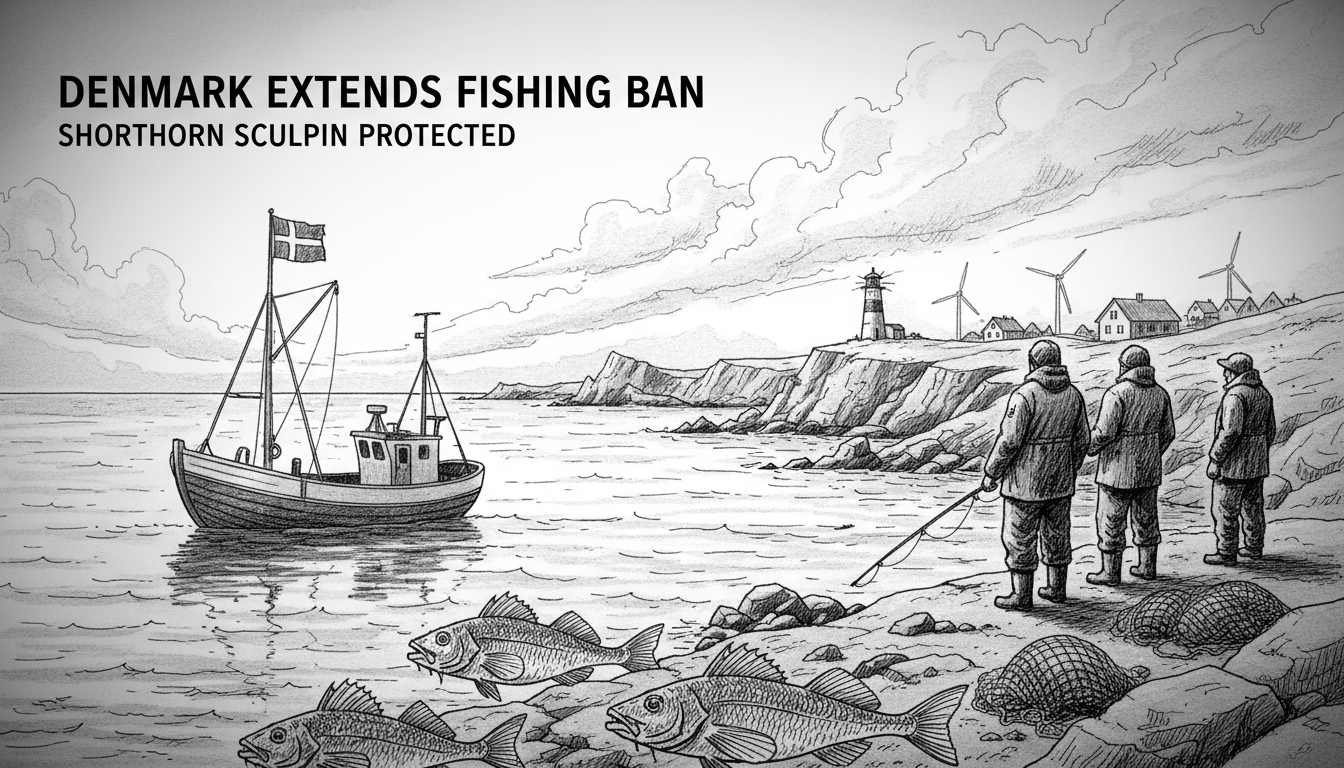
Danish authorities have prolonged the complete fishing prohibition for shorthorn sculpin into the next year. The decision affects both commercial operations and recreational anglers across Danish waters. Food, Agriculture and Fisheries Minister Jacob Jensen confirmed the extension following scientific advice about population concerns.
The minister expressed personal disappointment about continuing restrictions. He had hoped fisheries could resume after previous conservation measures. Scientific assessments from technical university researchers showed the species remains vulnerable. Population levels continue troubling experts despite earlier protections.
This marks the second consecutive year with zero fishing quotas for shorthorn sculpin. The initial ban took effect late in the previous year. Officials acknowledge the economic impact on fishing communities. Affected fishermen can apply for compensation through government support programs.
Denmark's approach reflects broader Nordic environmental management principles. The region frequently prioritizes ecological sustainability over short-term economic interests. This case demonstrates how scientific research directly informs policy decisions within Danish society. The welfare system provides safety nets during transitional periods for impacted workers.
Marine conservation decisions often involve balancing multiple interests. Commercial fishing groups seek livelihood protection while environmental advocates emphasize species preservation. Danish integration policies extend to economic transitions, helping workers adapt to changing regulations. Social centers in municipalities like Copenhagen assist with retraining opportunities.
What does this mean for Denmark's fishing industry? The continued ban affects coastal communities dependent on marine resources. Historical data shows Scandinavian countries often lead in environmental protection measures. Similar fishing restrictions have occurred for cod and herring stocks in recent decades.
International readers might compare this to their countries' approaches to fisheries management. Denmark's method combines scientific assessment with economic support. The system aims to prevent resource depletion while maintaining community stability. This reflects the Danish welfare model's comprehensive approach to societal challenges.
The decision comes during ongoing debates about sustainable resource use. Climate change impacts on marine ecosystems make such management increasingly crucial. Danish authorities monitor multiple species facing population pressures. Future decisions will likely follow similar patterns of scientific consultation and stakeholder consideration.