
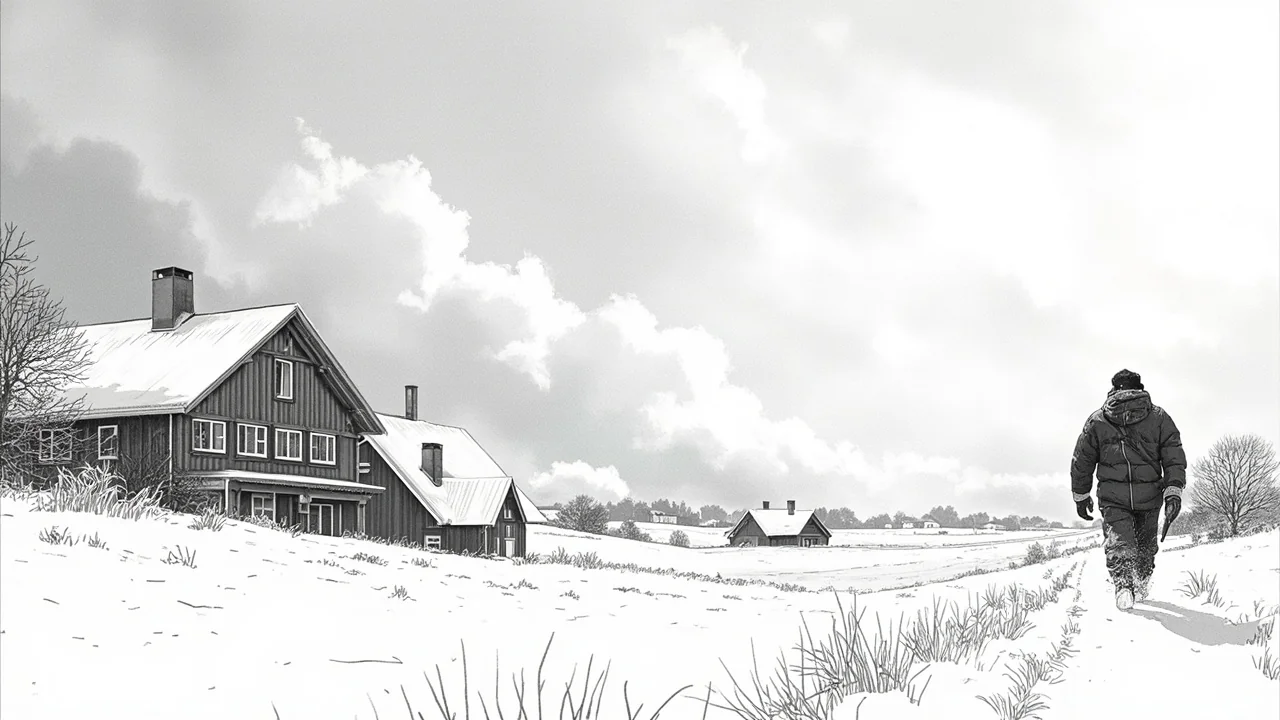
Denmark's stubborn winter weather is intensifying with a fresh wave of snow and blowing snow forecast for Monday. The Danish Meteorological Institute (DMI) issued a new warning Sunday evening, targeting large parts of the country after a bitterly cold weekend. For residents in northern and western regions, this means waking up to hazardous conditions and significant disruption as winter's grip refuses to loosen.
A Persistent Winter Assault
This latest alert focuses squarely on Jutland, which has already borne the brunt of heavy snowfall this season. The warning for blowing snow is in effect for Vendsyssel, Thy, Himmerland, and Djursland from 6:00 AM Monday until 1:00 AM Tuesday. The rest of Jutland also remains at risk, though with less accumulated snow and winds expected to decrease by Monday afternoon. Simultaneously, the island of Bornholm is experiencing its own bout of blowing snow, with strong to near-gale force winds battering its coasts, though these are forecast to subside later Sunday evening.
This pattern highlights a challenging meteorological period for Denmark. The consecutive warnings suggest a sustained pattern of cold air, moisture, and wind aligning over the Nordic region. "We therefore have a warning for blowing snow for Vendsyssel, Thy, Himmerland and Djursland," DMI stated plainly, underscoring the seriousness of the conditions. The combination of fresh snowfall and persistent wind is the primary culprit, reducing visibility and creating dangerous drifts on roads and pathways.
The Human and Economic Toll
Beyond the meteorological data, this recurring severe weather imposes a tangible human and economic cost. For commuters, the Monday morning drive transforms into a perilous undertaking. Public transportation, particularly bus services in rural Jutland and on Bornholm, faces delays and cancellations. School openings are frequently delayed or called off in the hardest-hit municipalities, forcing parents to scramble for last-minute childcare. The repeated nature of these events strains the resources of municipal road crews, who have been working extended shifts to keep primary routes clear.
Local businesses, especially in town centers, feel the impact as customers choose to stay home. Delivery services for online orders face significant backlogs. For the agricultural sector, the continued cold and snow present animal welfare challenges and delay early spring preparations. Each new warning resets the clock on recovery, costing municipalities millions of kroner in extra salt, sand, and overtime pay. This persistent winter also disproportionately affects elderly and vulnerable citizens, who may become isolated due to impassable sidewalks and fears of slipping on ice.
Preparedness and Public Response
Danish authorities operate on a well-established protocol for winter weather events. The nationwide warning system, via DMI and apps like minSPC, is the first line of defense. Municipalities activate their contingency plans, prioritizing the clearing of main arteries, hospital access roads, and public transport routes. Social media channels for local police and municipalities become vital hubs for real-time updates on road conditions and school closures.
The public response is a blend of rugged Scandinavian pragmatism and growing frustration. Danes are generally well-equipped for winter, but the persistence of this year's conditions tests patience. Retailers report steady sales of winter tires, robust snow shovels, and insulation materials. Community efforts often shine through, with neighbors checking on each other and helping to clear drives. However, the cycle of storm, cleanup, and new storm risks leading to public fatigue and complacency, which itself can be a danger.
Expert Analysis on a Changing Climate
While a single cold snap cannot be directly attributed to climate change, scientists note that shifting global patterns can influence the persistence of certain weather types. Meteorologists point to phenomena like disruptions in the polar vortex, which can channel colder air further south into Europe for extended periods. The current situation in Denmark, with repeated cold waves and snowfall, could be an example of such blocked or persistent weather patterns.
"What we are seeing is a very active winter pattern for the region," a climate researcher at the University of Copenhagen explained, speaking on background. "The key question is not necessarily about record-breaking cold, but about the duration and frequency of these disruptive events. It aligns with broader research indicating increased volatility in winter weather, even within a overall warming trend." This perspective places the immediate crisis within a larger, more complex environmental context, suggesting that municipalities may need to plan for more variable and extreme winter conditions in the long term.
Looking Ahead and Staying Safe
For now, the immediate focus remains on safety and mitigation. DMI's warning is clear, and the responsible course for citizens is to heed its advice. This means postponing non-essential travel in the warning zones, allowing extra time for any necessary journeys, and ensuring vehicles are properly prepared with suitable tires and emergency kits. Pedestrians should wear appropriate footwear with good grip and remain highly visible if walking near roads during periods of reduced visibility.
The week ahead will be crucial. Forecasters will monitor whether this system represents the final significant gasp of winter or merely another chapter in a prolonged season. The resilience of Danish infrastructure and community spirit is once again being tested. As the wind picks up and the snow begins to drift once more, the nation's practical, collective response to the enduring chill continues to define its winter experience. The broader question for policymakers is whether this year's pattern is an anomaly or a sign of winters to come, requiring new strategies for resilience in the face of persistent, disruptive cold.