
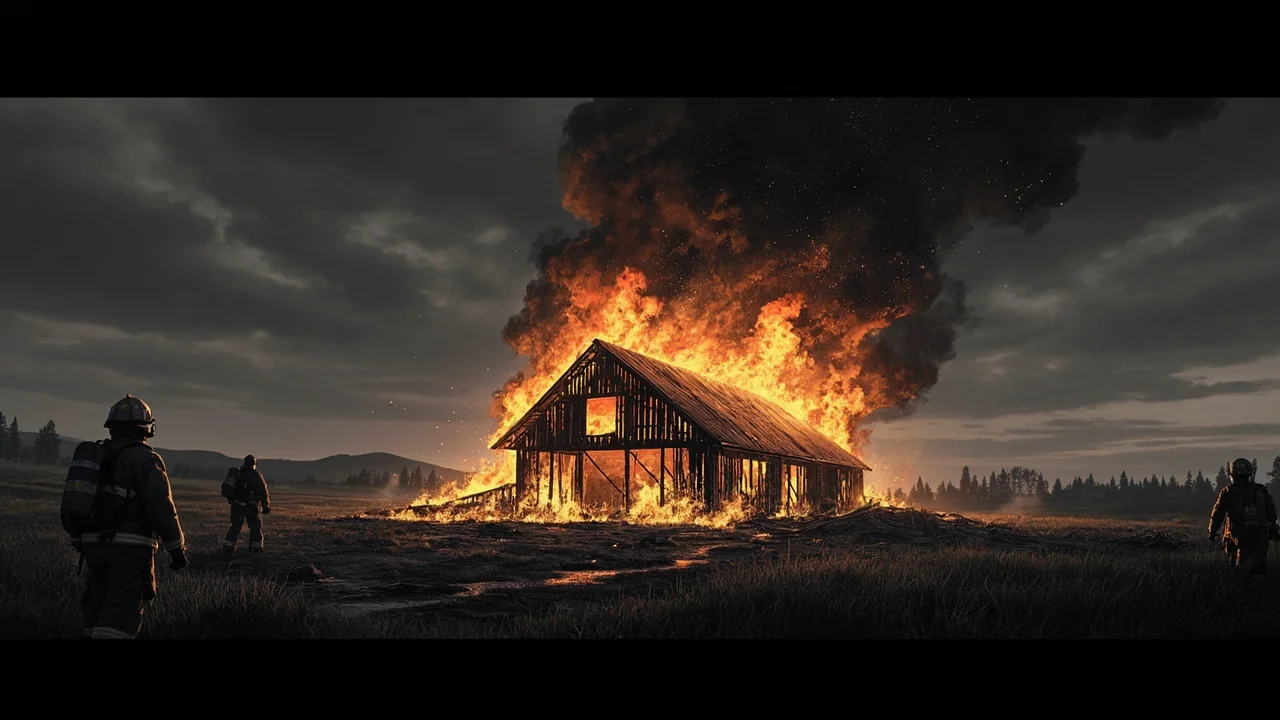
Denmark emergency services battled a major fire that consumed a large farm building on the island of Funen overnight. The blaze erupted in a side building on a rural estate near Brenderup, with the structure—packed with straw bales and housing a straw-burning furnace—completely destroyed by the intense flames. Police confirmed no injuries resulted from the incident, which has shifted focus to determining the cause of the fire that left little behind but ash and charred timber.
A Rural Property Engulfed
Flames tore through the 200 to 300 square meter auxiliary building in the early hours of Saturday. The property, situated in the countryside, contained significant amounts of agricultural material. "There is not much left of the building," police duty officer Sten Nyland reported on Saturday morning, describing the scene after firefighters brought the blaze under control. The presence of a straw-burning furnace, a heating system sometimes used in rural settings, has become a key point of the investigation. Authorities are examining whether this appliance played a role in starting the fire that rapidly spread through the combustible hay.
This type of incident highlights the specific fire risks present in Denmark's agricultural sectors. While modern farms have strict safety protocols, older buildings and equipment can present hidden dangers. The concentration of dry, flammable material like straw creates a perfect fuel source, allowing a small ignition to escalate into an uncontrollable inferno within minutes. The remote location of many such properties can also challenge emergency response times, though in this case, crews prevented the fire from spreading to other structures on the estate.
The Human and Economic Impact
Although no one was physically hurt, the emotional and financial toll on the property owners can be severe. A farm building is rarely just storage; it often houses essential equipment, harvested crops, or livestock feed critical to the annual operation. Losing such a structure, especially one containing a heating system, can disrupt agricultural workflows and represent a substantial financial setback. For a family-run estate, this is not just a business loss but a blow to a livelihood deeply connected to the land and its buildings.
These events resonate in a country where rural communities form an integral part of the national identity. The sight of a burning barn or storage facility strikes a chord, reminding Danes of the vulnerability that exists alongside the pastoral beauty of the countryside. It underscores a quiet reality of rural life: the constant negotiation with elemental risks like fire, far from the dense resources of urban fire departments. The community around Brenderup will likely feel this event, offering support to the affected property owners in the coming days.
Investigating the Cause and Context
The police investigation now centers on the straw-burning furnace. Such systems, while representing a form of biofuel heating, require meticulous maintenance and operation to be safe. Faulty installation, blocked flues, or improper storage of fuel can lead to disaster. Determining whether this was an accidental mechanical failure, an operational error, or had another cause entirely is a painstaking process. Investigators will sift through the wreckage, looking for clues in the patterns of burn marks and the remains of the furnace itself.
This fire occurs within a broader national context of building and fire safety. Denmark has rigorous building codes, particularly for new constructions and urban dwellings. However, the regulations for older agricultural buildings and for specific systems like biomass burners can be different. The incident may prompt local authorities in Funen and other municipalities to review guidance provided to rural property owners about fire prevention and the safe use of alternative heating systems. It serves as a stark, real-world case study for safety advocates.
A Narrow Escape and a Warning
The most significant takeaway from the Brenderup fire is the simple phrase from authorities: "Fortunately, no people were injured." This outcome is not guaranteed in such violent, fast-moving blazes, especially ones that break out at night. It suggests the fire may have started in an unoccupied building, giving occupants of the main house time to react and call for help. The alternative scenarios are too grim to consider, a fact that will not be lost on the residents as they survey the damage in the daylight.
For the wider public, the story is a seasonal reminder. As Denmark moves through the year, different fire risks emerge. The dry summer months bring grass and forest fire warnings, while autumn and winter see a rise in incidents related to heating systems, electrical faults, and indoor activities. This fire, involving stored harvest materials and a furnace, sits at the intersection of those seasonal hazards. It is a warning to check equipment, clear areas around heat sources, and ensure that smoke alarms are functional in all buildings, not just homes.
The Path Forward from the Ashes
Recovery for the affected estate will be a slow process. It involves dealing with insurance assessors, planning for cleanup, and deciding whether and how to rebuild. The choice to replace a traditional building with a modern, more fire-resistant structure, or to reconfigure the entire farm's layout, is a major decision. It carries financial weight and emotional significance, balancing practicality with tradition. The community's role in this phase, often through informal networks of neighboring farmers offering help, is a testament to the social fabric of rural Denmark.
Ultimately, this fire near Brenderup is a localized event with universal themes. It is about the suddenness of loss, the importance of safety vigilance, and the resilience required to rebuild. While the police report will eventually conclude with a probable cause, the story for those involved is just beginning a new chapter. The charred ground will be cleared, and the rhythms of farm life will persevere, but with a renewed and hard-earned respect for the destructive power of fire. How a community responds to such an event often reveals its true strength, long after the last ember has cooled.