
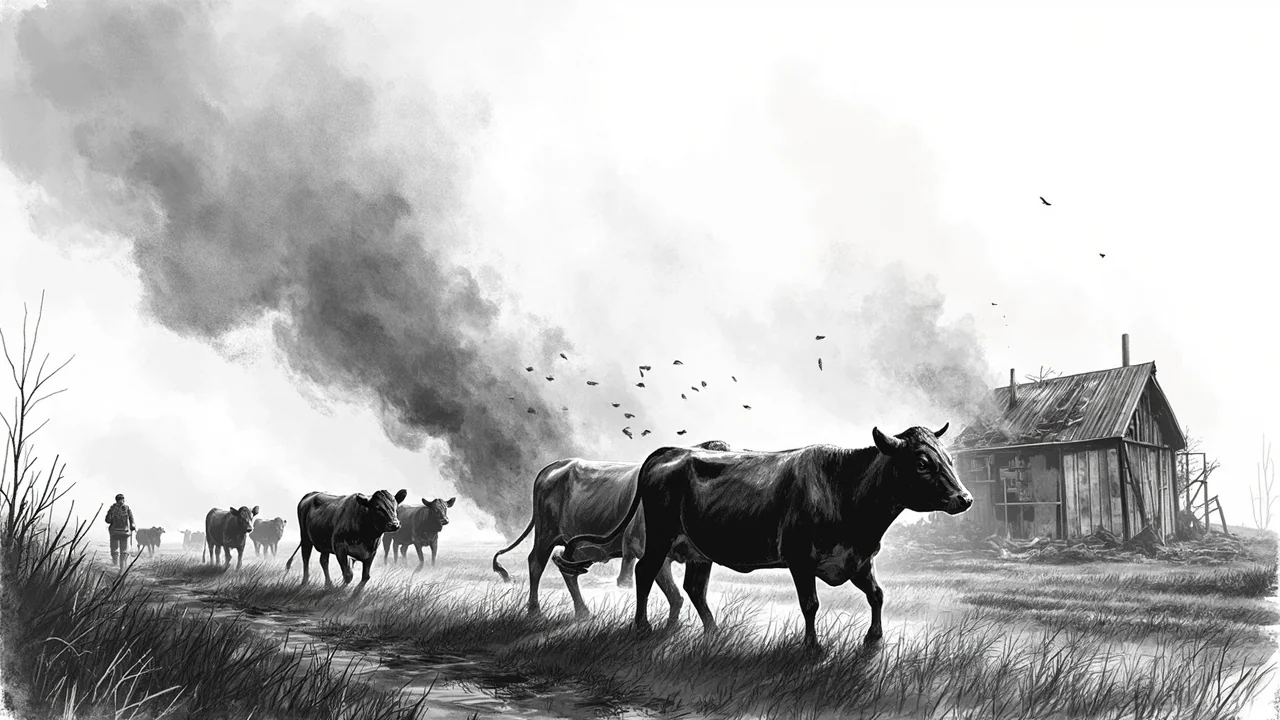
Denmark's North Jutland emergency services responded to a serious fire in a cattle barn near Sæby on Saturday evening. The call came in just after 5 PM for a blaze at a property on Krogsdamvej in Dybvad, a rural area in eastern Vendsyssel. Five emergency vehicles carrying thirteen personnel were dispatched to the scene, facing a critical situation with 34 animals inside the burning structure.
Initial reports from the fire service described heavy smoke with visible flames at the location. The primary and immediate challenge was the welfare of the livestock trapped within the kostald, a traditional Danish cattle barn integral to the farm's operations. For the farmers involved, this represented not just a property emergency but a profound threat to their livelihood and the animals under their care.
A Tense Response in Rural Jutland
The response was coordinated from Station Østervrå, a key fire and rescue hub for the region. As crews raced to the remote location, the operational focus was split between fire suppression and animal rescue. This dual priority is a complex and dangerous aspect of rural firefighting, requiring specialized training and calm decision-making under pressure. The Danish emergency services, known as Beredskab, are routinely drilled for such scenarios, where agricultural assets and lives are on the line.
Upon arrival, the situation was tense but quickly brought under control. A spokesperson for North Jutland Emergency Services provided a crucial update, indicating the fire was producing more smoke than open flame. Most critically, they confirmed that the animals were being moved to safety. "The animals in the barn were being herded out into the open," the spokesperson said, marking a significant turning point in the incident.
Securing Animal Welfare After the Flames
The successful evacuation of the cattle was the first major hurdle cleared. However, the incident protocol for livestock fires in Denmark mandates a thorough follow-up to ensure no animal suffers from smoke inhalation or hidden injuries. A veterinarian was urgently requested to the site to examine all 34 cattle. This standard procedure highlights Denmark's stringent animal welfare laws, which extend fully to emergency situations.
The vet's assessment is a critical step for the farming family, determining the immediate economic and emotional impact of the fire. Each animal represents a substantial investment and is often part of a carefully managed breeding line. The psychological toll on farmers who witness such threats to their herds can be severe, a factor increasingly recognized by Danish agricultural support networks.
The Fragile Balance of Rural Livelihoods
This fire, though contained without loss of animal life, exposes the persistent vulnerabilities of Denmark's agricultural heartlands. Farms in areas like Vendsyssel are often family-run operations where a single catastrophic event can jeopardize generations of work. The kostald itself is more than a building; it is the center of daily labor and a substantial capital asset. Its loss, even partially, triggers a cascade of insurance assessments, potential loss of milk production, and logistical nightmares.
While Denmark boasts a strong social safety net, the immediate aftermath of a farm fire is a deeply personal crisis. The community in Dybvad and surrounding parishes will likely rally around the affected family, a common response in rural Danish society where neighborly support, or 'nabohjælp', remains a powerful tradition. This informal network often works in tandem with formal assistance from agricultural associations and local municipality services.
Infrastructure and Risk in the Countryside
The response also underscores the importance of maintained emergency infrastructure in Denmark's less densely populated regions. Stations like Østervrå must cover large geographic areas with varied terrain. Their ability to mobilize five vehicles and thirteen personnel for a single incident demonstrates significant resource allocation, ensuring that even remote farms are within a viable response time. This commitment is a cornerstone of the Danish welfare model, which promises security and assistance to all citizens, regardless of postcode.
Fires in older agricultural buildings, often constructed with traditional materials, can spread with alarming speed. This event will likely prompt local fire safety advisors to renew outreach to farmers in the district, reviewing guidelines on electrical systems, hay storage, and the maintenance of firebreaks. Prevention is a key pillar of Denmark's approach to public safety, moving beyond simple response to proactive risk reduction.
Looking Beyond the Smoke
As the smoke clears on Krogsdamvej, the farmers face the process of recovery. They will navigate insurance claims, potential rebuilding, and the care of their shaken herd. The successful rescue of all 34 animals is a testament to the effective emergency protocols and the skill of the responding crews. It is a relief, but not an endpoint.
This incident serves as a stark reminder of the quiet risks underpinning Denmark's agricultural sector. It highlights a day where routine farm life was interrupted by disaster, only to be secured by coordinated professional action and a steadfast commitment to animal welfare. The story here is not one of catastrophic loss, but of a threat successfully mitigated. It asks a silent question felt across the countryside: how long can luck and preparedness hold the line against the ever-present danger of fire?