
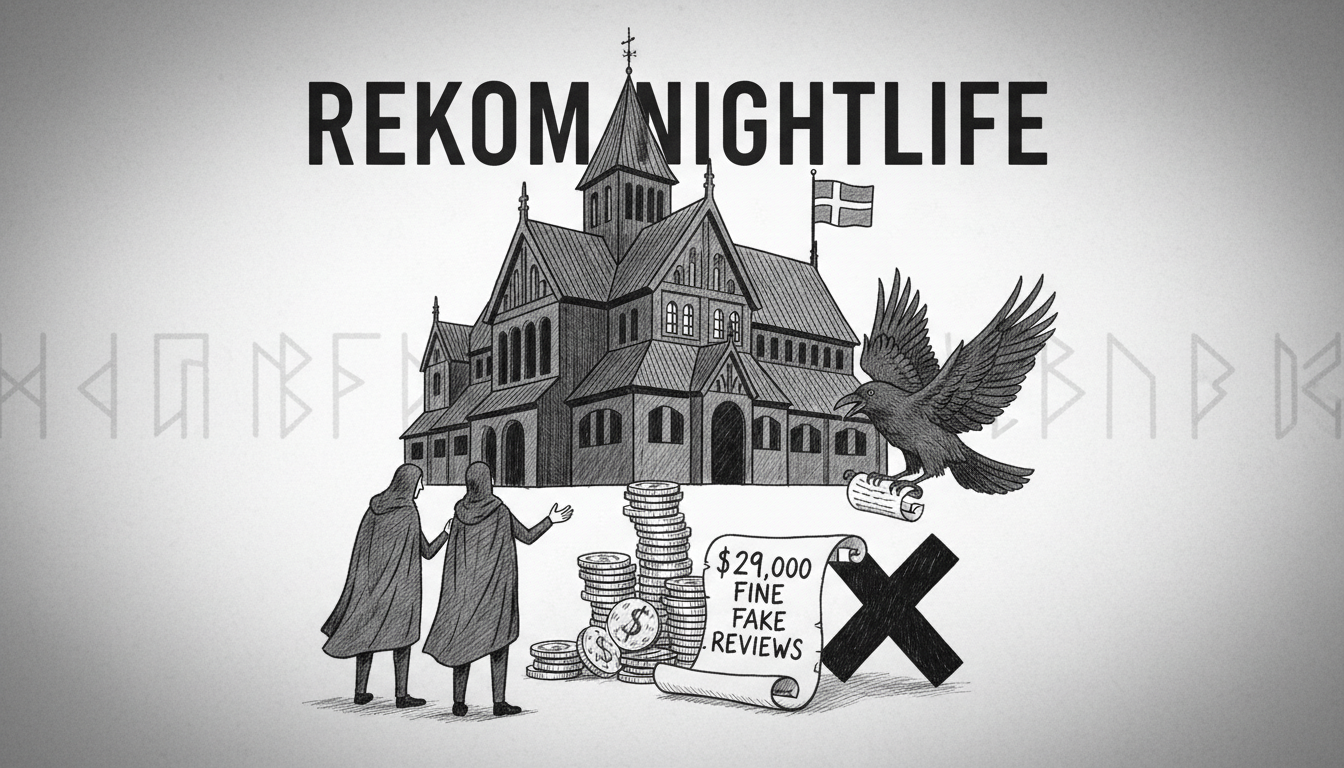
Denmark's largest nightlife group, Rekom, has been fined 200,000 Danish kroner (approximately $29,000) by the Copenhagen City Court for orchestrating a misleading marketing campaign involving fake positive reviews for its new app. The court found that employees of the company, which operates 80 bars and clubs nationwide including popular chains like Heidi’s Bier Bar and Proud Mary, had written glowing reviews to artificially boost the app's rating. This ruling sends a clear signal from Danish consumer protection authorities that deceptive digital marketing practices will face legal and financial consequences, even for major players in the lucrative hospitality sector.
A Coordinated Campaign of Deception
The case centered on Rekom's launch of a new customer app designed for booking tables and accessing promotions. According to the court's findings, the company's marketing strategy crossed a legal line. Employees were instructed or encouraged to download the app and post five-star reviews, presenting them as authentic customer feedback. This created a falsely positive perception of the app's functionality and popularity, which the Danish Consumer Ombudsman (Forbrugerombudsmanden) argued constituted a clear violation of marketing law. The practice, often called 'astroturfing,' undermines the trust consumers place in online reviews to make informed decisions.
"The court has emphasized that all marketing must be identifiable as such. When a company's own employees post positive reviews without disclosing their affiliation, it is misleading," stated a legal expert familiar with the case. The 200,000 DKK penalty, while not catastrophic for a group of Rekom's size, carries significant reputational weight. It formalizes a public rebuke, placing the company's internal marketing ethics under scrutiny.
Denmark's Strict Consumer Protection Framework
This ruling did not occur in a regulatory vacuum. Denmark enforces some of Europe's most stringent consumer protection laws, with the Consumer Ombudsman acting as a vigilant watchdog. The Danish Marketing Practices Act (Markedsføringsloven) mandates that all commercial communication must be clearly distinguishable as advertising. The principle is straightforward: consumers have a right to know when they are being marketed to, enabling them to critically evaluate the message.
"The Rekom case is a textbook example of the type of digital deception we are focused on," a source within the consumer protection sphere explained. "Online reviews are a powerful commercial tool. Manipulating them distorts the market and harms both consumers and honest competitors." The Ombudsman actively monitors sectors where consumer choice is heavily influenced by digital word-of-mouth, including hospitality, retail, and services. For an industry like nightlife, where atmosphere and popularity are key selling points, the authenticity of online sentiment is particularly crucial.
Reputational Risk in the Experience Economy
For Rekom, the financial fine may be less damaging than the hit to its brand integrity. The group dominates Danish nightlife, with venues in prime locations across Copenhagen, Aarhus, and other major cities. Its business model relies on selling experiences—fun, trust, and a sense of authentic cool. Being legally condemned for creating a fake perception strikes at the heart of that brand promise.
Industry analysts note that in the post-pandemic era, nightlife and experience-based businesses are fiercely competitive. "Consumer trust is your most valuable asset," said a Copenhagen-based hospitality consultant. "A ruling like this forces potential customers to question what else might be artificially curated. Was that packed bar last Saturday genuine, or part of a campaign? It introduces a seed of doubt that can be very damaging." The case highlights the tightrope walk for marketing departments: the pressure to generate positive online buzz must be balanced against strict legal and ethical standards.
A Warning to the Broader Hospitality Sector
The Copenhagen City Court's decision is likely to resonate far beyond Rekom's headquarters. It serves as a precedent and a warning to all businesses in Denmark's service and experience economy. The Consumer Ombudsman has demonstrated its willingness to litigate and its capability to uncover coordinated digital misleading practices. Companies are now on notice that instructing staff to post fake reviews, creating fake social media profiles, or failing to disclose paid partnerships in influencer campaigns can lead to legal action.
This enforcement aligns with broader EU efforts to clean up the digital marketplace. Proposed regulations like the Digital Services Act aim to increase transparency and accountability for online platforms and advertisers. Denmark, through cases like this, is positioning itself at the forefront of national enforcement. The message is that the digital domain is not a law-free zone for marketing; the same rules of honesty and transparency apply online as they do on a printed poster.
The Path Forward for Rekom and Competitors
In the wake of the ruling, Rekom must navigate both the legal and public relations fallout. The company has not publicly detailed any changes to its internal compliance or marketing training protocols. However, experts suggest that robust internal guidelines and employee training on marketing law are now essential, not optional, for major consumer-facing corporations.
Moving forward, the most successful players in Denmark's nightlife scene will likely be those that compete on the genuine quality of their experience, not the manufactured volume of their online praise. Authentic engagement, responsive customer service, and legitimate promotions will prove more sustainable than any astroturfing campaign. The court has, in effect, mandated a return to fundamentals: build a better product, and let real customers sing its praises. The question for the industry is whether this ruling will be a minor footnote or a catalyst for a more transparent digital marketing culture. For now, the review section is being watched—by consumers, competitors, and the authorities.