
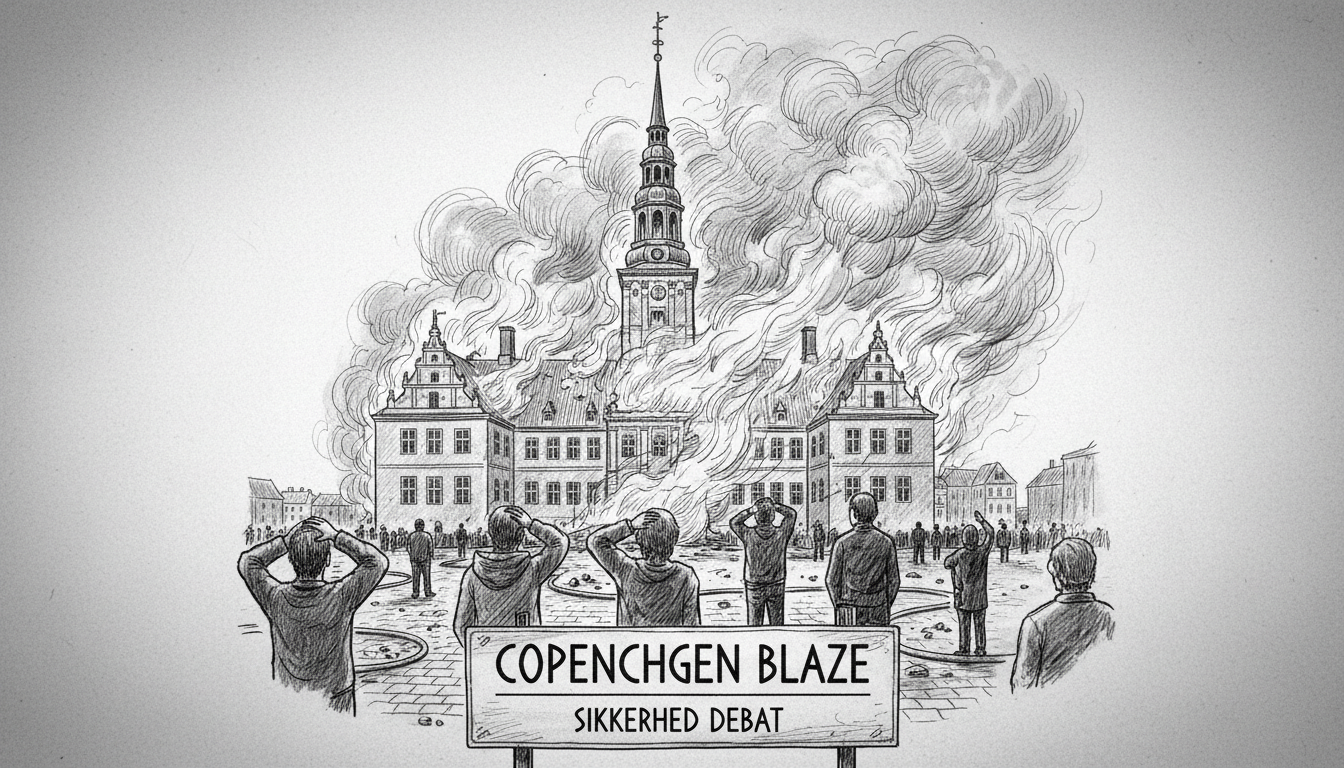
Denmark fire services mounted a massive response to a major blaze in a Copenhagen residential building late Thursday night. Flames tore through a rooftop apartment on Lærdalsgade in the Amager district, spreading rapidly across the structure's roof and prompting a significant emergency deployment that blocked the major thoroughfare of Amagerbrogade. The incident, occurring in a densely populated urban neighborhood, immediately raises critical questions about building safety and emergency preparedness in one of Europe's oldest capitals.
Operations Chief Kristian Levyg from the Capital Region's Emergency Services confirmed the severity of the situation upon arrival. "We received a report of a fire in a rooftop apartment, and we could confirm when we arrived at the scene that it had spread to the roof of the building," Levyg said. The swift escalation from a single-unit fire to a full-scale roof fire underscores the volatile nature of such incidents in compact city environments. Emergency vehicles from multiple stations converged on the scene, their flashing lights illuminating the night as crews worked to contain the threat.
A Community on Edge
For residents of the affected building and surrounding streets on Amager, the night shifted from routine to chaos in moments. The sight of fire engulfing part of their home is a traumatic event that disrupts the fundamental sense of security provided by one's own dwelling. Amager, an island municipality integrated into Copenhagen, is known for its diverse population and mix of historic and modern housing. Incidents like this resonate deeply in communities where buildings are often closely packed and families live in proximity.
The immediate human impact extends beyond the flames. The closure of Amagerbrogade, a central artery lined with shops and cafes, disrupted local traffic and business. It served as a stark reminder of how quickly an emergency can ripple through an urban ecosystem. Neighbors gathered behind cordons, united by concern for those directly affected and anxiety over the safety of their own homes. This collective experience of vulnerability is a powerful, unsettling force in any community.
The Structural Vulnerabilities of Urban Living
Fire safety experts point to this Copenhagen fire as a case study in the challenges of protecting older urban housing stock. While Denmark has stringent modern building codes, a significant portion of Copenhagen's charm and housing supply comes from older structures not originally designed with contemporary fire containment standards. "Fires in rooftop apartments present a unique set of dangers," explains Lars Bengtsson, a former fire safety inspector for the Copenhagen municipality. "They can often involve older timber construction in attic spaces, and vertical spread through cavities or external cladding can be extremely rapid."
The spread to the roof, as confirmed by emergency services, is a particularly worrying development. It suggests potential issues with fire barriers in the roof void or the use of combustible materials in roofing or insulation. Containing a roof fire is notoriously difficult for firefighters, as it requires external aerial attacks and poses a high risk of structural collapse. For cities like Copenhagen, balancing historical preservation with mandatory safety upgrades remains an ongoing and costly dilemma for building owners and municipal authorities.
Emergency Response Under the Microscope
The scale of the response—described as massive by observers—highlights the protocols in place for a significant urban fire. Denmark's emergency services operate on a principle of rapid escalation, ensuring enough resources are present to prevent a contained incident from becoming a catastrophe. The decision to block a major road like Amagerbrogade, while disruptive, is a standard and necessary tactic. It secures the operational perimeter for firefighters and protects civilians from falling debris or sudden changes in the fire's behavior.
This incident will likely trigger a standard post-operation review within the emergency services. Analysts will examine response times, communication between units, and the effectiveness of containment strategies. Such reviews are a cornerstone of Denmark's proactive approach to public safety, aiming to integrate every incident's lessons into future training and operational planning. The visible, large-scale deployment also serves a public reassurance function, demonstrating the state's capacity to protect its citizens in a crisis.
A Broader Conversation on Prevention
Beyond the emergency response, the Lærdalsgade fire inevitably turns attention to prevention. For Danish society, which places a high premium on social welfare and security, a residential fire is not just bad luck but a potential policy failure. Regular, mandatory inspections of common fire safety systems in multi-occupancy buildings are crucial. These include smoke alarms, fire doors, and emergency lighting. Tenant education is another key component, ensuring everyone knows evacuation routes and the importance of not propping open fire doors.
Copenhagen Municipality has run public information campaigns on fire safety, particularly focusing on the dangers of smoking indoors, faulty electrical appliances, and unattended cooking. However, enforcement in privately owned buildings can be complex, relying on cooperative housing associations or individual landlords. This fire may renew calls for even stricter municipal oversight and more frequent, unannounced checks, especially in buildings over a certain age. The cost of such programs is always weighed against the profound human and financial cost of a single major fire.
The Long Road to Recovery
Once the last ember is extinguished and the emergency vehicles depart, the long process of recovery begins for the displaced residents. In Denmark, the social safety net provides immediate assistance. Municipal social services will typically step in to offer temporary accommodation, essential supplies, and psychological support to those who have lost their homes and possessions. Insurance assessments and structural surveys will determine whether the building can be repaired or must be partially or fully demolished.
This support is a practical manifestation of the Danish welfare model, designed to catch citizens in moments of acute need. Yet, no amount of bureaucratic support can immediately replace lost family heirlooms, photographs, or the simple comfort of one's own bed. The emotional and psychological scars of such an event can last far longer than the physical rebuilding. Community solidarity often flourishes in these moments, with neighbors offering help, but the path back to normalcy is measured in months, not days.
A Night That Changes a Neighborhood
The fire on Lærdalsgade is more than a news brief about a blocked road and a dramatic blaze. It is a disruptive event that lays bare the interconnected vulnerabilities and strengths of urban life. It tests material structures, emergency protocols, and community bonds simultaneously. For Copenhagen, a city proud of its livability and safety record, it is a sobering reminder that risk can never be fully eliminated, only managed. The true measure of the city's resilience will be seen not just in the efficiency of the firefighting, but in the thoroughness of the subsequent safety review and the compassion shown in the recovery. As the investigation into the cause begins, the most important question remains: how can such a night be prevented from happening again, on this street or any other?