
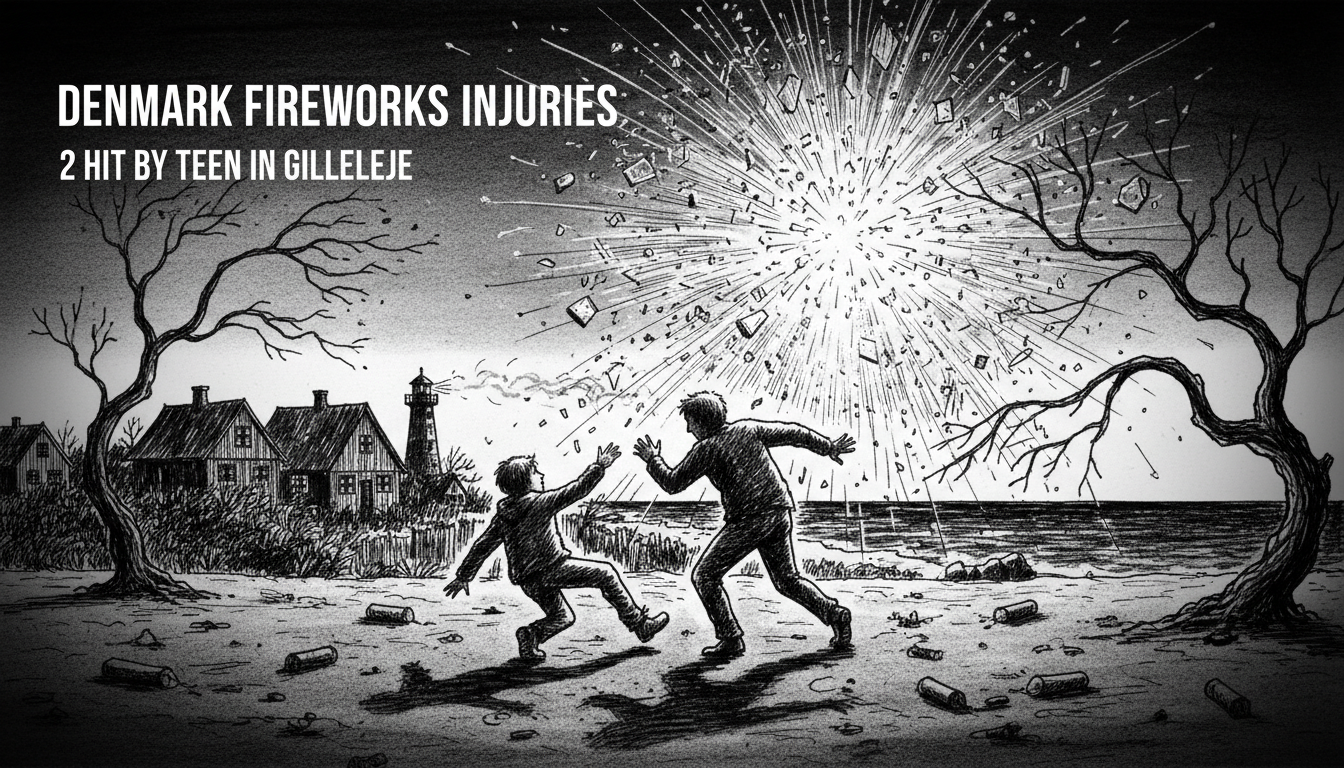
Denmark police are investigating a late-night fireworks incident in Gilleleje where a 14-year-old boy discharged pyrotechnics into a crowd at the train station. Two individuals suffered burn injuries from the illegal launch, which authorities say was serious enough to potentially violate penal codes on endangering life. The case highlights ongoing challenges with youth offenses and public safety enforcement in Danish municipalities.
A Dangerous Celebration Turns Criminal
Nordsjællands Politi received the emergency report at 1:32 AM on Sunday. Officers arrived at Gilleleje Station to find two injured persons. According to police, the fireworks were fired in a reckless manner directly toward people. "One person had burn marks on their jacket, while the other had burn marks behind the ear, singed hair on the neck, and a burn mark on the back of their jacket," said duty officer Lee Skeen. The incident did not occur during traditional celebratory periods when fireworks are common, raising immediate concerns about the motivation and access.
Police quickly identified a 14-year-old boy as the perpetrator. Due to his age, Danish law prevents standard criminal prosecution. Officials confirmed the discharge method was severe enough to fall under section 192 of the penal code regarding endangering others' lives or safety. Yet the legal system faces limitations when the suspect is below the age of criminal responsibility.
Youth Accountability in the Danish System
This incident touches a nerve in Denmark's ongoing debate about juvenile justice. The country maintains a strong focus on rehabilitation for young offenders. The welfare system, rather than the penal system, typically handles cases involving minors. A social services representative from the local municipality, who spoke on background, explained the process. "When a child under 15 commits an act like this, our primary concern is understanding why. We assess the family situation, school environment, and the child's well-being. The goal is intervention, not punishment."
Legal experts note this creates a perceived gap in accountability. "The law is clear: children under 15 cannot be punished criminally," says Professor Karen Palle, a legal scholar at the University of Copenhagen. "This can frustrate victims and the public when serious acts occur. The trade-off is protecting young people from the lifelong stigma of a criminal record. The system believes in offering a chance for change."
Data from the Danish Crime Prevention Council shows that most youth offenses are handled through municipal social services. Only a small percentage result in placement in secure youth facilities.
The Persistent Problem of Illegal Fireworks
Denmark has strict fireworks laws designed for public safety. Consumer fireworks are only legally sold from December 27-31 and can only be discharged on December 31. Powerful category F4 fireworks require special permits year-round. The incident in Gilleleje involved illegal possession and use outside the permitted timeframe.
Police conduct annual campaigns to curb illegal imports and black-market sales, especially from eastern Europe. Despite this, dangerous fireworks remain accessible. "Every year, we see serious injuries caused by misuse," a police spokesperson from Nordsjællands Politi told Nordics Today. "We urge parents to be aware of what their children are doing and to understand the real dangers. A firework is an explosive device, not a toy."
Hospitals in Denmark treat hundreds of fireworks-related injuries each New Year's period. The incident in Gilleleje is unusual because it occurred outside this peak season, suggesting the fireworks were obtained illegally and stored.
Community Impact and Social Cohesion
Gilleleje, a popular coastal town in North Zealand, is known for its fishing harbor and summer tourism. A violent incident at the local train station disrupts the community's sense of security. "It's frightening," said local shop owner Birgitte Larsen. "The station should be safe for everyone. To think that young people are playing with such dangerous items late at night is a worry for all parents."
Community policing teams often work with local schools and youth centers to provide education on the risks of fireworks. After such incidents, social workers may increase outreach in the area where the youth lives. The focus is on preventing escalation into more serious criminal behavior.
This model reflects the Danish welfare state's emphasis on early support. Critics argue it sometimes fails to deliver concrete consequences for actions that cause harm. Proponents say it reduces long-term crime by addressing root causes early.
A Broader Look at Prevention Strategies
Preventing similar incidents requires a multi-faceted approach. Police enforcement targets suppliers and adults who purchase for minors. Social services work with at-risk youth. Public information campaigns highlight physical dangers.
Child psychologists point to adolescent brain development. "Teenagers are more prone to impulsivity and underestimating risk," explains Dr. Magnus Thomsen. "They seek sensation and may not fully process the potential for permanent injury. Parental supervision and clear conversations about consequences are crucial, even with teens who seem independent."
The case now rests with the municipal social authorities. They will determine what intervention, if any, is required for the 14-year-old boy. This could range from family counseling to referral for supportive services.
The two victims, while physically recovering from minor burns, experienced a significant violation of their personal safety. Their experience underscores a difficult balance in Danish society: maintaining a humane justice system for children while ensuring public protection and a sense of justice for victims. As communities like Gilleleje reflect on this event, the challenge remains finding ways to steer young people away from dangerous paths before lives are irreparably damaged.