
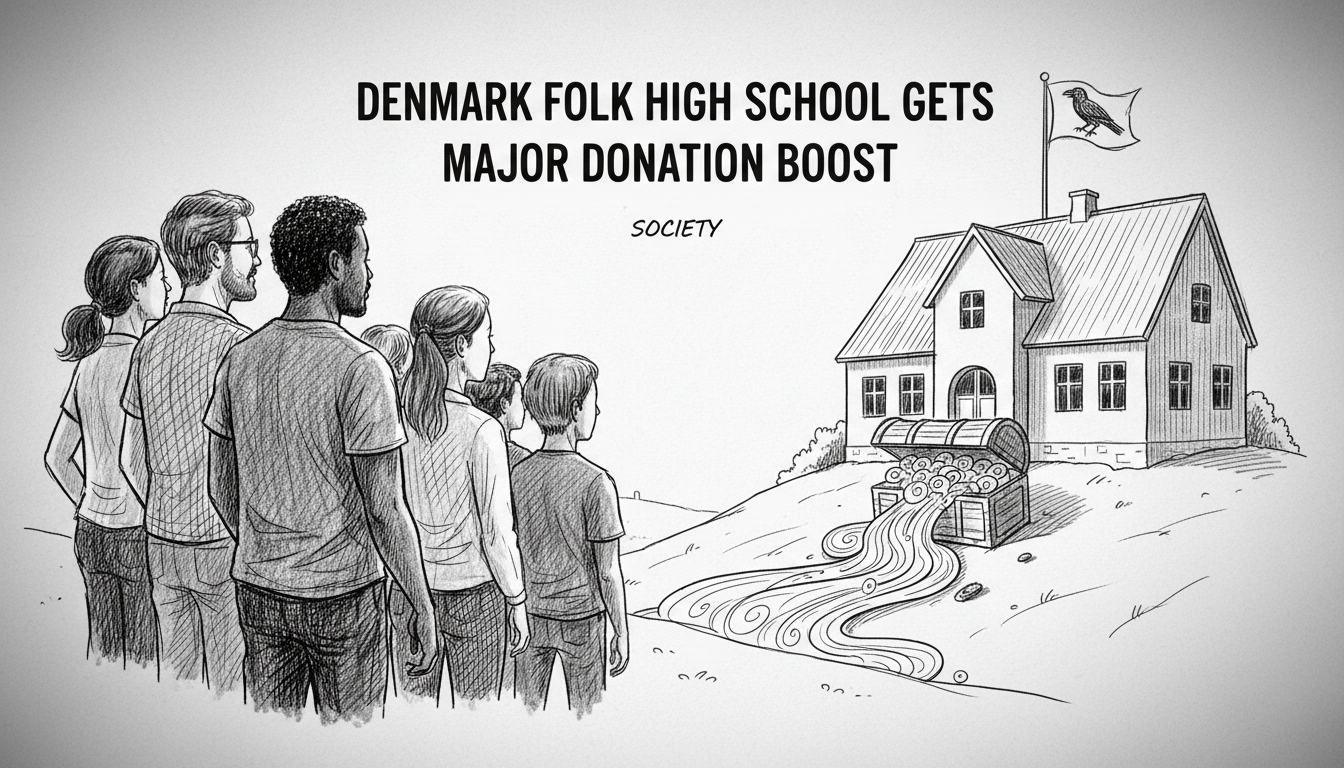
Denmark folk high schools welcomed over 30,000 students in 2023, a tradition now bolstered by a significant private donation to one of the country's most prominent institutions. The substantial gift, announced this week, is directed toward preserving and developing the historic school, ensuring its unique educational model thrives for future generations. This injection of private funds into a state-supported system highlights the delicate balance these iconic schools maintain between public funding and independent spirit.
A Gift for the Future of 'Folkeoplysning'
The donation arrives at a critical time for the folk high school movement. While these schools receive state funding, covering approximately 50% of their operational costs, they consistently face financial pressures. The remaining income must be generated through student fees and private contributions. "This donation isn't just about maintaining buildings, though that is important," said the school's principal in a statement. "It is an investment in the living idea of the folk high school. It allows us to experiment, to secure the highest quality teachers, and to ensure accessibility." The funds are earmarked for facility preservation, scholarship endowments, and developing new course offerings that reflect contemporary global issues.
The Heart of Danish Democratic Life
To understand the impact, one must grasp the folk high school's role in Danish society. Founded in the 19th century by N.F.S. Grundtvig, these residential schools are pillars of 'folkeoplysning' – people's enlightenment. They offer non-formal education with no exams, focusing instead on personal growth, community living, and democratic dialogue. Courses range from philosophy and visual arts to music and sustainable living, with the average student staying for 12 weeks. "It is where Danes go to find themselves and their connection to society," explains Karen Vallgårda, a historian of Danish education. "A strong folk high school sector is seen as essential for a healthy democracy."
Why Private Support Matters Now
Experts point to several reasons why such private philanthropy is increasingly vital. State funding frameworks can be rigid, often tied to specific attendance numbers and operational metrics. A major private donation provides flexibility and a longer planning horizon. "It grants the school breathing room," notes Lars Ulrik Nielsen, an analyst with the Danish Adult Education Association. "They can pursue pedagogical projects that may not fit neatly into state funding categories but are core to their mission. In an era of tight public budgets, this kind of support helps preserve the schools' autonomy and innovative edge." The donor, who wishes to remain anonymous, cited a personal transformative experience at a folk high school as the primary motivation.
More Than Just a School Building
The recipient school is renowned not only for its educational ethos but also for its architectural and historical significance. Nestled in a picturesque landscape, its campus is a destination in itself. The donation will fund careful restoration of its older buildings while upgrading living and learning spaces to modern standards. This dual focus on heritage and modernity reflects the folk high school's core challenge: honoring a 175-year-old tradition while remaining relevant to 21st-century youth. Municipal leaders in the region also welcome the news, as the school is a significant cultural hub and employer.
A Model Under Gentle Pressure
The Danish folk high school model is admired internationally but faces subtle challenges. Demographic shifts, changing youth interests, and competition from other educational forms require constant adaptation. Maintaining affordable fees while offering top-tier facilities and teachers is a perennial struggle. This donation acts as a buffer, allowing the school to navigate these pressures without compromising its foundational principles. It underscores a broader conversation about how Denmark sustains its unique welfare and cultural institutions in a changing world.
The Ripple Effect Across a National Network
While this donation benefits one school, the ripple effect across Denmark's network of 70 folk high schools could be significant. It sets a precedent for philanthropic engagement with these institutions. It demonstrates their value to successful individuals who see them as worth investing in. "We hope this inspires others to consider supporting the folk high school idea," the school's principal added. "Their survival and flourishing cannot be taken for granted. They require active commitment from the whole of society." The news has been met with optimism by other school leaders, who see it as validation of their collective work.
What This Means for Students and Society
Ultimately, the real beneficiaries are current and future students. The scholarship component of the donation will directly lower financial barriers, broadening access. The enhanced facilities and courses will improve the daily learning environment. In a broader sense, a financially secure folk high school can fully dedicate itself to its core task: creating a space for free inquiry and communal living. In an increasingly fragmented digital world, the value of such a physical, immersive community may be higher than ever. This donation ensures that this particular school can continue to offer that irreplaceable experience, contributing to the social fabric one student at a time. Can this model of private-public partnership secure the future of other cornerstone Danish institutions?