
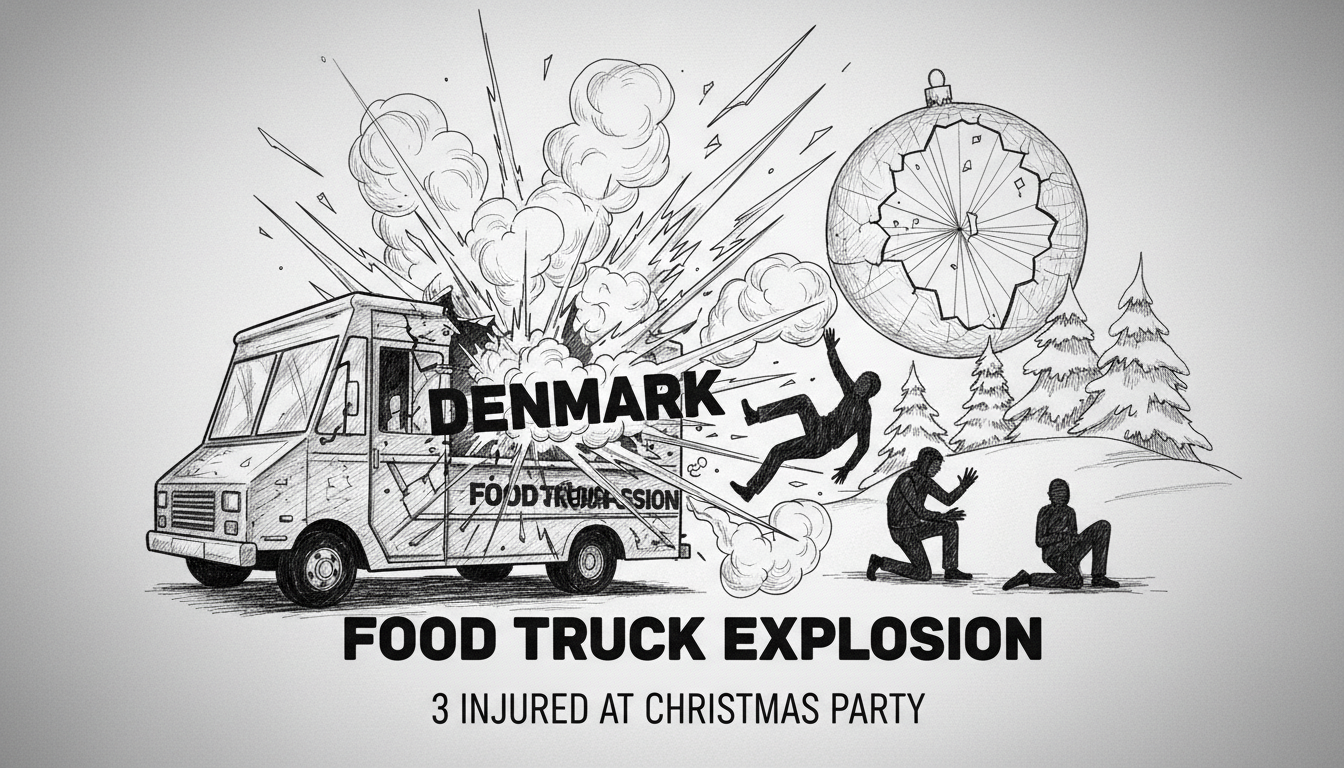
Denmark food truck explosion at a Christmas party in Frifelt sent three people to the hospital Saturday night. An evening of festive cheer for 300 guests turned to chaos when a gas leak from a catering vehicle met a lit cigarette, causing a violent explosion and fire. The incident, which occurred outside a sports hall in the small South Jutland community, highlights the hidden risks in familiar social settings.
Two women and one man sustained burn injuries in the blast. Police confirmed all three were transported to the hospital for treatment, with none reported in critical condition. The food truck itself was destroyed by the resulting fire. Emergency services, including South and Southern Jutland Police and the local fire brigade, remained on the scene until nearly midnight managing the aftermath.
A Festive Gathering Interrupted
The annual Christmas party, or 'julefrokost,' is a cornerstone of Danish social life. These gatherings are meant for colleagues, friends, and communities to celebrate the season with traditional food and drink. The event in Frifelt, near Skærbæk, followed this familiar pattern until the explosion around 9 PM. Police Vagtchef Søren Strægaard described the cause as a straightforward but dangerous chain of events. A gas cylinder connected to the food truck had developed a leak. When a partygoer lit a cigarette nearby, the combination of flammable gas and an open flame triggered the explosion.
This sudden violence disrupted an evening dedicated to camaraderie. Witnesses described a scene of confusion followed by swift action as fellow attendees and event staff rushed to aid the injured. The rapid response from local emergency services helped prevent a more severe outcome. The incident serves as a stark reminder that routine celebrations are not immune to accidents, especially when portable gas equipment is involved.
The Safety Landscape for Mobile Catering
Food trucks and mobile catering units are popular features at Danish festivals, markets, and private events like this Christmas party. They operate under specific regulations governed by the Danish Working Environment Authority (Arbejdstilsynet) and food safety agencies. These rules mandate regular checks on gas systems, including hoses, regulators, and valves, to prevent leaks. Propane and butane cylinders must be stored and handled correctly, away from ignition sources and with adequate ventilation.
Despite these regulations, the human element remains a critical variable. "Safety protocols are only as strong as the awareness of the people on the ground," says Lars Nielsen, a Copenhagen-based safety consultant specializing in event management. "A gas leak can be silent and odorless if detectors fail or gas is not properly odorized. This incident underscores the need for constant vigilance, not just from the operators, but from everyone in the vicinity." Nielsen emphasizes that designated smoking areas, clearly marked and far from any service or utility zone, are a non-negotiable safety requirement for any event.
Community Impact and Broader Reflections
For the tight-knit community in Frifelt, the explosion is more than a news item. It is a traumatic event that will resonate locally. While the physical injuries were not life-threatening, the psychological shock for the 300 attendees, especially those close to the blast, can be significant. Danish municipalities often provide crisis counseling through their social services following such traumatic public incidents, a support system rooted in the country's broader welfare model.
The incident also prompts reflection on Denmark's generally strong safety culture. The country boasts low rates of industrial and public accidents, a point of pride often linked to comprehensive regulation and a societal emphasis on preventative measures. This explosion presents a paradox: a failure of basic safety in a nation known for getting the details right. It suggests that familiarity can breed complacency, even with inherently dangerous materials like pressurized flammable gas.
Looking Ahead: Prevention and Policy
Authorities will likely conduct a standard investigation to confirm the exact technical failure. The focus will be on whether the food truck's equipment had been recently inspected and if the event organizers had conducted a proper risk assessment. While no major policy overhaul is expected from a single incident, it serves as a potent case study for safety campaigns. The Danish Emergency Management Agency (Beredskabsstyrelsen) and industry groups may use it to reinforce existing guidelines, particularly targeting small-scale event organizers and mobile caterers.
The key lesson is universal. Safety depends on a chain of responsibility, from the gas cylinder manufacturer to the caterer maintaining equipment, the event organizer planning the layout, and finally, the individual making a choice about where to smoke. One broken link can have immediate consequences. As Denmark moves past this incident, the hope is that it reinforces a culture of proactive caution, ensuring the only sparks at future Christmas parties are those of conversation and festive joy.
Will this close call lead to stricter enforcement or simply fade as a seasonal anecdote? The answer depends on whether the event industry and the public treat it as a random accident or a preventable warning.